SEPARATING RECYCLABLES AT THE SOURCE
The experts that CNA spoke to generally agreed that infrastructure improvements will be necessary if Singapore wants to improve recycling outcomes.
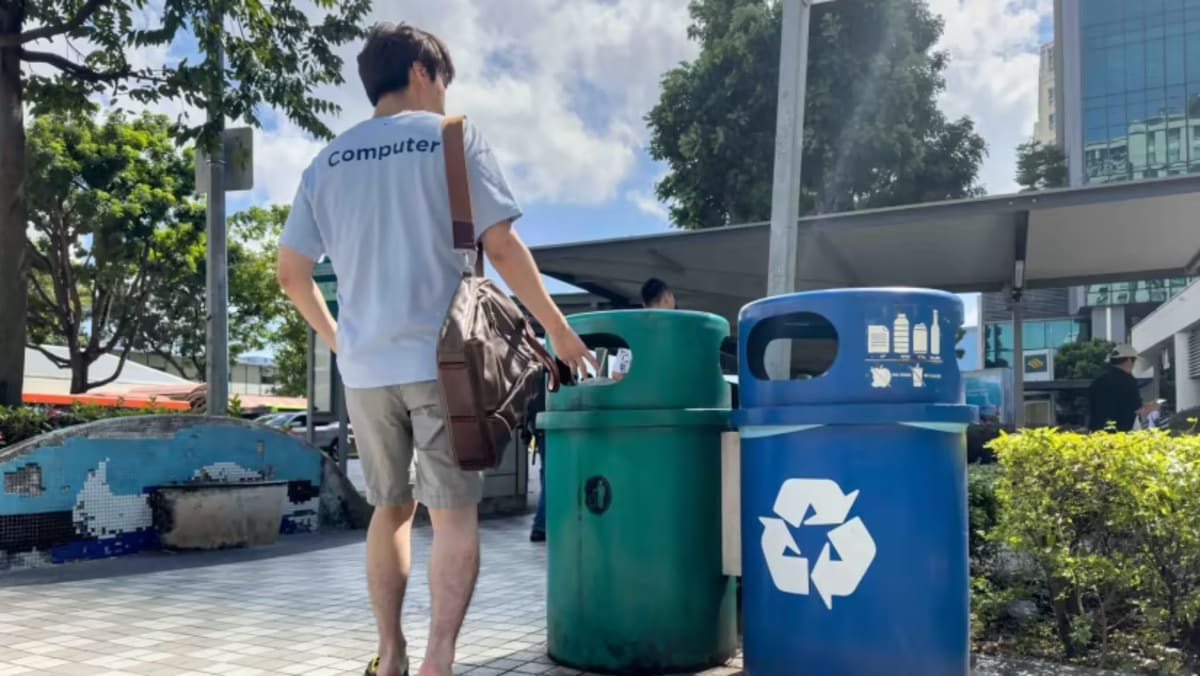
Underpinning the present day household recycling collection system is the co-mingled bin, more commonly known as the Bloobin or blue bin.
Over the years, the blue bins have been criticised because the co-mingled approach – in which recyclables are not sorted – leads to people disposing food and liquid waste in the bins, causing contamination. Contamination rates in blue bins have remained at about 40 per cent for years.
The blue bin “lowers the barrier to participation”, but the convenience comes at the expense of quality, said Prof Kuah.
Contamination reduces the quality and market value of recyclables, he added.
Hence, Singapore should consider moving from a purely co-mingled model to a more differentiated system, where blue bins are retained for selected dry recyclables, such as clothes and textiles.
This should be complemented by separate collection streams for other materials, with one example being the Beverage Container Return Scheme, Prof Kuah said.
Read Full Article At Source