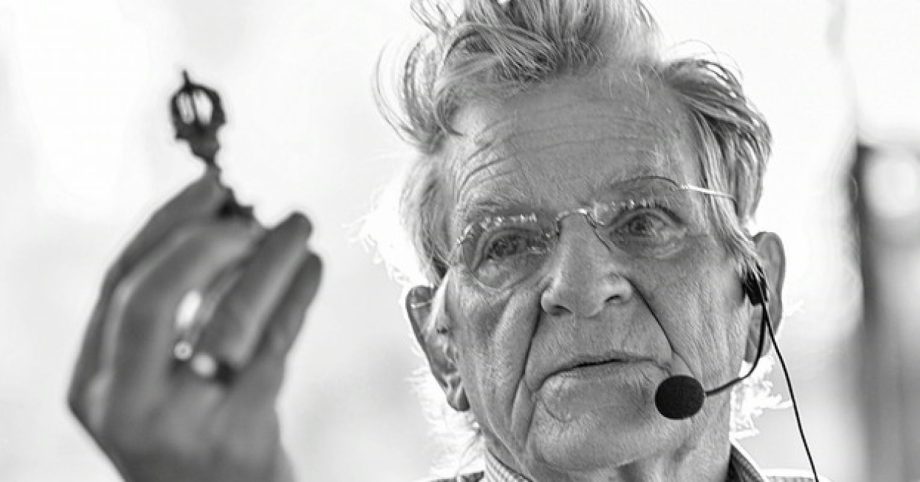
Today I learned that Robert Thurman had died.
The sadness made sense. The surprise didn’t. Not the surprise that he’d died—he was 84, and death at that age arrives more or less on schedule. What caught me off guard was how much space he turned out to occupy inside me. It shouldn’t have hit the way it did.
We only knew each other for a short time. He read my book, offered a testimonial, and came to my launch. A few months ago, I joined him on his podcast to discuss the ideas that had brought us together. By any objective measure, hardly any time at all. Yet when I heard the news, something important seemed to shift.
It made me think about an illusion many of us carry: that the importance of a relationship is determined by its duration. A 20-year friendship should matter more than a two-year one. A spouse more than a teacher. A lifelong colleague more than someone we met only recently.
But our inner lives don’t organize themselves by the calendar. Some people occupy decades and leave barely a trace. Others enter briefly and become part of the architecture.
Psychologists talk about attachment figures—the people who give us safety, guidance, stability. We picture parents, partners, close friends. But as I’ve gotten older, I’ve come to suspect there is another category altogether: the people who witness us.
Not necessarily the people who know us best. The people who see us most clearly. Many people know our history. Few recognize our essence. And when someone does, something unusual happens. We relax.
Read Full Article At Source