Singapore biotechnology company Mirxes started life in a research lab, running on notebooks and Excel sheets. Bringing a cancer-detection blood test to market meant leaving all of that behind.
“We went from lab notebooks and Excel sheets to documented and official forms and records,” says Jonathan Ho, associate director of quality assurance at Mirxes. That shift – to ISO 13485, an international standard for medical device quality management – would become the foundation the company built its processes on.
The company’s roots trace back to the early 2000s, when scientists at A*STAR developed a method to detect microRNA, genetic markers that can detect cancer – including at early stages – from a simple blood draw, stratifying individuals into low-, intermediate- or high-risk categories to guide physicians on appropriate follow-up, including gastroscopy, where warranted.
After the technology was patented in 2010, Mirxes was spun out of A*STAR in 2014 to bring it to market.
That commercial journey demanded consistency, regardless of when, where or by whom a test was performed. Certification took about a year and required stress-testing variables most would not think of: shipments sitting for hours on airport tarmacs, temperature fluctuations across the supply chain, intricacies at the molecular level that could not be missed.
“When dealing with the detection of gastric or lung cancer, there are a lot of intricacies at the molecular level that we cannot afford to miss out, because once we miss something or make one wrong move, it could result in a misdiagnosis and emotional anguish for patients,” says Ho.

GASTROClear, the cancer detection blood test that Mirxes was able to bring to market faster by building on the quality standards infrastructure it had already put in place.
PHOTO: MIRXES
Commercialising the technology meant moving beyond the flexibility of research environments towards tightly standardised processes.
“We managed to successfully change this mindset by explaining to our team why we had to make changes. For example, for traceability in documents and records,” says Ho. “That’s where the importance of adhering to standards comes in.”
That discipline laid the groundwork for Mirxes’ expansion.
Its flagship product, GASTROClear – the world’s first approved molecular blood test for gastric cancer detection – gained approval in Singapore in 2019.
While developing GASTROClear, Mirxes worked with the Singapore Standards Council, a national body managed by Enterprise Singapore (EnterpriseSG) that develops and oversees Singapore’s standards and quality infrastructure, to create SS 656.
The world’s first standard for validating microRNA-based diagnostic tests, SS 656 was developed to address inconsistencies in microRNA biomarker discovery and in-vitro diagnostic development.

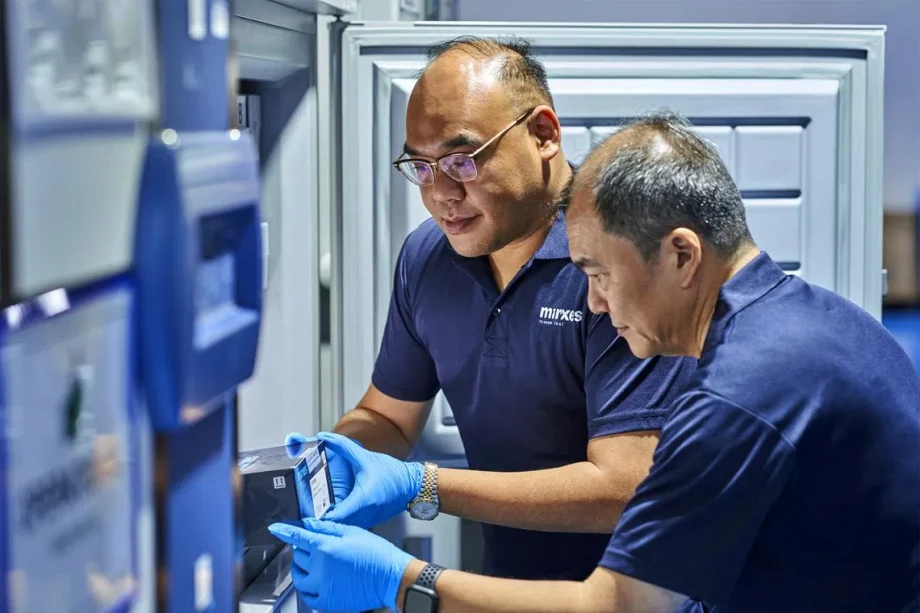
Decosta and supply chain manager Puvaneswari Dhanaraj at Mirxes’ manufacturing facility in Tukang Innovation Grove, where test kits undergo rigorous quality checks before dispatch.
PHOTO: SPH MEDIA
It provides companies with a structured framework for validating such tests, helping them meet regulatory requirements, manage development risks, improve product quality and accelerate the path to market.


Read Full Article At Source