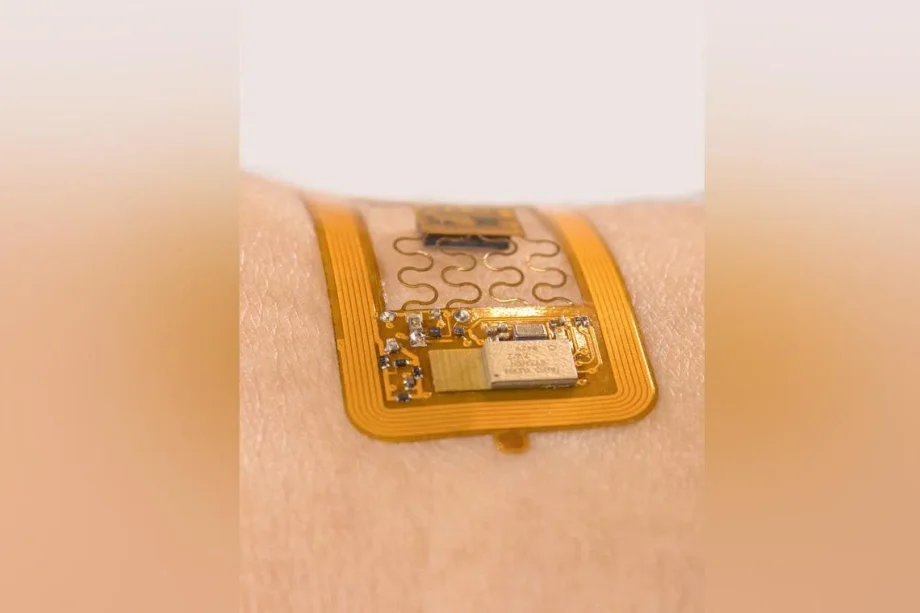
SINGAPORE – Local researchers have developed a battery-free skin patch prototype for continuous blood pressure tracking, marking a major leap forward in wearable cardiovascular monitoring.
This innovation allows for everyday tracking of vital signs without cumbersome cuffs that require one to sit still or the need to recharge batteries.
Continuous blood pressure monitoring is especially key during deep sleep and the point of waking up – which are times when blood pressure mostly goes unmeasured, said researcher Selman Kurt of the National University of Singapore’s (NUS) Electrical and Computer Engineering department, who was involved in the project.
A sharp surge in blood pressure on waking and a blunted drop in blood pressure when sleeping have been shown to be strong predictors of stroke and other cardiovascular problems.
“Peak blood pressure reached during exercise is also clinically meaningful,” said Kurt, who led a team of four researchers and professors on the project at NUS.
“Studies have shown that a deviation from the normal range – whether the peak is abnormally high or low – is associated with greater long-term risk of cardiovascular disease, stroke and early mortality.”
Traditional blood pressure monitors that use cuffs are highly reliable. But because they require the user to sit still, they capture only a snapshot of vitals in a resting state. Blood pressure fluctuations during physical activity or daily routines are not captured.
Wrist wearables, on the other hand, allow for continuous and unobtrusive monitoring during daily activities, but the trade-off for this convenience is clinical accuracy. Their batteries also need to be recharged.
Work on the skin patch prototype began in NUS’ Wireless Bioelectronics Group in 2021, and the team worked alongside researchers from the University of Arizona and Tsinghua University.

Read Full Article At Source