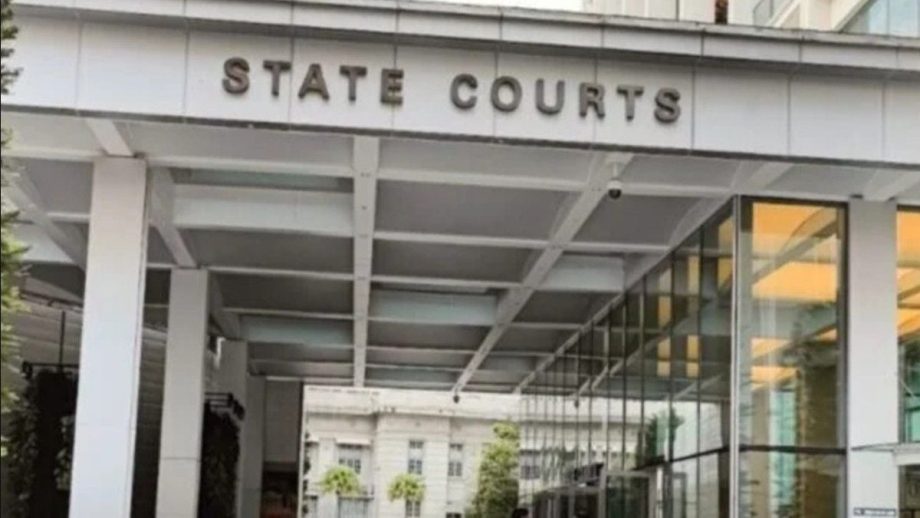
A Singapore district court has for the second time in three months dismissed an application to commit a company director for contempt of court over absence at a debt examination hearing, with the presiding judge sharpening his warning that committal proceedings are being misused as a debt collection tool in the State Courts.
In Cairnhill Law LLC v Royal’s Sanitary & Plumbing Pte Ltd, delivered on 3 June 2026, District Judge Chiah Kok Khun dismissed an application by law firm Cairnhill Law LLC to commit director Ms Subramanian Deepa for missing an adjourned examination of enforcement respondent (EER) hearing.
The ruling follows an earlier decision by the same judge in Cairnhill Law LLC v Royal’s Engineering & Trading (S) Pte Ltd, delivered on 30 March 2026, in which a near-identical application against a separate director was also dismissed.
Both cases involve the same law firm as claimant. The judge’s language grew notably stronger between the two decisions — from observing an “increase” in committal filings in March to characterising it as an “unhealthy increase” by June.
The June judgment: Cairnhill Law LLC v Royal’s Sanitary & Plumbing Pte Ltd
Cairnhill Law had previously acted for Royal’s Sanitary & Plumbing and obtained a default judgment against the company for unpaid legal fees. It then sought an EER order — a court-supervised process by which a judgment debtor’s director is examined on the company’s financial position and ability to satisfy the debt.
Deepa attended the initial EER hearing on 11 November 2025 and submitted the required questionnaire, albeit with two pages missing due to a double-sided printing oversight. She sought time to provide further supporting documents, which was granted. The matter was adjourned to 16 December 2025.
She did not appear on the adjourned date, explaining that without pen and paper at the hearing she had committed the date to memory and mistakenly recalled it as 19 December 2025.
Upon realising her error, Deepa wrote to the court on 22 December 2025 apologising and affirming her readiness to comply with any further directions. The letter was copied to the claimant. Within a week, on 30 December, she furnished all outstanding documents to Cairnhill Law.
Cairnhill Law did not respond to her compliance. Instead, on 31 December 2025, it informed the court it had filed for leave to commence committal proceedings — without disclosing to the court that Deepa had by then fully complied with the documentary requests. On 10 February 2026, Deepa paid the full judgment sum including costs.
District Judge Chiah found that Deepa had taken reasonable steps throughout the EER process and that her failure to attend the adjourned hearing was wholly attributable to an honest and reasonable mistake. He found her conduct was not contumelious and that she had in any event purged whatever contempt might otherwise have existed through her prompt apology, document production, and eventual full payment.
Read Full Article At Source