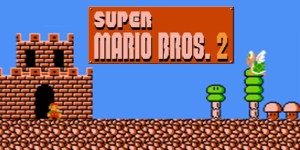

Super Mario Bros. 2, aka “The Lost Levels,” is celebrating its 40-year anniversary today, June 3, 2026. Below, we look back at how Nintendo created a notoriously punishing sequel, and why it only came to the West many years later.
Let’s set the stage. It’s 1986, and you’re Nintendo. Your Family Computer console has become a full-blown phenomenon on the back of the game you released late the previous year called Super Mario Bros. You’re now selling millions of consoles and games. On the back of all of this, you’re planning to launch an expansion peripheral for the Famicom: a floppy disk drive attachment called the Famicom Disk System that offers all kinds of nifty new features. The Disk System is launching with an ambitious new game by your hot young talent called The Legend of Zelda, and while you’re confident in it, it’s not a sure thing. What’s your best option to get more Disk Systems sold if Zelda doesn’t do it?
Well, you task your developers to make a follow-up to your biggest hit so far and make it exclusive to the Disk System, of course. But here’s the thing: It needs to satisfy players who’ve mastered the original Super Mario Bros., and it needs to be out fast. And so, on June 3rd, 1986, Famicom Disk System owners across Japan were able to walk into game stores with a specialized Disk Writer kiosk and request Super Mario Bros. 2, the sequel to the biggest video game megahit since Space Invaders.
In a lot of ways, Super Mario Bros. 2 was an anomaly for Nintendo. We associate Nintendo sequels with innovation, experimentation, and lots of polish. Super Mario Bros. 2, on the other hand, is built directly on the structure of the original SMB, with only a slight graphical touch-up over the existing engine. There’s a distinct lack of new gameplay elements. Some of the levels are straight-up reused from the arcade Vs. Super Mario Bros. Overall, the game feels more like an expansion pack than a proper sequel.
That’s not to say that SMB2 was devoid of new gameplay elements–it’s just that all of said new elements are expressly designed to make the game much, much harder. Mushrooms that damage you rather than powering you up. Wind that comes in suddenly and affects jump trajectory. Moon-jump trampolines that are somehow even more finicky than those in the original. Warp zones that warp you backwards. About the only new gameplay feature that isn’t out for your blood is a selectable Luigi, who jumps higher but is more slippery to control.