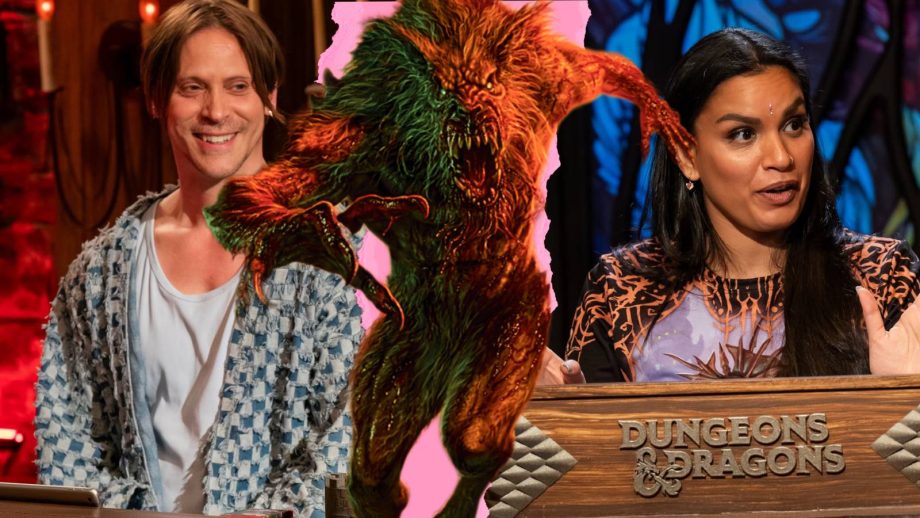
Scary season starts early this year, at least as far as Dungeons & Dragons is concerned. The upcoming release of Ravenloft: The Horrors Within on June 16 will mark the peak of “Season of Horror” for the world’s most famous role-playing game; we have some interesting teases of the contents of the book already, thanks to D&D’s new official actual play show, Dungeon Masters, and the Ravenloft Play-Along pack available on D&D Beyond.
These weekly drops consist of encounters and monsters seen in the show, giving players an early taste of what they will find inside Ravenloft: The Horrors Within. This week’s drop is a returning monster from Van Richten’s Guide to Ravenloft, the loup garou. This lycanthrope is inspired by French folklore (“loup garou” literally means werewolf in French), later exported to Canada, where it merged with Native American legends.
First appearing in the second edition of the game, D&D’s loup garou is a stronger, scarier werewolf, with a challenge rating of 13 and the potential to wipe out an entire party. Or at least, that’s what the 5th edition version could do.
I’m curious to see how the party led by DM Jasmine Bhullar will deal with a loup garou in the next episode of Dungeon Masters. The characters are all level 6, so in theory, they shouldn’t have any problem. You’ve read that right: The encounter presented in the Play-Along Pack is for level 6 characters, and it includes a loup garou and three werewolves. Unless there is a glaring mistake, this means that the game acknowledges that a level 6 party can take on challenges of much higher level than before.

The encounter has the party accompanied by two banshees, but I doubt they would tip the scales much. The loup garou is immune to the frightened condition, making the banshee’s horrify attack useless, and once they expend their once-per-day deathly wail (which also affects the party, by the way), the screaming ladies are left with their unimpressive corruptive touch attack. On top of that, the loup garou and its pack have a chance to ambush the party during the encounter.


Read Full Article At Source