NOT A NUMBERS GAME
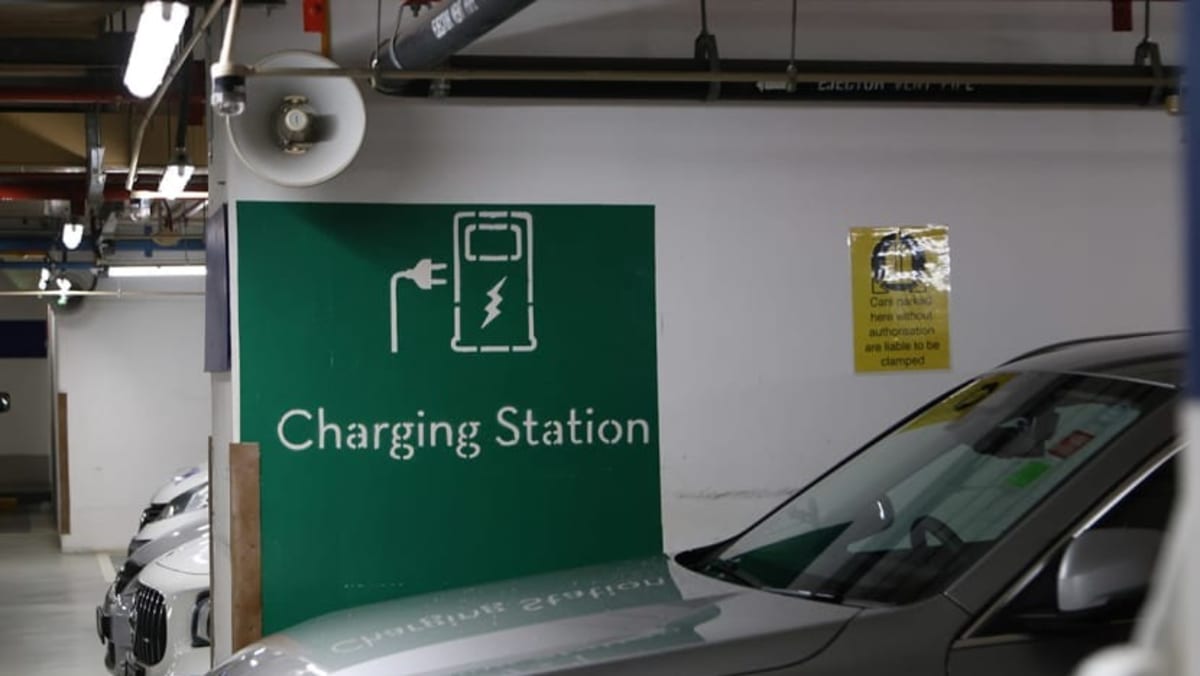
But as EV adoption goes mainstream, some say the next challenge is less about adding more chargers and more about whether they are in the right places with enough power to meet demand.
“I would argue that the charger count is becoming a vanity metric,” said Assoc Prof Peng.
The real measure, he said, was charging energy delivered per vehicle per week. A 7-kilowatt (kW) alternating current (AC) home charger, which is slower and suitable for overnight charging, and a 180-kW direct current (DC) fast charger each count as one charging point but serve very different needs.
Over 90 per cent of HDB car parks are equipped with slow chargers. Fast-charging hubs are being rolled out, with at least one per HDB town planned by end-2027.
“If close to 60 per cent of new cars are EVs, the right question shifts from ‘how many points’ to ‘how many usable kilowatts, in the right locations, at what utilisation’,” said Assoc Prof Peng.
“Otherwise we will reach 60,000 points and may still have a charging-experience problem.”