What a plate of chee cheong fun reveals about migration in Malaysia


What’s in a plate of chee cheong fun?

My wife and I had these steamed rice rolls for breakfast recently at Ming Jii Restaurant in Skudai, a satellite town about 13km from downtown Johor Bahru.

She ordered a plate of chee cheong fun with pork skin in curry, while I went for a version stuffed with minced pork and a bowl of yong tau foo soaked in curry sauce.

My wife said she felt as if she was back in her home town Ipoh, in Perak state.

Chee cheong fun is a Cantonese snack said to have first appeared in Guangzhou in the 1920s. The versions of the snack from Perak and Kuala Lumpur, where the Chinese communities are Cantonese, are usually served with curry or stuffed with ingredients like minced pork or dried shrimp.

In JB, the dish is traditionally served with just red sweet sauce. But these days, curry chee cheong fun has become a lot more common in the southern city.

The dish’s journey south mirrors the migration patterns of Malaysian Chinese.

In the 1990s, Johor’s state capital attracted migrants from KL and Perak who were looking to commute from there to Singapore for work, to take advantage of the stronger Singapore currency. In 1997, one could exchange $1 for about RM2; this has risen to about RM3.10 as at April 2026.

Ipoh-born property agent Cheo Yee How, 41, says Ming Jii is one of the few places where the chee cheong fun comes close to what he grew up with.

“It’s tasty, but with a local twist – served with curry cockles. We’d never have this in Ipoh.”

I tried the curry cockles with soya sauce-dipped chee cheong fun on my first visit. The rice rolls were smooth and silky, but slightly cold.

Ming Jii Restaurant’s second-generation owner, Mr Wong Zhi Hao, recommends that first-timers try it with curry sauce, as it enhances the flavour of the Chee Cheong Fun.

Ming Jii Restaurant’s second-generation owner, Mr Wong Zhi Hao, recommends first-timers try the chee cheong fun with curry sauce, as the sauce enhances its flavour.

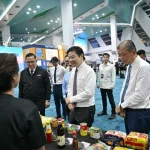
“It’s better for first-timers to go with the curry sauce. It warms up the chee cheong fun,” said Ming Jii owner Wong Zhi Hao, 30, who took over the business from his father and is running two outlets, in Skudai and Johor Jaya.

Ming Jii also offers a version from Teluk Intan, a former port town in southern Perak.

Teluk Intan chee cheong fun is stuffed with dried shrimp, yam bean and lard, and the dish is enhanced by the crunch of pickled green chillies. I always make sure to eat this whenever I return during Chinese New Year to Teluk Intan, my father’s home town.

But Ming Jii has tweaked the snack to make it more palatable to Johor taste buds: the lard and dried shrimp are replaced with preserved radish, a common ingredient in Teochew cuisine.

“The JB version of Teluk Intan chee cheong fun is healthier without the lard. It may also be influenced by Singapore hawker food culture, which reduces fat, salt and sugar,” said Mr Wong.

Ming Jii was started 26 years ago in Skudai’s Taman Ungku Tun Aminah, which is known as the “Queen area” among the Chinese community because it is named after a Johor queen consort.

Associate Professor Pek Wee Chuen, 40, who heads the South-east Asian department at Selangor-based New Era University College, said this area was developed in the 1980s to accommodate migrants from Perak and Penang. With the newcomers from Perak came chee cheong fun from the state.

The native of JB said he grew up eating chee cheong fun with red sweet sauce, “which is rarely found in Kuala Lumpur”.

Long Kee, a food truck in Taman Universiti about 10km from Ming Jii, serves a KL version of chee cheong fun, topped with fish cakes, meatballs and fried bean curd skin, all dressed with sauce.

Parked next to a 4-D outlet, Long Kee operates on Wednesdays, Saturdays and Sundays, when the lottery draw is on.

Owner Chan Yoke Long, 60, and his wife Oh Mee Hoon, 59, keep their chee cheong fun in a steamer at about 50 deg C to 60 deg C – warm enough to serve without overcooking.

Mr Chan initially started a construction business in Pahang in the 1980s, but he ran into cash-flow problems and the company folded. In 1988, he went to KL to learn the craft of making chee cheong fun, before moving to JB with his wife to start their food business.

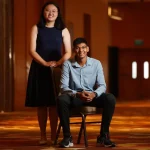
Mr Chan Yoke Long and Madam Oh Mee Hoon moved to JB in 1988 to operate a Kuala Lumpur-style Chee Cheong Fun business.

Mr Chan Yoke Long and Madam Oh Mee Hoon moved to JB in 1988 to operate a Kuala Lumpur-style chee cheong fun business.

ST PHOTO: LU WEI HOONG

“Back then, chee cheong fun wasn’t popular among JB-reans. We were pioneers – it was a simple way to earn cash,” he said.

Madam Oh, who is a KL native and Teochew but well versed in Cantonese, prefers to greet customers in the dialect.

Said Mr Chan: “Most diners who reply to my wife in Cantonese are from outside Johor; 70 per cent to 80 per cent are from Ipoh and Kuala Lumpur.”

Kuantan-born Mr Chan is Cantonese but prefers to speak Mandarin to his customers.

The use of Chinese dialects has declined among Johor Bahru natives, influenced in part by Singapore. As some in JB like to joke: “Johor is the success story of Singapore’s Speak Mandarin Campaign.”

As the Singapore dollar strengthened against the ringgit over the years, their business has improved.

Said Mr Chan: “Those returning from work in Singapore are more willing to spend – you could say they have three times the buying power.”


Read Full Article At Source