JOHOR BAHRU – It’s no coincidence that Mr Fariz is fiercely proud of both Johor and its football club. It taps into a broader state‑centric identity known as “Bangsa Johor” – or the “Johor Nation” – a sense of belonging that the Johor royal family has spent decades actively building and which rises to fever pitch on the football field.
The idea holds that race, religion and class need not divide – that a Malay pizzeria worker, a Chinese cafe owner and an Indian trader can all be Johorean first. Backed by royal authority, welfare programmes and world-class football facilities, it has gained genuine traction, with surveys showing the vast majority of Johoreans claiming it as their dominant identity.
But as Johor transforms into one of Malaysia’s most powerful economic engines – attracting billions in foreign investment and leaning ever closer to Singapore – three fault lines are emerging beneath that promise.
There is a clash between a state identity and the national one; between the development Johor is selling to the world and local residents being priced out of their own state capital; and between the confident Bangsa Johor projected from Johor Bahru and the scepticism found in the districts farther north.

A state identity years in the making
Situated at the southern tip of Peninsular Malaysia, Johor is now home to roughly four million people. But the inception of the Bangsa Johor concept has its roots in the late 19th century under the rule of Sultan Abu Bakar, seen as the father of modern Johor.
According to Professor Kassim Thukiman, an author and historian, the state became a regional economic hub after Sultan Abu Bakar’s father, the Temenggong Daeng Ibrahim, developed its pepper and gambier plantations by resettling Chinese migrants from Singapore.
This was achieved through a system called “kangchu” that was developed more than a century ago, in which the Chinese were allowed to organise themselves by forming associations to oversee the riverine plantations and their own communities. The Teochew dialect term “kangchu” means “river master”.
But there arose the risk of an ethnic rift: The Malays administered the state via the civil service, while the Chinese thrived within the state’s economy. The need for multi-ethnic economic cooperation necessitated the Bangsa Johor concept.
“Sultan Abu Bakar embedded the maxim ‘muafakat itu berkat’ as part of Johor’s Constitution,” said Prof Kassim, who is also one of the 14 members of the Johor Council of Royal Court. The Malay saying means “unity brings prosperity”.
“He subsequently advanced the idea of Bangsa Johor in his later years, before his death in 1895,” added Prof Kassim. “The royal family at that time saw that racial unity in Johor society would be fundamental for the state to prosper.”
The concept was further popularised by Sultan Abu Bakar’s successor, Sultan Sir Ibrahim, as the state’s population grew to include Indian and Javanese communities in the early 20th century, Prof Kassim said.


More than a century later, that early push for trade and multi‑ethnic cooperation has helped shape Johor’s modern economic clout. In 2026, Johor has emerged as one of Malaysia’s leading investment hubs.
Malaysian government data showed Johor’s economy grew by 6.4 per cent in 2024 from the previous year. It also raked in RM110 billion (S$35.5 billion) in investments in 2025. Both figures were the highest among the country’s 13 states.
This economic growth has been driven in large part by Johor’s proximity to Singapore. They share one of the world’s busiest land crossings, the Causeway, with an estimated 300,000 people crossing each day in search of or to work in better-paying jobs in the island republic.
Johor is among Malaysia’s best-performing states economically
Johor is the only state in Malaysia with access to both the Strait of Malacca and the South China Sea, and its Tanjung Pelepas Port is the 15th busiest container port in the world. The Johor-Singapore Special Economic Zone is also under development.
As a result, Johor is welcoming substantial investments from all around the world, in areas ranging from semiconductors and manufacturing to data centres.
Politically, the state is the birthplace of the Malay nationalist party United Malays National Organisation (UMNO), the lynchpin of the once unassailable ruling coalition, Barisan Nasional. UMNO is still part of the federal government.
Due to its massive economic and political influence in Malaysia, many Johoreans have immense pride in their birth state, which strengthens their identification with Bangsa Johor.
This pride was articulated by Datuk Seri Hasni Mohammad, 67, born and bred in Pontian in the state’s south-western tip. He served as the Johor Menteri Besar between 2020 and 2022, and is now the economic adviser to the state government.
“Bangsa Johor is a symbol of unity among all races with a vision to achieve global recognition,” he told The Straits Times. “We are not an ordinary state in what we do.”
One Johor, many distances
Yet on the ground, the meaning of Bangsa Johor can vary sharply from district to district.
The state’s borders are constant, but what counts as “Johor” becomes looser the farther away one travels from Johor Bahru.
In northern Muar, which is closer to the state of Melaka than to Johor Bahru, it is common to hear residents talking about “returning to Johor” or “travelling to Johor” – as they call the state capital. It is the same in Mersing on the east coast of the peninsula, just a 30-minute drive from Pahang state, compared with at least two hours to Johor Bahru.
At that distance from the state capital, the southern part of Johor can feel almost like a foreign country.
At Mee Bandung Abu Bakar Hanipah, a decades‑old fixture on Muar’s food scene, owner Abu Bakar Hanipah showed his open shirt collar to distinguish himself from “more uptight” city folks from the south.
The 76-year-old pointed to a wall plastered with old photos of the dignitaries and politicians who have stopped to enjoy his mee bandung – a yellow-noodle dish topped with a savoury tomato-based broth of beef and seafood.
“You see those with their shirts buttoned to the top? They’re not from Muar,” he said with a laugh.


Mr Abu Bakar said older folk in districts to the north, such as Muar, Batu Pahat and Tangkak, more commonly have their shirts unbuttoned because of the hot flatland climate.
He admitted that he identifies with Bangsa Johor in official settings, but sees himself first as a son of Muar.
“Johor people are like Singapore people. City people. They can be rude and showy,” he said, referring to Johor Bahru urbanites. “But in Muar, we’re more like a village. We help one another.”
Among fishermen along the Muar river, scepticism runs deeper.

The most recent survey on the subject, a 2017 ISEAS – Yusof Ishak Institute poll of 2,011 Johoreans, found that 88 per cent of respondents identified with Bangsa Johor, though only 14 per cent considered it their primary identity. No comparable survey has been conducted since.
Dr Serina Rahman, a lecturer from the National University of Singapore’s Department of South-east Asian Studies, explained that different feelings about Bangsa Johor have to do with how Johoreans relate to people within the state and to those in other states.
“It’s relative, isn’t it? Someone from Muar speaking to someone from Johor Bahru will emphasise his Muar-ness, but the same person speaking to someone from a northern state, say Kedah, will assume himself to be Bangsa Johor,” she suggested.
Dr Serina said people from other states may feel that Johoreans professing Bangsa Johor have a chip on their shoulder.
“Partly because Johoreans carry with them the pride of having rulers who push the federal government on certain issues for the welfare of the state, and also JDT’s victories. And partly it’s got to do with other people’s resentment of Johor’s success,” she said.

From the throne to the terraces
The promotion of Bangsa Johor by the Johor monarchy has been constant, but not all rulers have placed the same emphasis on it. Nonetheless, the more prominent it is in their reign, the more it seems to resonate with Johoreans, observers said.
“We see it more promoted under the current ruler Sultan Ibrahim, but less from his father, Sultan Iskandar,” said Dr Francis Hutchinson, coordinator of the Malaysia Studies Programme at ISEAS – Yusof Ishak Institute.
“You could say that over time, the promotion of Bangsa Johor has fluctuated, but interestingly, it’s always been there.”


It is hard to talk about the current resurgence of Bangsa Johor without mentioning Sultan Ibrahim’s eldest son, Johor Crown Prince Tunku Ismail, who is the current state regent while his father serves as Malaysia’s King.
Success, however, comes at a cost. Johor’s rise as a regional economic powerhouse has left some residents feeling they have not benefited equally, especially as foreign investments tend to be concentrated in Johor Bahru, whose rapid development has led to those in other parts of the state feeling left behind.
A massive influx of luxury high-rise flats has altered the city’s skyline while pricing out residents. Under the World Bank estimate for housing affordability, homes in Johor fall into the “severely unaffordable range”, as the median price of a place in Johor is more than five times the median annual household income of Johoreans.
Johor’s proximity to Singapore has also pushed inflation in the state above the national average, driven by the stronger Singapore dollar earned by some local residents and by shoppers from Singapore who cross the Causeway at the weekends.
While Malaysia’s monthly national inflation rate ranged between 1.1 per cent and 1.7 per cent from March 2025 to March 2026, Johor’s rate hovered above that, at between 1.7 per cent and 2.3 per cent over the same period.

Retail assistant Abdul Hafiz Abdul Aziz is critical of what this means. He works in a street clothing boutique in Johor Bahru’s main cultural street, Jalan Dhoby – a vibrant arts hub until recently, when rising rents and a focus on foreigners squeezed out local creatives.
“Johor looked outwards too much to Singaporean customers and foreign tourists, instead of building its own identity,” Mr Abdul Hafiz said. Unlike in Kuala Lumpur, where local brands have flourished, shops in Johor Bahru choose to carry knock-offs of international brands that appeal to visitors rather than showcase what is unique to the state.
If anything, Johoreans who spoke to ST said they want development to grow from within – and at their own pace.
In idyllic Pulau Besar off the coast of Mersing, Madam Normah Abd Rahim, 54, said she is a proud Bangsa Johor supporter, largely because her town is free from traffic congestion, with fresh air to breathe every day and a slower pace of life.
“My hope is that the people of Mersing can muster the effort to develop their own town, to keep it clean and treasure its heritage rather than allowing it to fall into other people’s hands,” she said.


Why the Chinese are crucial as believers
If there is a clear beneficiary of the Bangsa Johor project, it would be the Chinese community. Making up nearly one-third of Johor’s 4.1 million population, according to the 2025 census, the community has spent generations living in the shadow of a more prosperous society with a Chinese majority just across the water.
The ISEAS – Yusof Ishak Institute survey found that the Chinese in the state top the list in identifying with Bangsa Johor – at 90.5 per cent. This was followed by the Malays (88.2 per cent) and Indians (81.7 per cent).
The enthusiasm is not incidental. For the Chinese community, Bangsa Johor functions less as a feel-good slogan and more as a working shield against the race-based politics at the federal level that have made minorities feel like guests in their own country.
In 2021, when Sultan Ibrahim publicly opposed the use of “pendatang” – a Malay term meaning “outsiders” that is routinely deployed as a slur against minority communities – it carried weight, something lacking in states where the royals are silent or hostile.

In Kluang, roughly 100km north of Johor Bahru, Mr Lim Jit Tong, 56, is the third-generation owner of Kluang Rail Coffee, a once-traditional railway coffee shop turned cafe chain that is now a household name in the state.
“Johor is one of the places in Malaysia where the Chinese community can thrive, thanks to the royal family, who ensure that there are fair opportunities for all,” he told ST in no uncertain terms.


The sense of inclusion has deep historical roots. An oft-cited figure is Sultanah Fatimah, the queen consort of Sultan Abu Bakar. Born Wong Ah Gew, the Cantonese woman from a wealthy merchant family married the ruler in 1885.
A charity foundation set up by the Johor royal family in 2015 was named after her. Sultanah Fatimah was said to enjoy a cordial relationship with Johor Bahru pioneer Wong Ah Fook, who gained Sultan Abu Bakar’s trust as a major contractor for the state and built the Sultan Abu Bakar State Mosque and Istana Besar.
“She reflects that the acceptance of the Chinese community in Johor dates back long before independence in 1957,” said Assistant Professor Bak Jia How from Southern University College’s Faculty of Chinese Studies.
“The Johor royal family was far ahead in responding to the need for Chinese recognition in the state.”

Yet for all its royal pedigree, Bangsa Johor has not fully resolved the Chinese community’s more complicated sense of belonging – which Singapore, sitting just across the Causeway, has long made thornier.
The proximity of Singapore, where the Chinese form the majority of the population, plays an influential role in the cultural identity of Johor Chinese. While the rest of Malaysia had no local television channels in Mandarin prior to the 1980s, Chinese Johoreans could capture Singapore television programmes – such as those on Channel 8 – and radio through their antennae.
A village chief in Kluang, Mr Ong Chuan Kheng, 54, is one of Channel 8’s long-time viewers. He even participated in the channel’s Golden Age Talentime singing competition in early April.
“Some of the assigned songs are related to xinyao,” said Mr Ong, referring to a contemporary Singaporean Mandarin vocal genre.
Access to Singapore broadcasting channels gave Johor’s Chinese community a daily window into a majority-Chinese society just 30 minutes away.
Super-tall TV antennae remain a common sight across Johor, reaching as far as Muar and Tangkak, nearly 200km from Singapore.


“A Malaysian radio and TV transmitter tower on Gunung Ledang, built in the 1980s, weakened the signal from Singapore. So a late technician told me that he had to install 20-foot antennae for clear reception for locals,” said Mr Hiew Wei Yong, 47, the founder of Kaki Gunung Mas, a non-governmental organisation which documents Tangkak’s local history.
Kluang architectural designer Gin Cheong recalled starting his mornings with Singapore’s national anthem on television. For many, the exposure was formative — not just culturally, but in how they weighed their own identity as Malaysians.
That schism rankles deeply with Kluang restaurant owner Chau Huang Yi, 43.
“What angers me is that some claim to be Singaporean rather than Malaysian to avoid discrimination abroad. Why are they ashamed to be Malaysians?” he asked, referring to Chinese Johoreans who travel overseas.


His anger explains why Bangsa Johor matters to the Chinese community in Johor. The state identity offers something the federal government has long failed to: the assurance that they belong.
Dozens of Chinese Johoreans interviewed by ST feel Bangsa Johor is an inclusive concept, though some question whether it is merely superficial. Activist Thomas Fann, chairman of democracy advocacy group Engage, called it a “noble project” but cautioned that certain expressions of state identity risk appearing to place Johor above Malaysia.
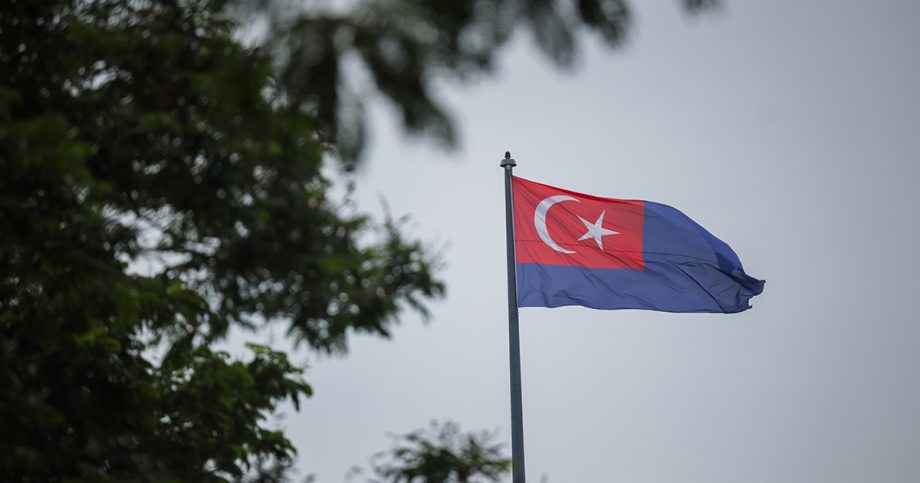
“This perception is reinforced when I see three Johor flags alongside a single Malaysian flag on lamp posts in the state. It has concerned me since I first noticed it 15 years ago,” the Johor Bahru native told ST. It is traditional for lamp posts to be festooned with flags during celebrations for the Sultan’s birthday and national holidays.

What Bangsa Johor becomes next
The debate over what Bangsa Johor truly means – and to whom – is unlikely to be settled any time soon.
However, whether it can survive Johor’s next chapter as a global investment hub pulled between two countries and the competing ambitions of its own people ultimately depends on how the royal family and the state choose to use – and promote – the idea.
“Bangsa Johor has been considered quite special in recent years, because of how closely the state government works together with the royals,” said Ms Violet Lee, a researcher at Malaysian think-tank Iman Research, which focuses on youth and identity.
She noted how, in recent years, the concept has taken on a “special” sheen owing to the two sides – government and royalty – working together closely to roll out welfare programmes reserved for Johoreans. This, in turn, projects the Sultan’s authority as state power.
Yet, the more assertively Bangsa Johor is promoted, the more it has periodically strained relations with Putrajaya, Malaysia’s administrative capital. This was shown most sharply in 2022, when Sultan Ibrahim accused the federal government of treating Johor like a “stepchild”, and warned that the state would consider leaving the federation if its constitutional rights were breached.
The tension has since taken on a fiscal edge, with the current Johor Menteri Besar, Datuk Onn Hafiz Ghazi, in 2024 demanding that 30 per cent of Johor’s tax collection be retained locally – a demand Putrajaya rebuffed by invoking the Federal Constitution.
Analysts, however, cautioned against reading these as signs of a deepening ideological rift. Mr Aziff Azuddin, research director at Iman Research, told ST that Bangsa Johor has rarely registered as a serious policy concern in Putrajaya.
“You don’t see state pride being a policy issue,” he said, adding that Bangsa Johor’s historical entanglement with UMNO has kept it from crystallising into outright opposition to the federal centre. “Because this is not in opposition to Putrajaya, it hardly becomes political per se.”
For most Johoreans, Bangsa Johor exists to remind them of the importance of multiculturalism. But as Dr Hutchinson argues, there are also “winners and losers” when that same identity becomes entangled with development, cost of living and who can afford to live in the city.
Meanwhile, for Singapore – whose workers, students and tourists criss‑cross Johor daily – how Bangsa Johor evolves will shape a key neighbour’s politics and society.
At the Iskandar Puteri TMIYC, cafe owner Mohd Firdaus Rosli, 39, knows this tension first-hand. Once a Starbucks barista in Singapore, he had to leave his previous shop lot in Johor Bahru’s Jalan Dhoby – where he felt Bangsa Johor most keenly – because of high rent.
“I may have moved out from the city, but I don’t think Bangsa Johor has got to do with where I am,” he said. “I think wherever I go, that spirit of Bangsa Johor just moves with me.”


Back at Sultan Ibrahim Stadium, JDT won 4-1 against Kuala Lumpur City F.C. – a result that barely surprised anyone. The club has already been crowned 2025-2026 season champion, its 12th consecutive league title, with several fixtures still to play.
As JDT’s drums faded and the crowd thinned, Mr Fariz packed up his bass drum and joined the slow crawl back towards the Causeway.
The next day, he would be the pizza man again. But for a few hours on nights like this, he is something else entirely: one small, beating part of a larger, still-forming idea of what it means to be part of Bangsa Johor.
He told ST: “To sing and play the drums for Johor – even when people ask why we bother tiring and forcing ourselves – at least to me, it makes me feel special.”
video.autoplay:true