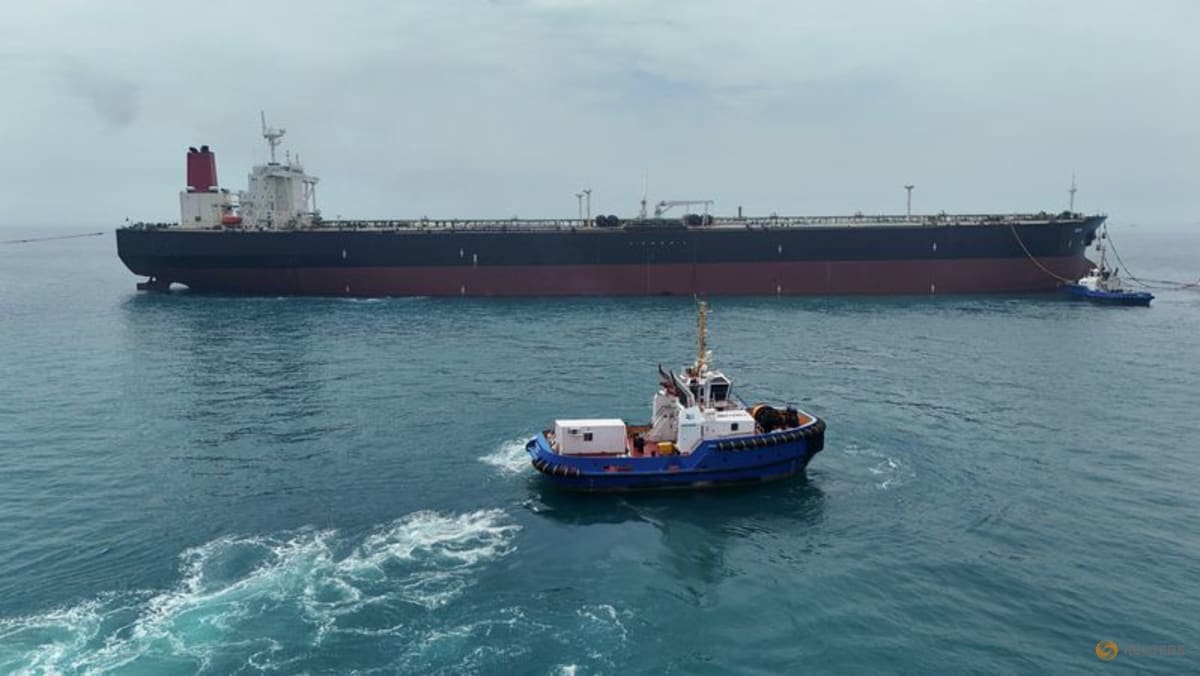
SINGAPORE: Soon after the Middle East conflict broke out in late February, Iran started restricting shipping through the Strait of Hormuz, effectively imposing a naval blockade on a critical chokepoint where around 25 per cent of the world’s seaborne oil passes through.
As the conflict dragged on, the United States also imposed its own blockade of Iran’s commercial ships. In recent weeks, commercial ships belonging to countries not involved in the conflict have been seized, and there were suggestions from both Iran and the US to levy taxes on ships that ply the waterway, which is less than 40km wide at its narrowest point.
Elsewhere, the idea of charging tolls for passage through narrow straits became a topic of discussion.
Indonesia’s finance minister Purbaya Yudhi Sadewa last week suggested that ships passing through the Strait of Malacca could be levied, although the country later affirmed that it has no plans to impose tolls in the strait, which is less than 4km wide at its narrowest point. Commentators and Chinese netizens are also discussing the possibility of “toll booths” in the Taiwan Strait, drawing inspiration from how the Strait of Hormuz has been weaponised by warring parties.
Amid the growing threats to navigational rights and freedoms, countries are now shining a spotlight on a critical piece of international law that governs maritime activities – the United Nations Convention on the Law of the Sea (UNCLOS), and on why the rule of law needs to be upheld.
Underscoring these concerns, the United Nations Security Council on Monday (Apr 27) is also set to meet in New York for a debate on the safety and protection of waterways.
CNA looks at what UNCLOS covers and whether it has been effective as a check against unfettered unilateral actions by large maritime powers.
How did the United Nations Convention on the Law of the Sea come about?
UNCLOS is a set of rules governing the world’s oceans. It allocates rights and legal authority to states, and establishes regulations for the peaceful use of the sea and its resources.
The international law took effect in 1994 after being adopted in 1982, and was the result of a 15-year process beginning with a speech by Malta’s then-Ambassador to the United Nations Arvid Pardo.
In the decades before, oil exploration, fishing and mining activities were taking people far beyond their native shores, and countries were making conflicting claims to parts of the sea.
For example, in 1945, then US President Harry Truman unilaterally extended the country’s jurisdiction over all natural resources on its continental shelf in a challenge to the freedom-of-the-seas doctrine, which limited national rights to a narrow belt of sea surrounding a country’s coastline.
Other countries followed suit, with Argentina claiming its shelf, and Chile, Peru and Ecuador asserting sovereign rights over a larger area, hoping to limit the access for fishing fleets that were operating outside their own borders.
Speaking at the United Nations General Assembly in 1976, Mr Pardo said countries might be tempted to use their technical competence to competitively extend their jurisdiction over selected areas of the ocean floor.
“The consequences will be very grave,” he said then. “At the very least, a dramatic escalation of the arms race and sharply increasing world tensions.”
In the following years, the United Nations Seabed Committee was set up, and a global diplomatic effort was made to regulate and write rules to govern the ocean.
Singapore was one of the architects of the UNCLOS, playing an important role in shaping the provisions on transit passage in straits used for international navigation.
Today, 172 parties have ratified UNCLOS. Countries such as Iran and the US have signed UNCLOS, but have not ratified it.