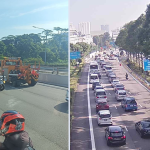
SINGAPORE – Khaya trees introduced here in the 1980s have become a common streetside feature, their dense canopies providing shade and greenery.
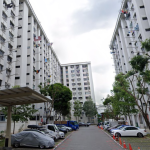
But these trees, along with sea apple trees, are now being felled in HDB estates and other areas, to some residents’ dismay.
Bukit Panjang resident Christina Lee, 45, observed the Khaya trees in her HDB estate being cut down last month. She said she was unaware of the reasons behind their removal, although she had surmised that they were removed out of safety concerns.
“Since the trees were quite old, it’s a bit heartbreaking to see them go,” she added. “It’ll take a very long time for the trees to grow to that size.”
Khaya trees, also known as Senegal mahogany, are native to Africa. They were first used for roadside planting because of their rapid growth rate and ability to tolerate dry urban environments. They can reach 30m tall.
National Parks Board group director for streetscape Oh Cheow Sheng said Khaya (Khaya senegalensis) and sea apple (Syzygium grande) trees have been observed to be susceptible to basal rot – a fungal disease that causes decay at the base of a tree.
Damage to a tree’s anchoring roots can lead to tree failure – the breakage of the trunk, branches or roots – which may damage the tree’s surroundings or injure passers-by.
Such trees are now being removed in HDB estates and spaces managed by NParks for safety reasons.
“Planted decades ago, many of these trees have also outgrown their growing spaces, which now limits continued root growth and affects their long-term health,” Mr Oh said, in response to queries from The Straits Times.

Khaya trees, also known as Senegal mahogany, are native to Africa.
ST PHOTO: JASEL POH
“Trees that show signs of disease, are in poor health or structural condition, or are growing near areas with high human traffic or in limited growing spaces are prioritised for replacement.”
Associate Professor Adrian Loo, deputy director at the NUS Centre for Nature-based Climate Solutions, explained that as the natural habitat of Khaya trees is drier than Singapore, the trees may become susceptible to disease or vulnerable to tropical storms as they age.