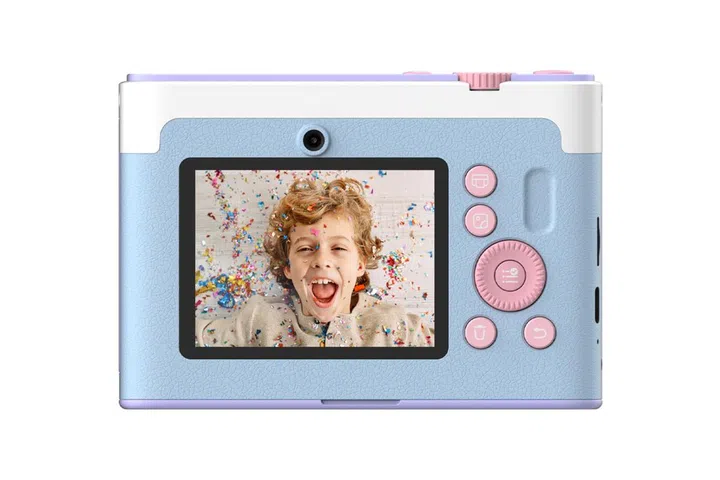
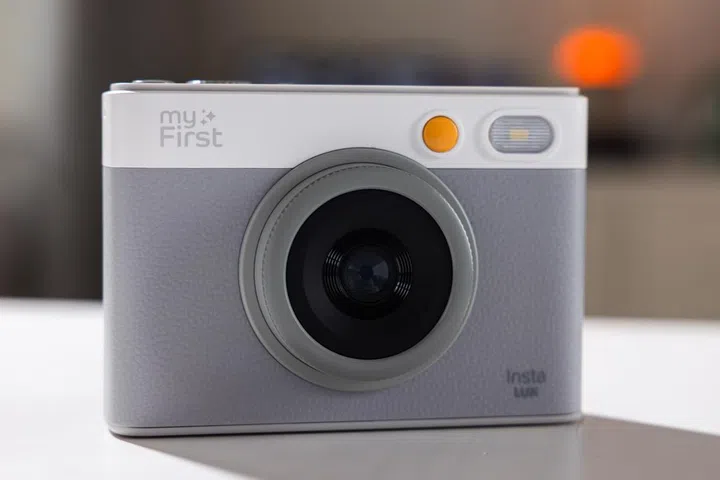
Instant cameras have enjoyed a sustained revival over the past decade, driven by a generation of young people who want something physical to hold alongside their digital libraries. Fujifilm’s Instax range has largely defined that revival, and the charm of a print that develops in your hand has proven remarkably durable as a concept. But charm and durability are different things, and it is the durability question that Singapore homegrown kids tech brand myFirst is directly addressing with its latest launch.
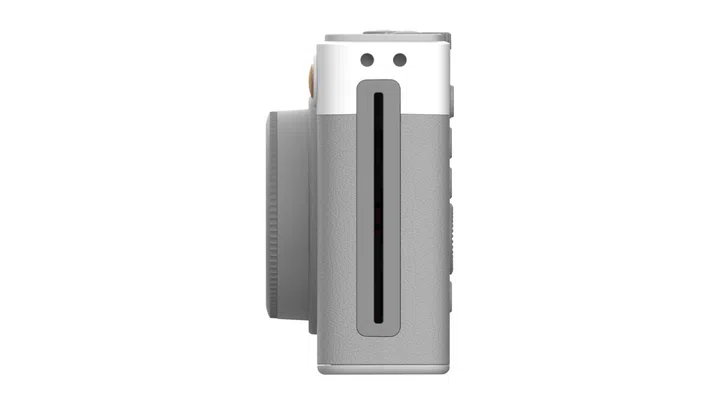
The myFirst Camera Insta Lux, first introduced at CES 2026, is the brand’s most advanced instant camera to date. At S$239, it is positioned firmly in the family and young creator market, and its headline claim is straightforward, in that its dye-sublimation printing technology produces vibrant, waterproof, fingerprint-resistant prints that can remain vibrant for decades.
Why printing technology matters more than you might think
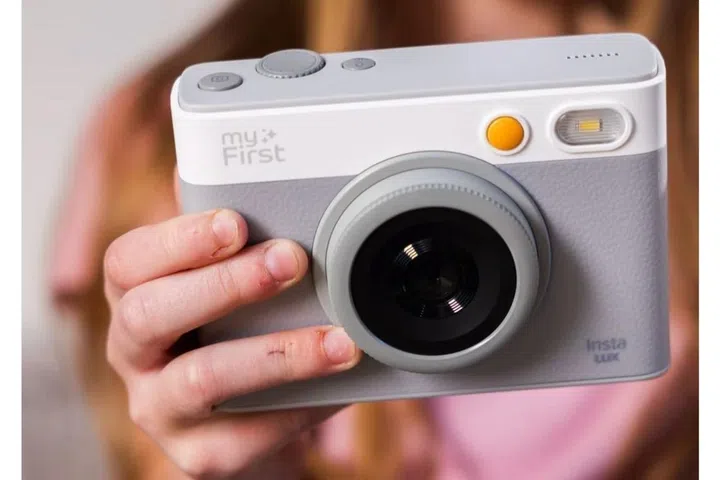
Instant photography now has a new option.
Photo: myFirst
The distinction between how instant cameras produce their prints is not merely a technical detail. It is the central reason some prints end up yellowed and faded in a drawer while others survive years of handling in wallets, scrapbooks, and phone cases. To understand what myFirst claims the Insta Lux does better, it helps to understand what it isn’t.
Traditional instant cameras, such as the Fujifilm Instax range and Polaroid, use silver halide imaging technology. Silver halide paper contains light-sensitive silver halide crystals and dye couplers suspended in layers of gelatin. When this paper is exposed to light, it triggers a chemical reaction that develops into a full-colour image without a drop of ink. Rather than laying down individual dots of colour, the silver halide process produces a smooth, continuous tone known as contone, and the results are great at recreating natural skin tones, shadows, highlights, deep blacks, and brilliant whites.
Silver halide prints can typically withstand deterioration caused by light exposure for approximately 60 years when properly processed and stored, giving them an archival quality. Since the dye is embedded in the paper rather than deposited on top, the print is less likely to smudge and offers some degree of scratch and water resistance.
The limitations, however, are real. Silver halide prints rely on a photochemical development process that requires the right temperature and humidity conditions, and the film itself is sensitive to light exposure before and during printing. Every frame pressed consumes a unit of film regardless of the result, and the cost per print adds up quickly for families and young photographers who take many shots to get one they like. The prints also require careful storage away from light and moisture to achieve their stated longevity.