Xiaomi 17 Ultra review: Leica cameras & premium features

Xiaomi 17 Ultra review: Leica cameras & premium features


  1. 1. Design, Display, Audio
  2. 2. Refined and even more iOS-like
  3. 3. Imaging performance
  4. 4. Benchmark Performance
  5. 5. Battery Life
  6. 6. Conclusion
  7. 7. Xiaomi 17 Ultra pricing and availability

The Xiaomi 17 Ultra is Xiaomi’s flagship smartphone for 2026, and it certainly delivers a premium experience. 

Equipped with the newest Qualcomm Snapdragon 8 Elite Gen 5, LPDDR5X RAM and UFS 4.1 storage, the excellent hardware is powered by a larger 6,000mAh silicon-carbon battery that should offer improved battery life.

Running on the new HyperOS 3, the 17 Ultra offers new AI features that we’ll touch on below, as well as a smoother and more refined experience.

Additionally, Xiaomi has launched a special Leica Leitzphone edition that is essentially the 17 Ultra, but with more premium materials and a few software tweaks. We’ll cover the Leitzphone in this review as well, but most of our talking points will be based on the Xiaomi 17 Ultra.

Xiaomi thinks that these improvements to the Xiaomi 17 Ultra warrant a slight price increase to S$1,799, but do they? Let’s find out.

Design, Display, Audio
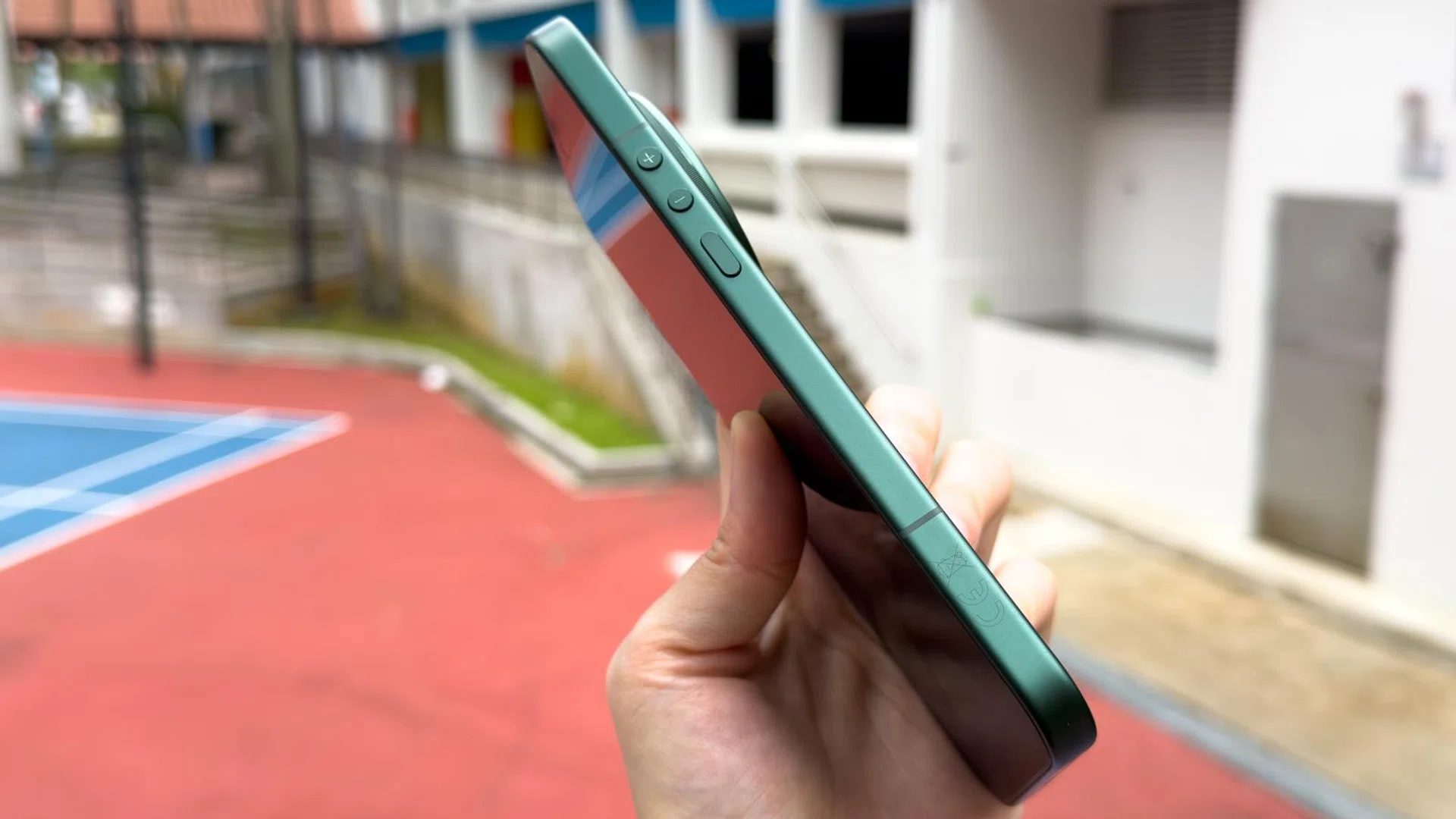
Xiaomi 17 ultra

The flat display and back makes the phone feel better in the hand

Photo: HWZ

In a big change, Xiaomi has left the curved screen and back in the past as it joins us in the future with a flat display and rear glass panel. This design choice can be subjective, but we think it makes the 17 Ultra feel nicer in the hand. 

Xiaomi has managed to reduce the thickness and weight of its flagship smartphone from last year’s, with the 17 Ultra now just 8.29mm thick and weighing 219g. The 1-inch type main camera sensor does contribute to the size, making it larger than most competitors.
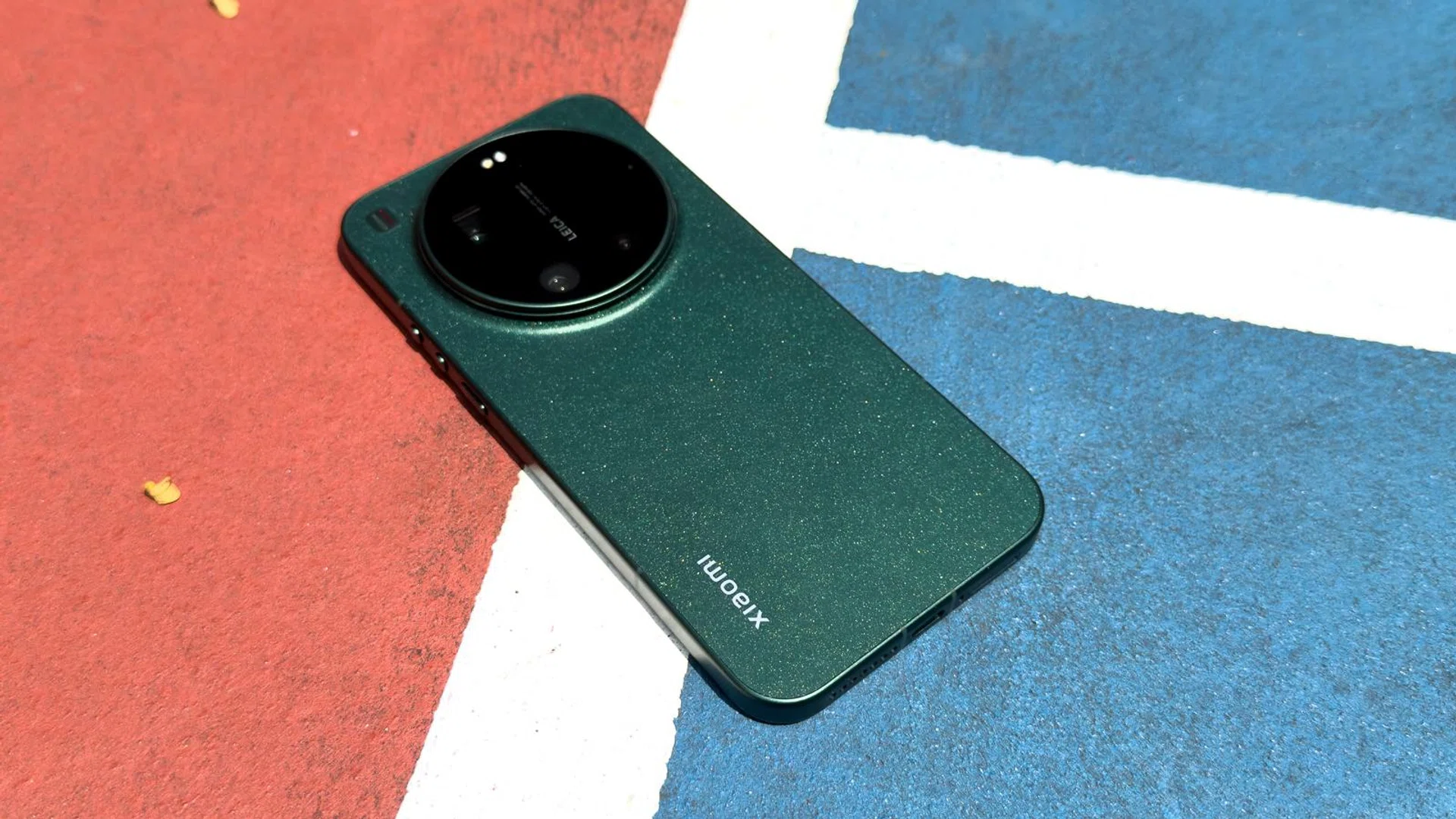
Xiaomi 17 Ultra

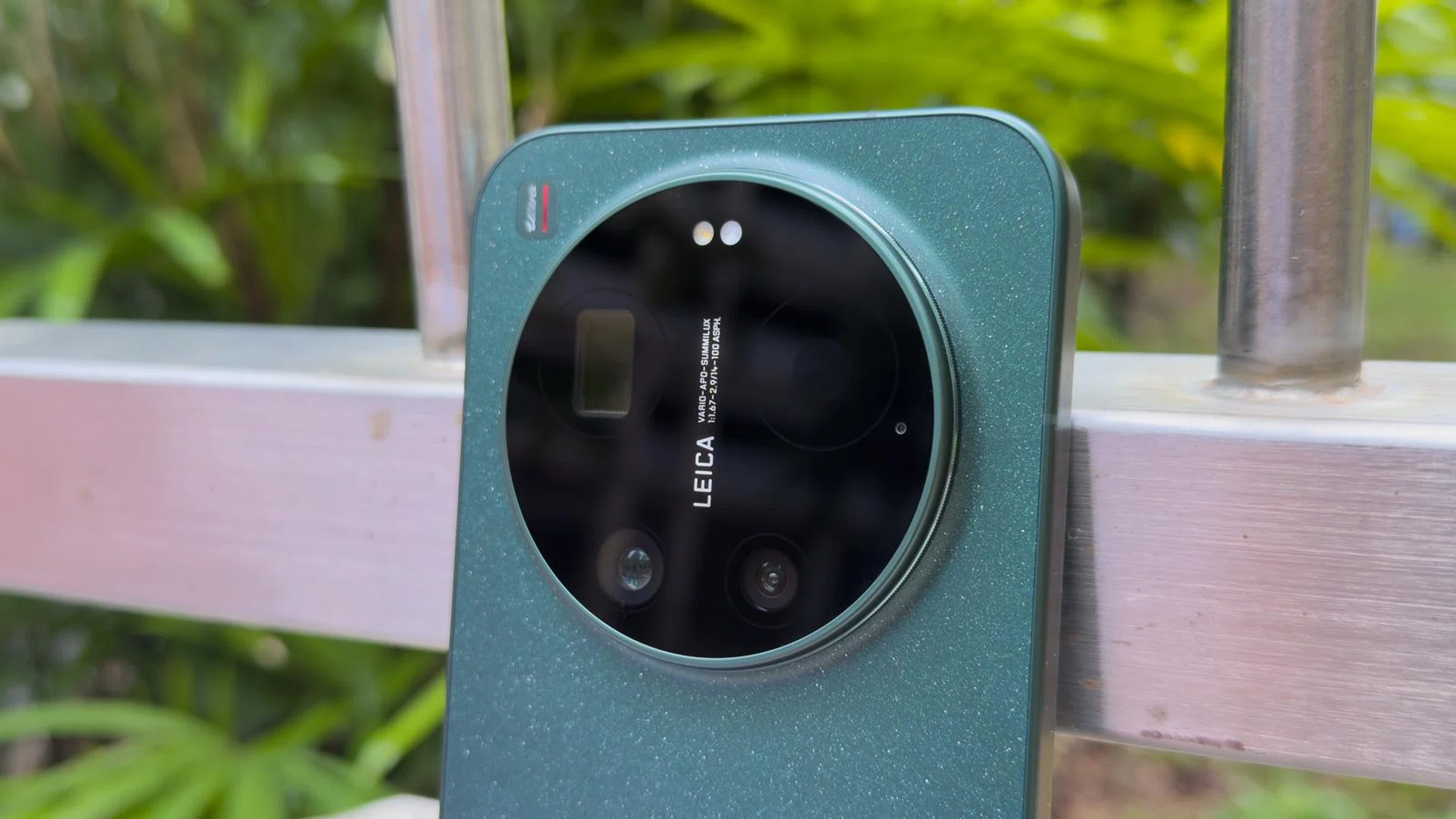
Gorgeous Starlit Green colourway

Photo: HWZ

The Starlit Green colourway we have is stunning, with flecks of gold on the back that resembles a starry sky. The camera bump’s diameter is ever so slightly smaller as well, and thanks to the larger width and flat back of the phone, the bump doesn’t feel like it’s pushing right up against the sides of the phone.

The larger dimensions allow for a new 6.9-inch HyperRGB OLED display that can achieve a peak brightness of 3,500 nits and supports a 1-120Hz refresh rate as well as HDR10+ and Dolby Vision. The screen is protected by Xiaomi’s new Shield Glass 3.0, which is supposedly 30% more drop-resistant.

The phone is still IP68 dust and water resistance rated, so there’s no issue with bringing this to the beach or using it under rain. 

Unlike last year, the new stereo dual speakers on the Xiaomi 17 Ultra are balanced and can handle audio quite deftly. That being said, we’ll still recommend a pair of true wireless earbuds to enjoy music properly. 
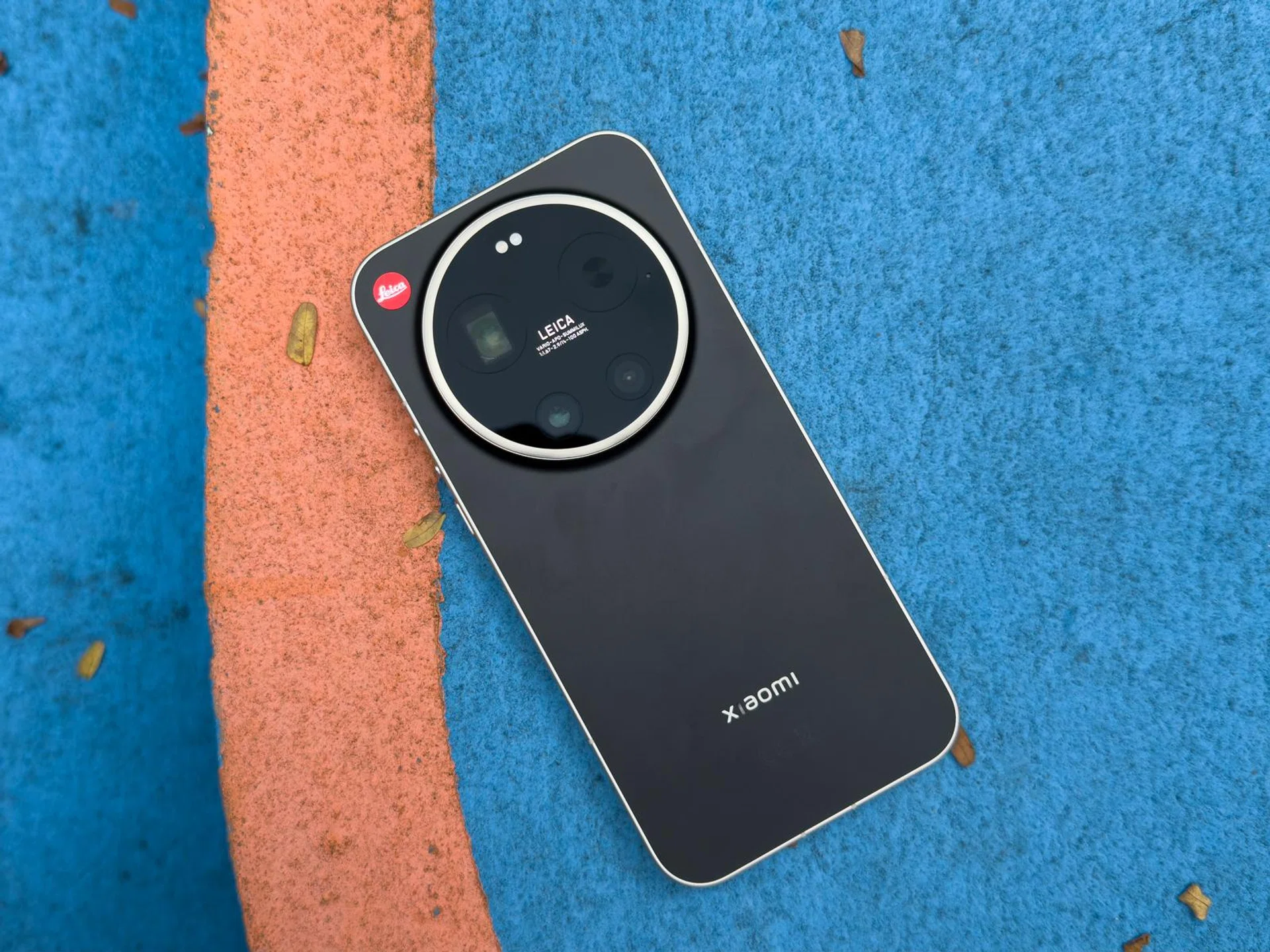
Leica Leitzphone powered by Xiaomi

Leica Leitzphone powered by Xiaomi

Photo: HWZ

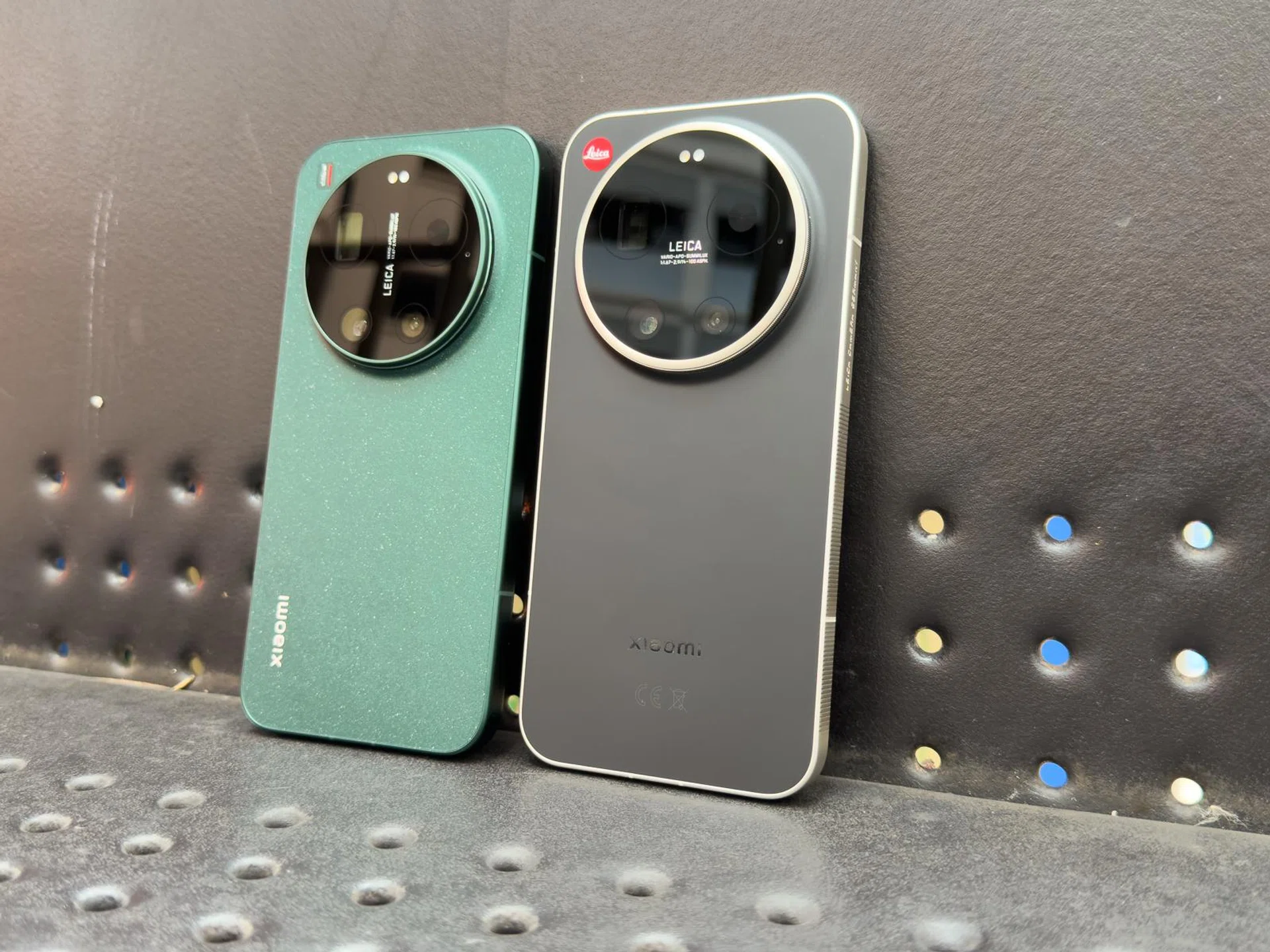
As for the Leitzphone, it comes in a single colour option: silver aluminium sides and a matte black glass back. It’s highly reminiscent of a Leica camera, and we find it more aesthetically pleasing than the China version, which is called the Xiaomi 17 Ultra by Leica. 
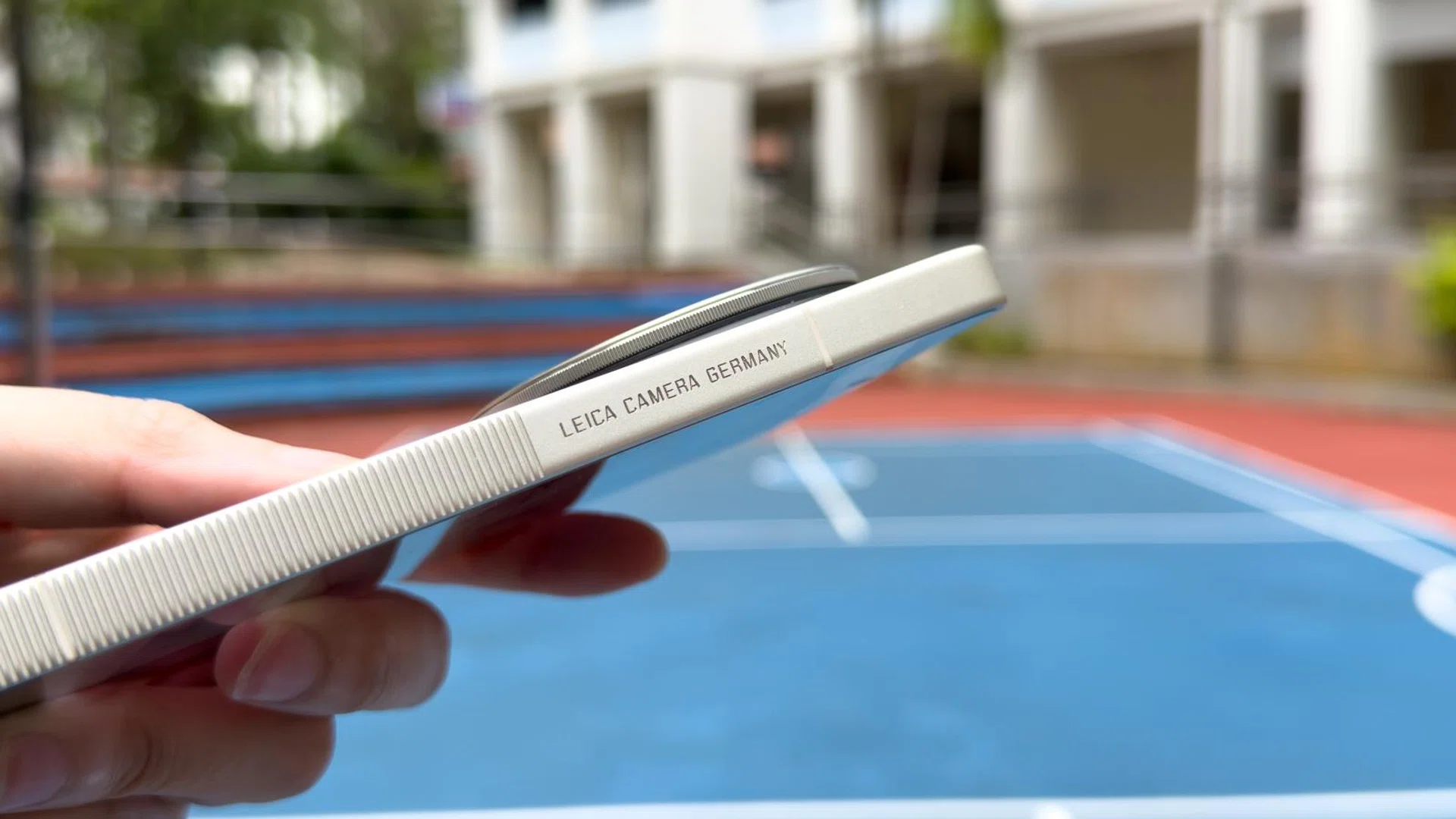
Leica Leitzphone powered by Xiaomi

This phone feels excellent in the hand.
The knurled sides offer excellent grip, and small touches like the engraved “Leica Camera Germany” on the side makes this phone feel more premium. The internal hardware of the phone is identical to the Xiaomi 17 Ultra, aside from the addition of a security chip to enable CAI Photo Authenticity Protection technology, which applies a digital signature to each photo to indicate it’s not an AI creation.

Refined and even more iOS-like

HyperOS 3 is finally here, and Xiaomi has taken some major design cues from Apple’s iOS. 

One such new feature is the Hyper Island, which offers bite-sized information from apps like Timer, Calendar, Music and more. Even third-party apps like Apple Music are supported, which is excellent.

Xiaomi HyperAI features also get an upgrade, with AI Writing now available in third-party apps like WhatsApp and Instagram thanks to the new AI Writing Assistant feature that is able to scan content on the screen to offer writing guidance for captions or replies. 

I tried it out with a photo of a $50 note and the results were surprisingly decent, even if it did read very much like an AI-generated caption.

There’s also AI Search, which uses natural language search to find photos, files, recordings, notes and messages. It’s a bit of a shame that it’s unable to be used with he Calendar app, since I’d have loved to get a quick summary of my upcoming week’s schedule. 

Some of the searches don’t quite work as expected, however. I saved some upcoming flight details in a note, specifically titled “Flight details Barcelona”, and the search bar couldn’t pull it out. However, when I simply typed “Barcelona”, the details inside the note was shown. 

Most of the other AI features are similar to what Xiaomi offered in the 15 Ultra, so we won’t touch on them too much. 

Imaging performance

Xiaomi 17 Ultra

New Leica-branded cameras on the back

Photo: HWZ

Unlike its predecessor, the Xiaomi 17 Ultra has just three cameras. The two telephoto cameras from before have been combined into a single telephoto camera that’s able to cover the 75mm to 100mm focal range with continuous optical zoom. 

All three cameras are Leica-powered, thanks to the brand’s continued partnership with Leica, and the cameras are:

  • 50MP main camera, 1-inch Light Fusion 1050L sensor, f/1.6 aperture, OIS, 23mm equivalent focal length
  • 50MP ultrawide camera, f/2.2 aperture, 115° field-of-view, 14mm focal length
  • 200MP telephoto camera, f/2.39-2.96 aperture, OIS, 75-100mm focal length

We’ve covered the cameras and showcased sample shots in an earlier feature, so make sure to check that article out as the shots below mainly serve to reinforce our opinion.

Shots out of the main camera are excellent, and this time around, we actually preferred shooting in the Leica Vibrant colour profile. There’s plenty of detail in telephoto shots, and low light shots are handled well with good exposure and accurate colours.

Portraits are the highlight of this camera system, as we’ve shown before, and if you take a lot of photos in portrait mode, you’ll definitely enjoy the shots coming out of this phone.

Leica Leitzphone powered by Xiaomi

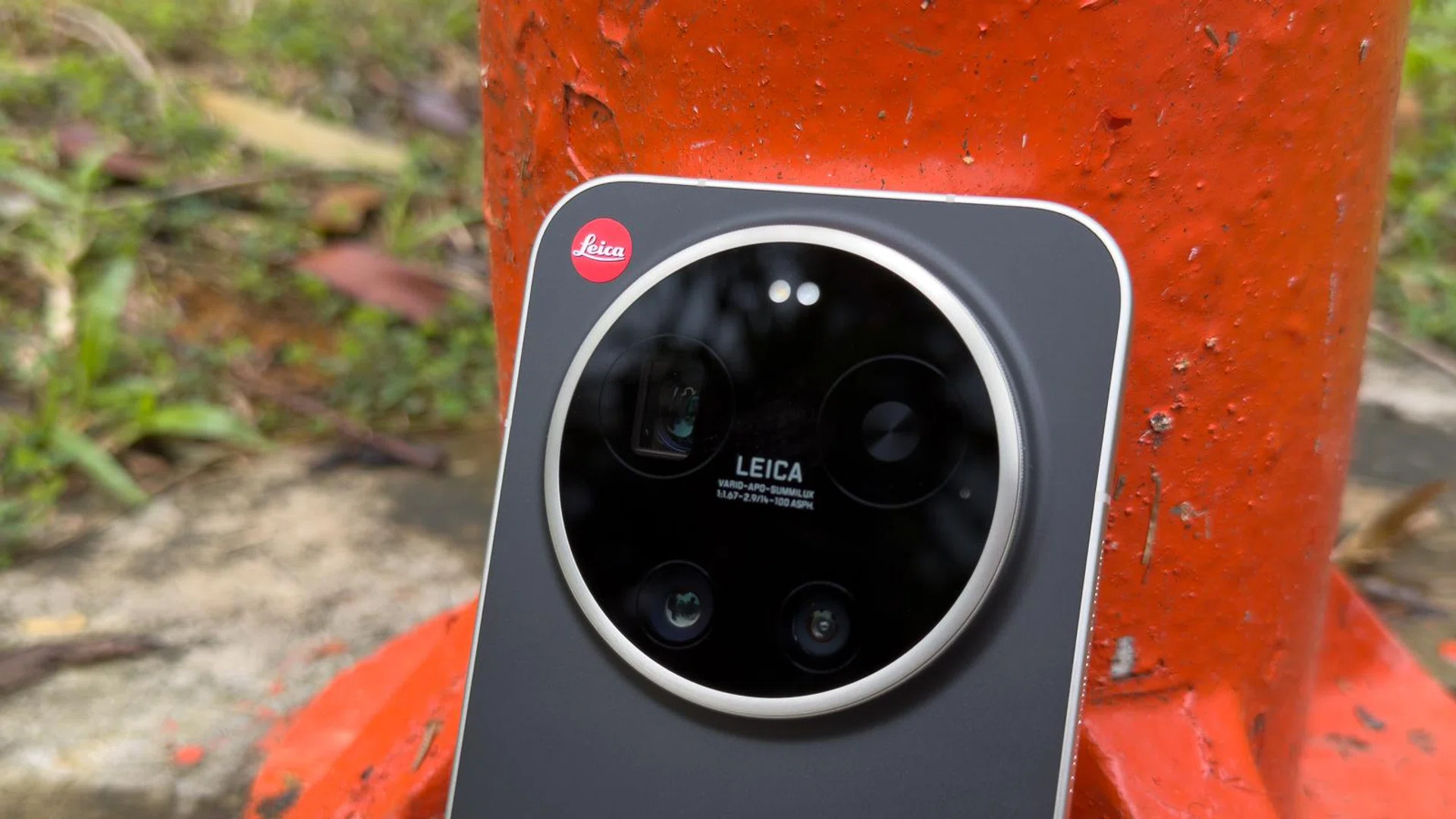
That iconic red dot logo finally makes its way to a Xiaomi smartphone

Photo: HWZ

The Leitzphone has the exact same cameras as the Xiaomi 17 Ultra, although it comes with a camera ring on the rear that can launch the Camera app and customize settings such as zoom level, EV, shutter speed, filter effects, or bokeh intensity. 

Additionally, it comes with a Leica Essential mode which uses presets to achieve the look of the Leica M3 (with Monopan 50 film) or Leica M9 cameras. 

Aside from that, the Leitzphone produces very similar photos out of the main camera mode as the standard Xiaomi 17 Ultra.

Benchmark Performance

Having partnered with Qualcomm for so many years, it’s no surprise that Xiaomi’s flagship smartphone will use the flagship Snapdragon 8 Elite Gen 5 processor. Other flagship phones will also be using this chip, and we expect the 17 Ultra to perform similarly to those phones in our synthetic benchmarks.

The details on how we benchmark Android phones can be found here.

Disclaimer: Due to testing the phone before the official release, we were unable to do the 3DMark benchmarking. The gallery below will be updated with the 3DMark results once we are able to do the benchmark.

We did the benchmarks for both the Xiaomi 17 Ultra and the Leitzphone, and the results were similar enough that we didn’t see the need to have two separate entries for them. 

As expected from the Qualcomm Snapdragon 8 Elite Gen 5, the performance of the Xiaomi 17 Ultra is fantastic. It keeps pace comfortably with the other two flagship devices (Honor Magic8 Pro and Vivo X300 Pro) that are using the same processor, and we can expect these to be some of the top performing phones in 2026.

Normal usage is excellent as well, with no lag, stutters or any sort of issues when browsing the web or playing intensive games like Where Winds Meet.

Battery Life

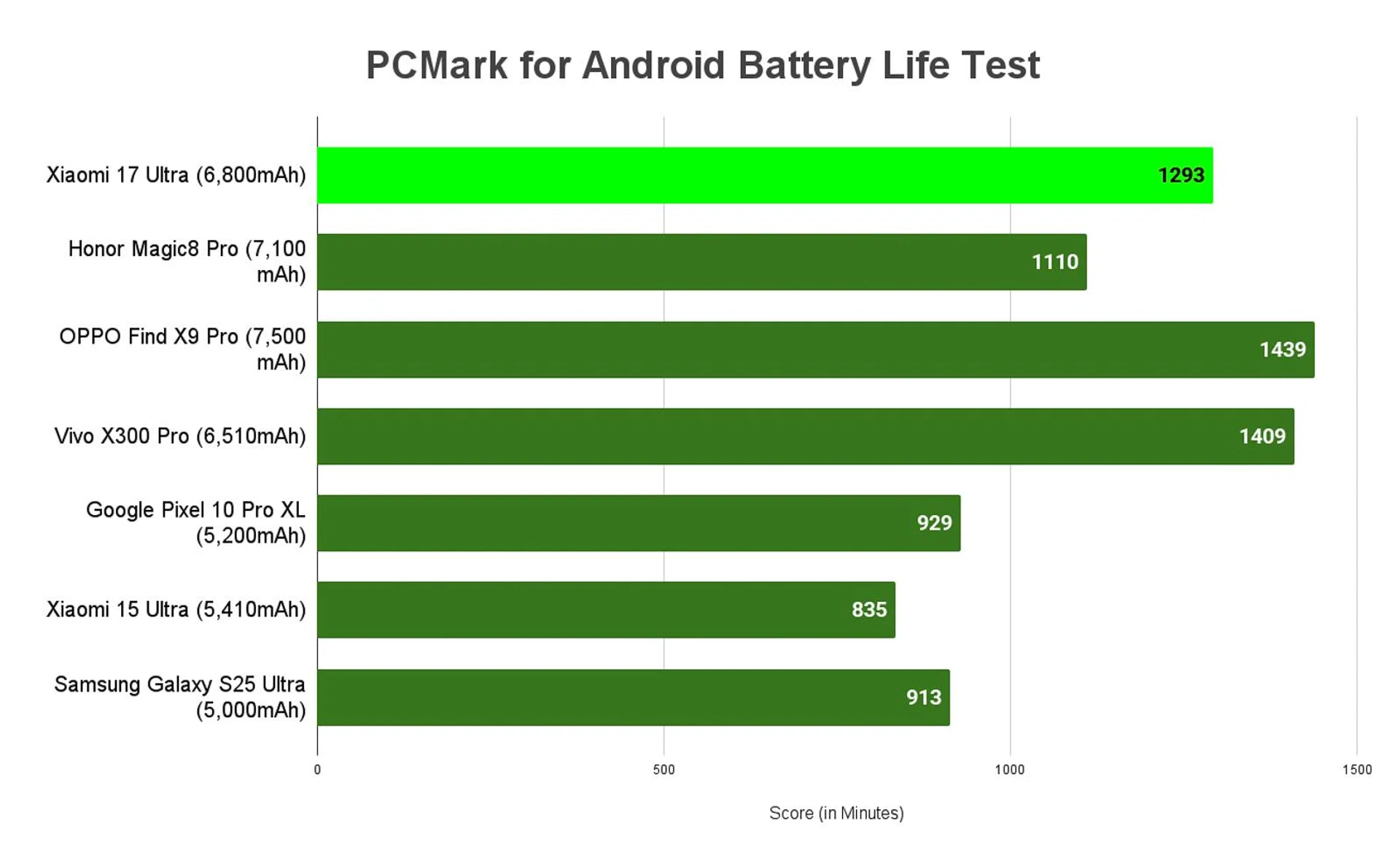
Our battery benchmark uses PCMark for Android’s Work 3.0 Battery Life, with results shown in minutes. This controlled benchmark simulates real-world usage, such as web and social media browsing, video and photo editing, parsing data with various file formats, writing, and more. The test starts at 100% and ends with 20% left on the device.

Disclaimer: There are two different global models of the Xiaomi 17 Ultra. The one we have on hand is the Europe version, which comes with a 6,800mAh battery. The model sold in Singapore only comes with a 6,000mAh battery. We will update our battery benchmark chart with the Singapore model once we are able to test it.

Battery life in minutes.

Photo: HWZ

The battery capacity has increased significantly this year, between 10-25% depending on the model, and it shows in the battery benchmark as well. 

This improvement also correlates to longer battery life during normal daily usage. Therefore, even though the charging speeds didn’t get a bump from 90W wired, we’re still counting it as an overall win for Xiaomi in this area. In fact, Xiaomi has dropped the wireless charging speeds down to 50W, but we’re still not letting that bum us out.

The Singapore retail sets will come with a 100W charging brick, although our review unit did not. Therefore, we tested it with a third-party charger and managed to achieve a 50% charge in about 28 minutes, with a 100% charge only taking 74 minutes. 

Conclusion

Xiaomi 17 Ultra, Leica Leitzphone powered by Xiaomi

Left to right: Xiaomi 17 Ultra, Leica Leitzphone powered by Xiaomi

Photo: HWZ

Some people might nitpick at Xiaomi’s decision to charge an extra S$100 for the Xiaomi 17 Ultra, but we think it’s a reasonable ask when considering the amount of upgrades in this phone. Additionally, Xiaomi has managed to keep prices the same over the last two years. If you really can’t bear to fork out that extra S$100, all you have to do is take advantage of the early bird discount to pay S$1,699. 

Whether it’s the new and more refined HyperOS 3, the improved Leica-branded cameras or the excellent hardware inside, Xiaomi has continued to do a lot of things right. 

But this year, there are even more competitors to fight against. While the Xiaomi 17 Ultra continues to compete against the Honor Magic8 Pro, the Honor phone is still S$300 more affordable while sporting the same processor, a larger battery and faster charging speeds. On the plus side for Xiaomi, the 17 Ultra has the Magic8 Pro beat when it comes to detail retention in both telephoto and low-light shots.

However, the 17 Ultra comes up against a very tough opponent in the Vivo X300 Pro, thanks to the excellent Zeiss cameras. Here, it’s really a personal choice on what sort of colours and style you prefer, whether it’s the slightly more AI-processed and more accurate colours of the X300 Pro, or the detailed and more powerful low-light and telephoto performance of the Xiaomi 17 Ultra. 

When it comes down to it, your choice will mainly be up to your own personal preferences for the design and software, since all three phones are excellent options. But we feel Xiaomi has an excellent phone on their hands, and we’re pleased that they’ve managed to, yet again, improve. 

Xiaomi 17 Ultra pricing and availability

The Xiaomi 17 Ultra officially retails at S$1,799 (16GB RAM and 512GB storage) in the Black, White and Starlit Green colourways on Xiaomi’s official online store and official platforms like Shopee and Lazada. The Leica Leitzphone powered by Xiaomi will cost S$2,299, with limited units available in Singapore.


Read Full Article At Source