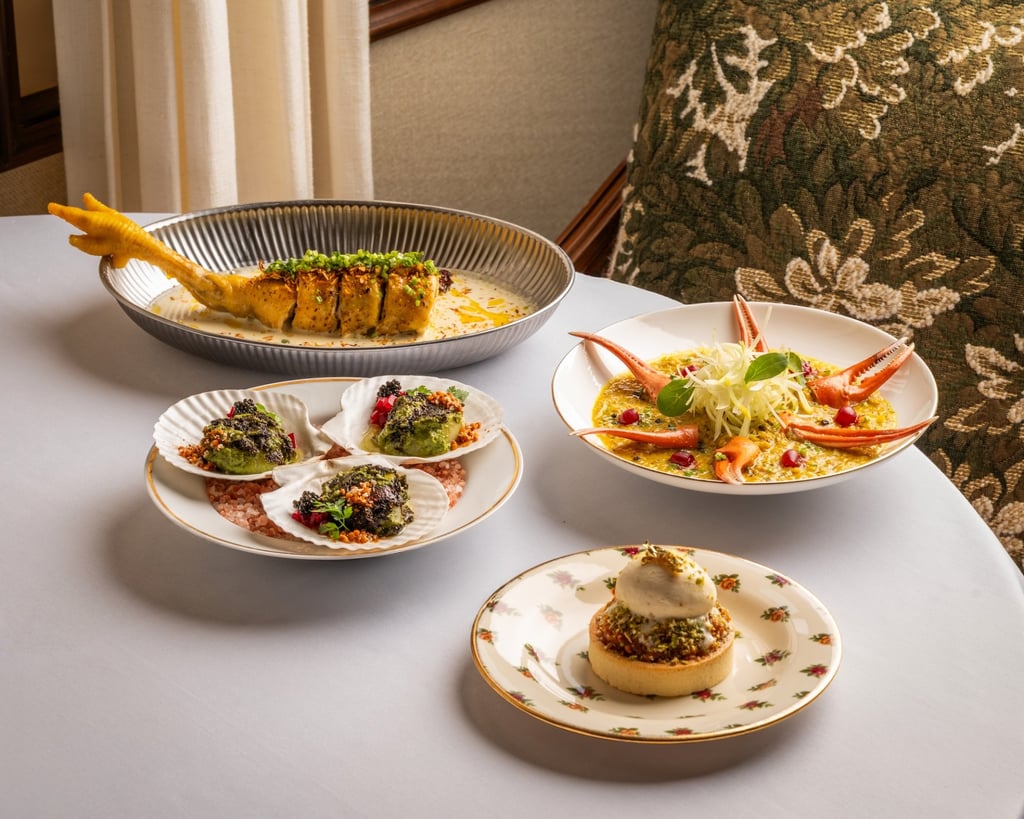
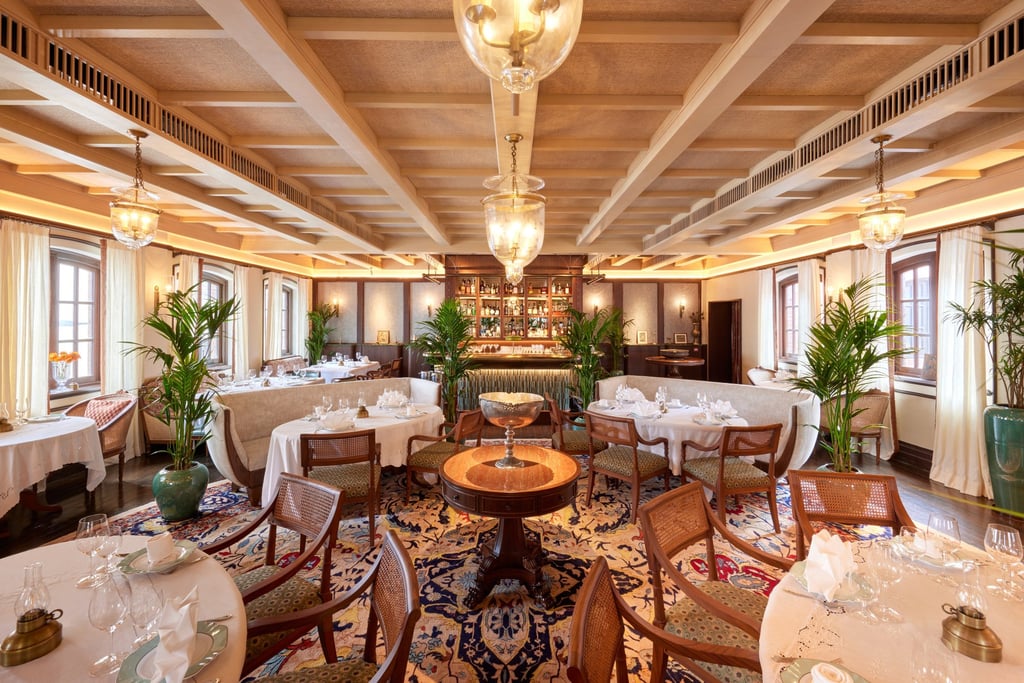
Housed in the former Central Magistracy, Prince and the Peacock is one of Hong Kong’s most striking stages for Indian cuisine, pairing grand colonial architecture with a menu that looks beyond clichés to the royal courts and coastal regions of India. At its helm is chef Palash Mitra, long admired for his refined, flavour-forward take on Indian food and seafood dishes. His current philosophy is distilled into a dish that’s rooted in tradition yet shaped by Hong Kong, and is as visually composed as anything from a European fine-dining kitchen: the crab claw porichettu.
“This dish is all about simplicity, authenticity and deliciousness. It captures the essence of both India and Hong Kong in a unique and memorable way,” Mitra says. The foundation is a porichettu sauce he knows intimately from travels through South India, especially coastal Kerala. “I have a deep appreciation for the porichettu sauce that serves as the foundation of this dish. The sauce’s simple yet intricate composition captivates me, as I have savoured various interpretations of it during my travels to the region,” he explains.
When he chose to build a crab dish around it, he decided to layer two types of crustacean: robust local mud crab for depth and texture, and “I opted for snow crab claws to add a dramatic touch, enticing diners to uncover the explosion of flavours hidden within the curry. The sweetness of the snow crab presents a delightful contrast to the bold, tangy and spicy crab curry below.”
He begins by cleaning and cutting locally sourced mud crabs into pieces, then marinating them with sweet matsuba snow crab claws, finely chopped Poona onions, cold-pressed coconut oil and fermented palm (toddy) vinegar, letting “the flavours meld for about 30 minutes” before cooking. It’s a deceptively simple start that sets up the layers to come.