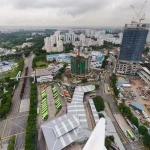
SINGAPORE – More than 52ha of forested land and streams near Nanyang Technological University is slated to be cleared for the expansion of an industrial district in Jurong.
JTC Corporation said on Dec 1 that the clearance is for the development of the CleanTech Park and Bahar precincts of the
620ha Jurong Innovation District, a five-precinct advanced manufacturing hub
that is being progressively built since 2019.
The 116ha project site for the CleanTech Park, which will be Singapore’s first eco-business park, and Bahar is located along Jalan Bahar, near the PIE intersection.
Larger than Thomson Nature Park, the forested area comprises a mix of mature forest patches, vegetation that has recolonised abandoned kampungs and plantations, as well as forest streams, a rare habitat here that cannot be easily re-created.
A total of 56 flora and fauna species significant for conservation are expected to be affected, including the heavily trafficked Sunda pangolin and the harlequin butterfly, a reddish brown insect adorned with silver spots on the brink of extinction in Singapore.
The size of the area was tabulated by The Straits Times based on figures in an environmental impact assessment commissioned by JTC that was released for public consultation on Dec 1.
The report, prepared by consultancy Aecom Singapore, proposed that about 14.5ha of the natural areas be retained as parks, as well as other measures to limit environmental damage caused by the project, which cuts into a key ecological corridor here.
These spaces will preserve the only known active breeding hot spot for harlequin butterflies on mainland Singapore, and protect trees that harbour a group of non-synchronous bent-winged fireflies and roosting spots for bamboo bats considered to be nationally vulnerable.

A male harlequin butterfly.
PHOTO: KHEW SIN KHOON
On the other hand, the total loss of the area’s forest patches and streams – when combined with other concurrent projects like HDB’s Tengah town and the nearby MRT station – will result in a major impact on flora and fauna that depend on these areas for survival, the report said.
project area
cuts into one of Singapore’s four key ecological corridors – a chain of forested areas used by fauna to move between the Western Catchment forest and Tengah forest.
The loss of this corridor would create a “bottleneck” for wildlife moving between these two biodiversity hot spots, the report said.
This will be especially detrimental for forest-dependent species that rely on the linked habitats to move around, such as the harlequin butterfly, Sunda pangolin and leopard cat.