Kengo Kuma on Singapore HDB flats and architecture

Kengo Kuma on Singapore HDB flats and architecture


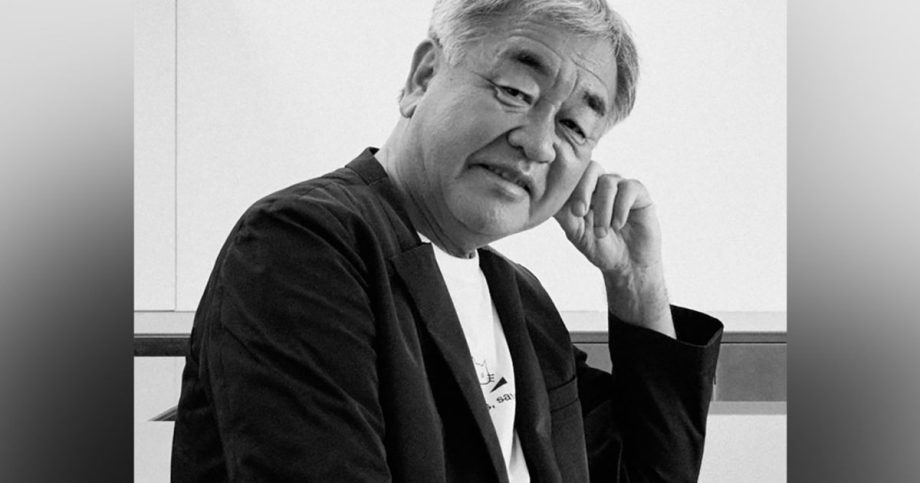
SINGAPORE – Kengo Kuma, one of Japan’s primo active architects, is a fan of the ordinary. Hence, his subdued contribution to apparel giant Uniqlo’s storied T-shirt catalogue: a spray of wildflowers, tied together by a thin bow.

The graphic, done by the 72-year-old designer of the Tokyo Olympic stadium, is rendered in a single earthy brown colour. Look closer and one realises the blooms are actually chalk marks, more like the casual scratchings of a child than a draughtsman.

“The T-shirt (as a garment) is connected with the love for ordinary life and that’s why I joined this Uniqlo project,” Kuma told The Straits Times on a call from his Tokyo office.

His shirt ($19.90) is part of Uniqlo’s Peace For All charity line, which donates all sales proceeds to organisations against violence.

The Japanese brand brings “gorgeousness” to normal people and the wildflower bouquet is a symbol of that kind of mundane beauty, Kuma said.

“Anyone can pick flowers from the field to show their love for their friends. I remember the day I presented one such bouquet to my girlfriend when I was a kid. That kind of experience can be shared with everybody.”

The chalk scribbles represent his most used tool as an architect who still designs by hand. “I don’t use the computer at all, the lines are too artificial,” he added.

Kengo Kuma Uniqlo Peace For All T-shirt close-up ($19.90).

An up-close look at Kengo Kuma’s Uniqlo Peace For All T-shirt ($19.90).

PHOTO: UNIQLO

The doyen visited Singapore in October for Uniqlo’s Peace For All event, but was unable to attend due to illness.

He is familiar with the city-state, having designed event venue Whitestone Gallery and two forthcoming high-profile sites: the Founders’ Memorial (co-designed with Singapore’s K2LD Architects) and a 190m-tall, 30-storey redevelopment of the former Tanglin Shopping Centre, which will house a theatre, museum and mall, among others.

Kuma masterminds big buildings, then, and his best-known work – the timber superstructure that is Japan National Stadium – ranks among the country’s largest venues.

But his favourite Singapore buildings are the strikingly ordinary old Housing Board blocks.

He even knows the housing body’s 1960 birth year. “At that time, Singapore was not a rich country, but Lee Kuan Yew thought of ordinary life as the basis of the country. The HDBs of that period are very unique and the public spaces in those buildings very rich,” said Kuma.

He is particularly ecstatic about shared spaces. “Apartments now have no connection with the community. They are big, private spaces that are totally separated for perfect privacy. I think that is not the life of humanity. The life of humanity should be part of the community,” he added.

Kuma, whose wife is a Japanese professor researching Singapore’s public housing, joked he might be considered a kind of “professional of HDB”.

Integrating a theatre and museum into the recently announced towering Tanglin building is a way of replicating the human core he so admires in early HDB flats. “Without a cultural function, tall buildings destroy the community. Culture can be the bridge between the community and tall buildings,” he said.

Artist’s impression of a new 1,000-seat theatre and contemporary art museum, slated to open at the yet-to-be-named redeveloped Tanglin Shopping Centre by 2030.

An artist’s impression of a new 1,000-seat theatre and contemporary art museum, slated to open at the yet-to-be-named redeveloped Tanglin Shopping Centre by 2030.

PHOTO: PACIFIC EAGLE REAL ESTATE

Skyscrapers are a violence on the “intimate and vibrant” Asian city, but Kuma is countering that with his philosophy of makeru kenchiku (“defeated” architecture), which aims to dissolve into the surroundings rather than dominate the landscape.

For the Orchard Road behemoth slated for a 2030 opening, that means a facade of his signature material, wood, “embraced” and “enveloped” by Singapore’s signature, greenery, said Kuma.

His Whitestone Gallery design features an indoor canopy of wood.

“Because of the economy, we need to have tall buildings, but even then, we can bring (in) a public community. Without community, the city will be a dead place.”

The Founders’ Memorial will have a leafy top and wooden interior, the opposite of the customary “heavy stone” that symbolises permanent legacy, said Kuma.

Instead of sticking out, it will merge with its environment at the Bay East Garden at Gardens by the Bay. The intention is for the landmark to “disappear into the park”, to violate the domineering impulse of monument architecture, he said.

“I think it’s a new kind of monument in the history of monumental buildings in the world.”


Read Full Article At Source

Share. Save. Don't Miss The Buzz: FacebookRedditTelegramWhatsApp

Leave a Reply

Your email address will not be published. Required fields are marked *