Cooperation is the best hope to anchor and unlock potential of region’s AI economy
THE prospects of artificial intelligence attract interest and investment, but also concerns and contestation.
Demand for data centres has surged, with some stakeholders competing to attract them and others protesting against them. Can we reap the benefits of this new driver of the global economy while avoiding the pains?
Singapore and its nearest neighbours have a particular advantage in serving not just Asian markets, but also global ones. Submarine data cables connecting Asia and the wider world converge on Singapore, and extend to Johor and Indonesia’s Riau Islands.
This proximity enables low-latency connections for advanced computing and digital services, giving the region a head start in developing an AI economy.
But capturing the opportunity requires more than infrastructure, technology and investment. It needs a cross-border ecosystem that includes people, livelihoods, energy and water, to optimise the benefits and move forward sustainably.
Shared growth across borders
Cross-border economic activities are already considerable; for instance, efforts to create the Sijori Growth Triangle – a partnership between Singapore, Johor and Indonesia’s Riau Islands – date back to the 1990s.

Today’s opportunities are qualitatively different. Unlike the goals of the Sijori scheme, this is no longer simply a question of leveraging more land and labour.
While submarine cable connectivity provides an advantage, the AI economy involves much more than connecting and storing data or computing. It extends to research, software, cloud services and applications in finance, healthcare, manufacturing, logistics and energy.
No single Asean country has all these capabilities at an optimal scale. But Singapore, Johor and the Riau Islands together offer many of them.
SEE ALSO

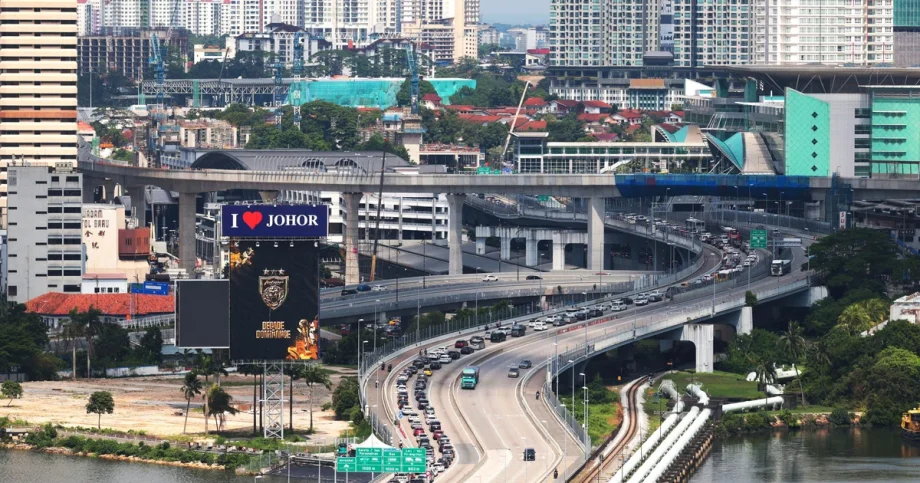
Singapore is strong in research, technology, finance and professional services. Johor offers manufacturing capabilities, industrial space and expanding computing infrastructure. Batam combines an established industrial base with growing digital infrastructure and access to the wider Indonesian market.
Together, they could support AI engineering, specialised services and advanced industries, creating higher-value activities and skilled employment across all three locations. They could develop industries and services that none can achieve alone.
Resource and sustainability considerations
Growing the AI economy and data centres will require substantial resources, especially energy and water. Unless managed well, these demands could strain existing supplies, affecting other industries and households.
Consider electricity. Singapore already has more than 1.6 gigawatts (GW) of data centre capacity. In Johor, electricity demand from data centres is projected to reach 4.42 GW by 2030. Batam is seeing a surge in investments around Nongsa Digital Park, adding pressure on power generation and grids.
Read Full Article At Source