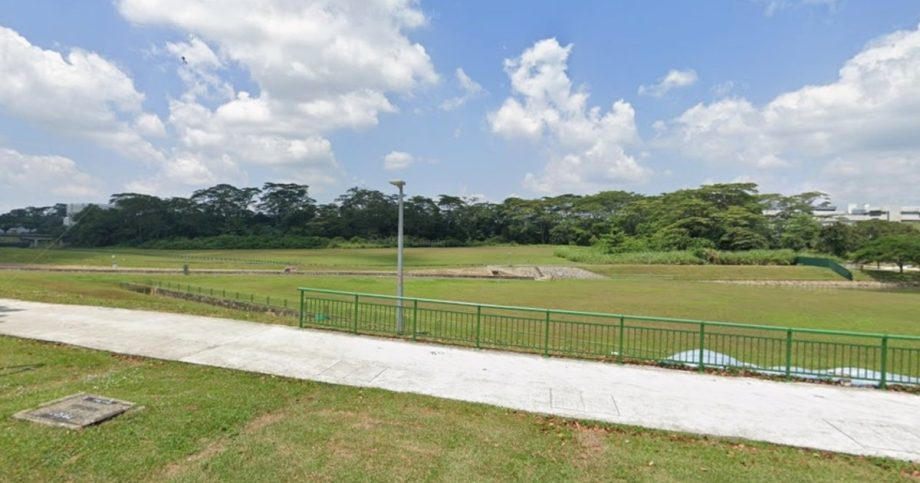
SINGAPORE – A partially forested plot of land in Woodlands next to Marsiling Park could make way for housing developments in the coming years.
There are no plans to set aside any part of the land for conservation, following an environmental study that listed several reasons for not retaining for conservation a site within the redevelopment area, said the Housing Board on Nov 10.
The area slated for future housing has been zoned for residential use since 1998.
It is bounded by Woodlands Avenue 3, the Bukit Timah Expressway (BKE), and an upcoming extension to the BKE, which is part of plans to expand Woodlands Checkpoint.
The environmental report, prepared by engineering consultancy Aecom Singapore, looked at a wider 14.4ha site that includes the area earmarked for housing. It found that about 46% of the entire site was secondary forest.
This includes a part of the area slated for new homes that was found to have moderate ecological value. However, the study cited several reasons for not retaining this area.
The report noted that it has a low density of plants with significant conservation value and its area of native-dominated forest is relatively small.
It added that the area’s central location within the proposed development also makes it less suitable for retention as it would be isolated from other green spaces and surrounded by built-up areas.
For these reasons, the report concluded that the area would have limited prospects for long-term persistence if retained.
Separately, the study found that about 1.12ha of mangroves within Marsiling Park to the north of the proposed housing site has high ecological value, due to the rarity of the habitat and the presence of plant species with conservation significance.
The mangroves and the stream flowing through the park could also be home to many animals with significant conservation value, like the Asian softshell and mud lobsters, said the report.
However, the study, which also flagged avoiding of impact to sensitive areas like the mangroves as a priority, concluded that the mangroves will not be directly affected by the development as they sit outside the proposed area.

Read Full Article At Source