SINGAPORE – Patients experiencing an acute stroke can be assessed, scanned and treated in as little as 82 minutes, down from 130 minutes, at the newly opened Singapore General Hospital (SGH) Emergency and National Neuroscience Institute (NNI) building.
The 12-storey facility is designed to manage heavy patient volumes and complex medical crises and eliminate potentially severe hospital transit delays caused by transfers between hospital buildings.
With emergency assessment, acute medical care and advanced neuroscience intervention brought together under one roof, stroke patients can receive treatment faster, without having to be transferred to the SGH main blocks.
Officially opened by Minister for Health Ong Ye Kung on Oct 30, the 14,000 sq m facility is six times larger than its previous space in Block 1. This is the latest development in the ongoing transformation of the SGH campus in Outram.
Ong said the co-location with NNI is by design, to provide a faster response to stroke patients, as a blocked blood vessel needs to be cleared within the “golden hour”.
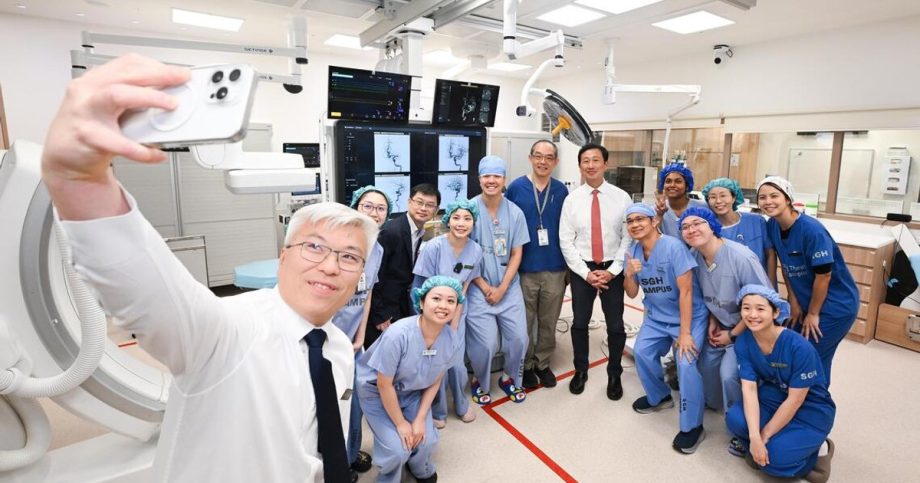
Locating Singapore’s first emergency department-based angiography suite at the ED allows patients to undergo a life-saving intervention – endovascular thrombectomy – to reopen blocked blood vessels in the brain within minutes of diagnosis, without having to be transferred to the SGH main blocks, as was done in the past.
When it comes to stroke treatment, time is brain – every minute a blood vessel remains blocked, millions of brain cells die. Longer transit times increase the risk of permanent brain damage, severe disability and poorer long-term survival rates.
“The ED continues to be the front line of a healthcare institution and the bridge between what’s happening inside the hospital and the outside environment. The ED is that bridge,” Ong said.
If bed occupancy shoots up in the hospital wards and admissions slow down, the bottleneck is immediately felt in the ED.

Read Full Article At Source