Key Preview Takeaways:
- This isn’t a straight retelling of the anime, but it does follow the same overall storyline.
- The designers aim to include something in combat for more advanced/experienced players too.
- The moments in-between big battles are some of my favorites so far.
I must confess something before I get this preview started: I bowed out of Attack on Titan early. After the first season, actually. I didn’t think it was terrible or anything. I was there for the human drama. Little people swinging around like Spider-Man and dealing with their trauma while playing a game of David and Goliath against big, scary Titans. But when those little dudes started being able to become Titans, well… it just wasn’t for me. But after spending some time with Attack on Titan 3 and speaking to producer Hideo Suzuki, I’m tempted to give it another go… at least as a video game.
Attack on Titan 3 may come with a number, but it isn’t a direct sequel in the truest sense of the word. It’s more of a retelling. Part of that, Suzuki told me, was because it’s been seven years since Attack on Titan 2: Final Battle. “Right after the previous game, we already had started talking about the sequel, but at the time the anime series was still ongoing. So we were like, ‘What kind of concept should [the next one] be?’ And we did think about just covering the new parts of the anime series, but as a game or as a one product, we didn’t think it was quite enough. So we were like, ‘Okay, one series is coming to an end, so why don’t we just cover the story from beginning to the end and just kind of follow that storyline?’”
But Attack on Titan 3 isn’t just a straight retelling. You’ll be strapping on your ODM gear as an original character, but your backstory is interesting. After your squad is wiped out on your first mission as a squad leader, your character – I named mine John Titan, not knowing I could later choose their gender – is too traumatized (and afraid of fighting Titans) to continue. But since they also happen to be a great engineer and a generational talent with ODM gear, they’re kept on to fix things and train new recruits. It’s an interesting role to step into; games rarely ask you to embody deeply traumatized people who are so badly mentally broken that they have to step away from what they were great at.
Suzuki, however, told me that decision was intentional. “The reason that we had that kind of story in the beginning is we needed to establish that the Titans are the humans’ enemy. So the character goes to battle, he experiences the loss and trauma and then goes back with a stronger determination to fight Titans from then on. This time, the character is set up as a senior to Eren and other characters. And I mean, although he is a senior or more veteran trooper, if he’s so strong from the beginning, there won’t be much story to tell. So we have to have some kind of setback in the beginning for him to go through and it’s that incident in the beginning. And then he’s going to kind of play the role of Eren and others’ mentor, but then they will work together and then they recover from the trauma and grow after.”
After playing with the character creator, I’m assigned to the 104th cadets, where I’ll be instructing Eren Jaeger, Armin Arlett, and Mikasa Ackerman, among others. My job, along with another hard-assed instructor named Keith, is to mold these kids into proper soldiers. But we have to break them first. You have to prepare the clay before you can shape it. But these recruits aren’t just blank slates. Like the show (and manga) it’s based on, Attack on Titan’s characters are their own people, sometimes to a fault. As soon as the initiation ceremony is over, Eren Jaeger bombards me with questions about why there aren’t more scouting missions and why we aren’t retaking the walls, and I’m forced to watch as my character relives their own shame. It’s a neat moment.
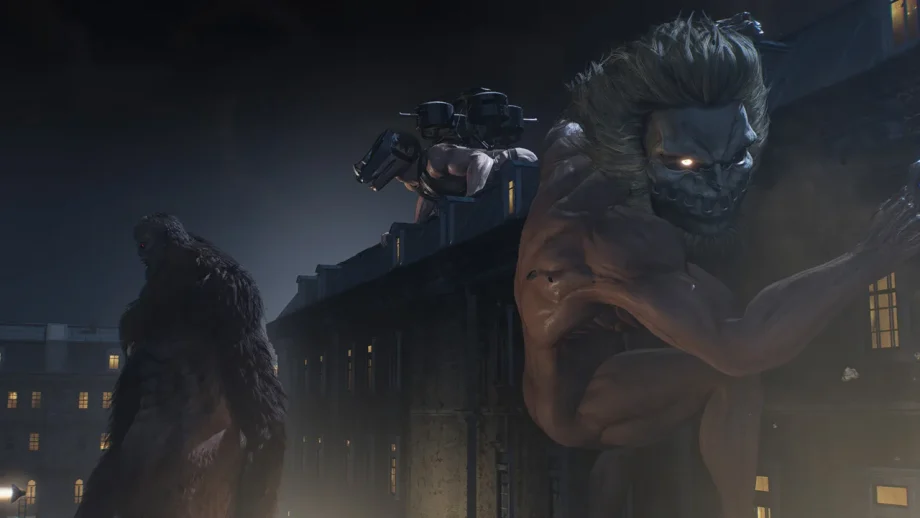
But I have to get to know these kids, too. Attack on Titan is probably most famous for its high-flying human vs. Titan battles or its knock down, drag out Titan-on-Titan brawls, but it’s a human story at heart, and building relationships with the other characters is a core part of Attack on Titan 3.
“There are many ways that the player can build a friendship with anime characters, and one of them is giving gifts to them,” Suzuki tells me later. “A second one is to eat together in a mess hall, and also they can invite those characters into their room and have conversations. So by pleasing the other characters, they can build rapport, a better friendship, and then it will affect the combat… These comrades that you build friendships with, you can invite them or you can take them onto these exterior missions or exterior scouts. And outside of the wall, you of course have battles against Titans and the player and those characters can work together to carry out special skills. We call these Buddy Arts… So the better relationship you have with these other characters… the better that your exterior missions or scouts are going to get.”


Read Full Article At Source