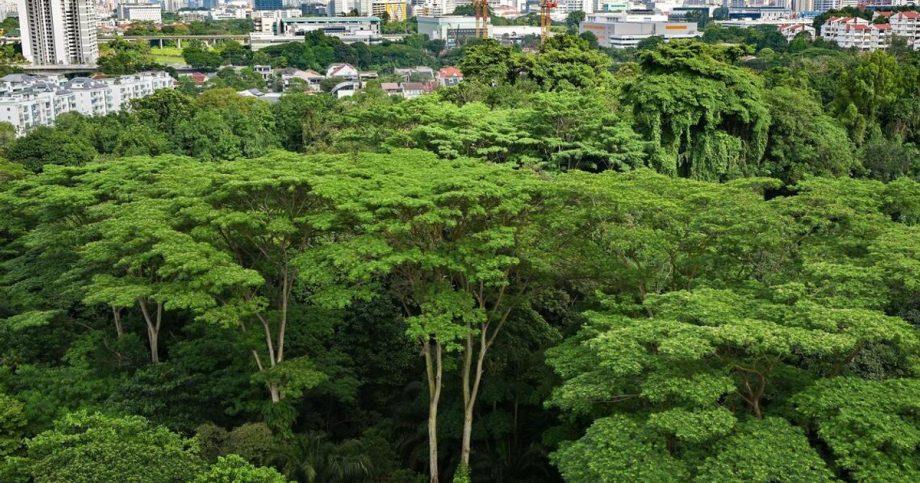
SINGAPORE – The revised development plans for Maju Forest and Gillman Barracks are a good compromise between providing housing and preserving greenery, and also connect wildlife better than in original proposals, say nature groups here.
But redevelopment of any kind would still have an impact on biodiversity and habitats at both sites, they added.
Residents living near Maju Forest and Gillman Barracks had mixed feelings towards the updated plans. While some felt that the changes struck a better balance between redevelopment needs and their concerns, others said they had hoped to be consulted on the revised plans.
These comments followed the Oct 28 announcement of revised plans for the redevelopment of both sites, which will now have more greenery but fewer new homes than in the initial plans released in July.
Movin Nyanasegaran, president of Bird Society of Singapore, said the additional greenery that has been set aside is a “good compromise”.
While he felt the changes were not a massive step up for wildlife since initial plans had made allowances for fauna at both sites, he said he was glad to see more native-dominated forests retained under the revised plans.
Such forests, which are typically dominated by native fast-growing trees, are more suited to vegetation and insect communities that form the foundation of natural ecosystems here than forests filled with non-native plants, said Nyanasegaran.
He added that he appreciated the move, especially because retaining more native-dominated forest in the Gillman Barracks site was something he had specifically suggested during engagement sessions with the Housing Board.
Under the revised plans, retained greenery at Maju Forest will also be designated as a new nature park, while green spaces at Gillman Barracks are set to be part of the upcoming Alexandra Nature Park to widen the greenery within the Labrador Nature Park Network.
Lester Tan, a member of the Nature Society Singapore conservation committee, said dedicating parts of both sites to nature parks is a good step as such parks are “more rustic than a manicured urban park”.


Read Full Article At Source
