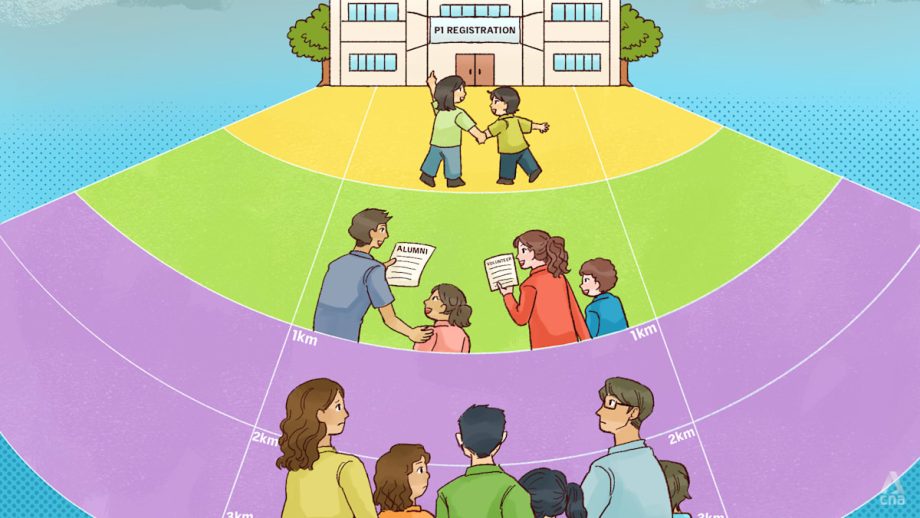
Associate Professor Eik Leong Swee, an economist at the University of Melbourne in Australia whose research includes education and inequality, similarly argued that policymakers should also ask why parental demand remains so concentrated on a relatively small number of schools.
“There are a lot of good schools that parents are missing out just because they don’t know that they are good,” he said.
Rather than focusing on fine-tuning the supply of places at popular schools, MOE could also influence demand for places at other schools by giving parents more information about what they offer, he suggested, encouraging them to consider what would actually make a good school for their child.
“If the average parent starts believing that ‘the potential set of good schools for my child is 50 schools rather than 10’, a lot of things will change.”
Assoc Prof Swee added that, if feasible, he would spread the location of sought-after schools more evenly across Singapore. But he acknowledged that doing so would be difficult and financially costly.
Pointing to Anglo-Chinese School (Primary)’s move from Barker Road to Tengah, he noted that relocating an established school requires land, could weaken existing alumni and community ties, and may draw resistance from supporters. Such moves are therefore rare, he said.
Read Full Article At Source