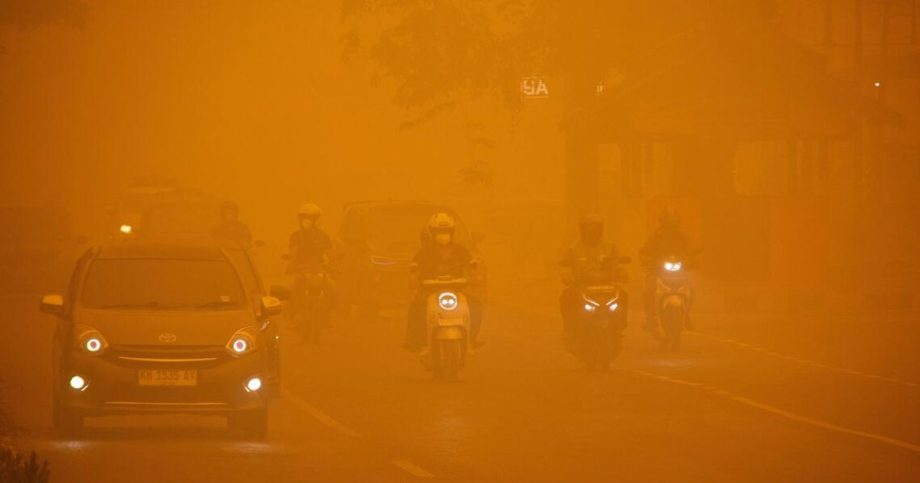
SINGAPORE – South-east Asia has faced multiple episodes of severe haze, with at least four of them coinciding with particularly strong El Nino years.
In 1982, 1997, 2015 and 2026, the fires in Indonesia were exacerbated by drier, hotter weather caused by the climate phenomenon.
The fires are largely caused by slash-and-burn agricultural practices used by farmers to clear land. This is illegal in Indonesia, but still often used as it is cheaper than using excavators.
The Straits Times traces the scorch marks of the fires compounded by strong El Nino events in recent history, including their impact on the region.
2026
The current episode is the worst haze crisis to affect the region in over a decade.
Smoky pollution from the forest fires in Indonesia has been detected as far away as the Philippines. Between late August and early September, Metro Manila’s air quality fell to acutely unhealthy levels, according to media reports.
Schools have been closed and flights grounded in affected parts of Malaysia and Indonesia. Respiratory cases in both countries have grown.
Indonesia has recorded more than 283,000 cases of acute respiratory infections in affected regions from Aug 18 to Oct 13, said its Health Ministry.
In parts of Kalimantan, the fires turned the sky an apocalyptic orange, and NASA imagery showed high levels of carbon monoxide blanketing South-east Asia due to the fires.
Singapore was also ranked the most polluted city for a few days in October by Swiss-based air quality monitor IQAir.
The Republic had registered 18 consecutive days of unhealthy air starting Oct 5, surpassing the 15 days in 2015. The highest 24-hour Pollutant Standards Index (PSI) reading during this period was recorded at 10am on Oct 18, when it hit 230 in the western region, in the very unhealthy range.
The situation improved on the afternoon of Oct 22, when the 24-hour PSI returned to the good to moderate range. However, the reprieve was likely due to favourable wind conditions, with satellite maps still showing hot spots in Sumatra and Kalimantan.
The months-long blazes have also taken a toll on Indonesia’s wildlife, particularly the critically endangered Bornean orang utan, as their habitats were razed.


Read Full Article At Source

