Key Preview Takeaways:
- It tells a serious story that shows how discrimination of the early 20th century shapes someone, but intentionally includes certain anachronisms.
- The parry-based combat mechanics work really well once you lock in with it.
- There are some top-tier minigames, including being a music and club manager to fit the theme of music breaking cultural barriers.
I was conflicted coming out of my first hands-on with Stranger Than Heaven earlier this year, generally liking what I saw but unsure if its slower, clunky combat system would get better in time. That was a 45-minute demo that thrust you into battle without any real setup, but in a new three-hour demo, I got to play it from the start, see a bit of its decade-spanning story in action, and explore the different towns that represent each time period while playing all-new minigames that fill the streets. That also meant getting real familiar with how to throw hands in the re-tuned combat, and it feels like I’ve done a complete 180-degree turn on RGG Studio’s next game. Meaning, I’m now all-in on the Yakuza team’s latest.
Life of a Yakuza
Stranger Than Heaven’s premise drew me from the first reveal – a story about a man of mixed ethnicity in a tumultuous time between Japan and the US, spanning decades and leading into where the Tojo Clan began in 1960s Kamurocho. As someone who’s played every Yakuza / Like A Dragon game, this sounds like it could hit hard. Being familiar with the dynamic of being mixed and struggling to find your place in society, it seems like a story that’s touching on something very few game stories have.
It starts with lead character Makoto Daito looking to get out of San Francisco in 1915 while fleeing the scene of a crime he did not commit. But the bastard cops pursuing him don’t care – they can pin the crime on a “foreigner” and call it a day. And man, it’s been a while since I’ve heard some of these old time-y slurs towards Asians, but that’s the tone being set here with regard to the discrimination they faced during this time. Thankfully, we get to whoop their ass as the tutorial for the intricate combat system. He escapes on the last ship leaving the Bay as a stowaway, meets Snoop Dogg’s character named Orpheus after tussling with the ship crew, and arrives in the small Japanese town of Kokura.
Here’s what I’ll say about Orpheus; Snoop Dogg’s role kind of works for what this story is doing because part of it seems to be about outcasts finding community through music. One thing director Mikinobu Abe mentioned is that Stranger Than Heaven isn’t trying to be time-period accurate – and maybe being anachronistic breaks the believability of its world, but I want to see more of how this is done. They also just kinda let Snoop Dogg do his thing, even teaching Makoto how to roll up loose cigarettes, which is also a gameplay mechanic for crafting cigs that give temporary stat boosts!
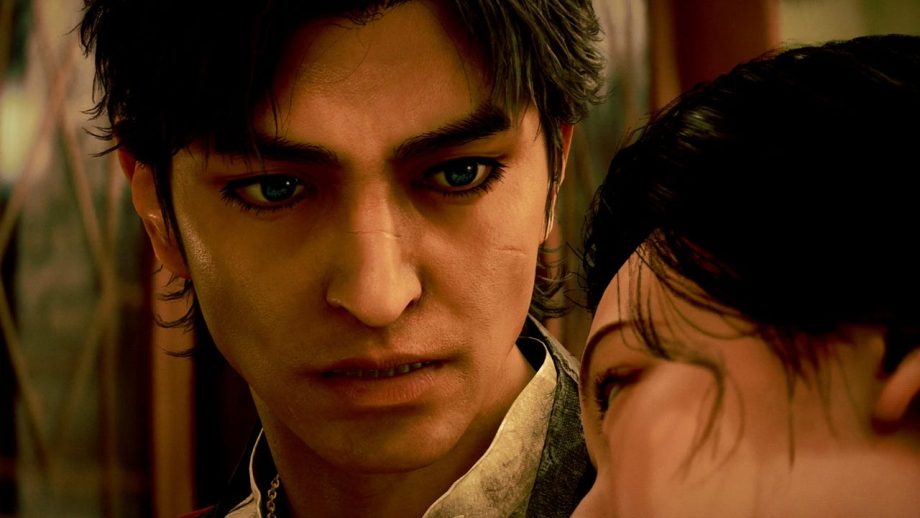
Stranger Than Heaven takes on a more serious tone, however. The story sequence I played in Kokura shows Makoto as a very timid outsider whose deep blue eyes give away that he’s an outsider – and again, discriminated against in a country he’s supposed to be home to. He meets a hostess named Tae at a restaurant under the pretense of getting closer to a crime boss he’s tasked with helping take down. The way he clearly lacks the social skills, or just feels shame for who he is, comes across powerfully in these cutscenes. That anxiousness causes him to break since he’s compelled to be an honest person, and so they both lay their motives bare.
This made for over 15 minutes of cutscenes, and I was still locked in the entire time. RGG Studio and the Yakuza series have been some of the best in terms of cinematics and actor performances, and Stranger Than Heaven proved that it still has the sauce, letting the intimate details speak volumes and establish a believable dynamic between characters.
Catching Hands
The demo fast-forwarded to a raid on a factory in Kokura where Tae was being held captive by said crime boss, so I didn’t have any real context for what led up to this moment. However, this is where it dialed in the combat. It still feels pretty sluggish and gets a little messy when dealing with crowds, but the calculated nature of fights shined through. The bumpers control left and right light attacks while the triggers are for respective heavy attacks, which is a great idea on paper, and once I came to grips with the directional parry system, I started flowing through each fight. While holding the guard button, you have to either time the parry with a left or right light attack to stagger your foe – and you really have to pay attention to attack animations not just for timing, but to make the correct call on the direction it’s coming from. Stranger Than Heaven joins the crowded ranks of action games with parry systems, yet this seemingly minor mechanic could be the difference in having something more engaging.

Read Full Article At Source

