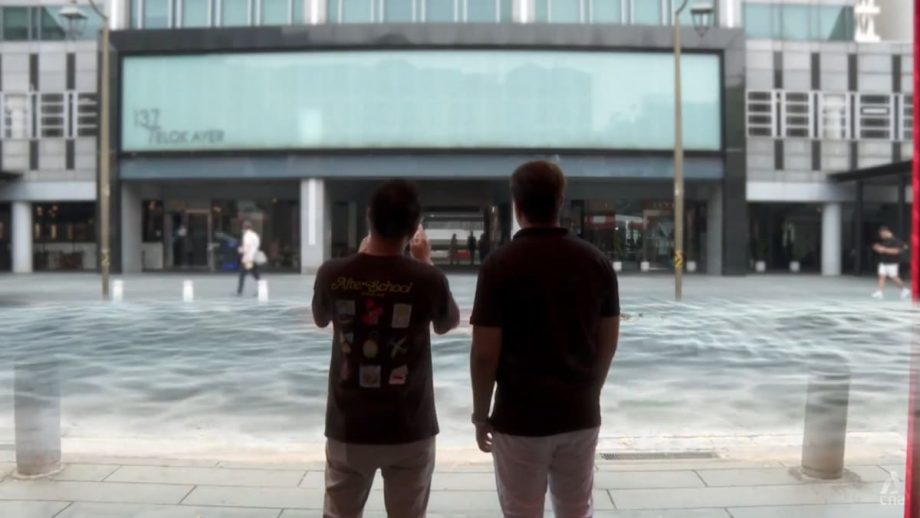
Most people walking along Telok Ayer Street today would not realise they are standing where Singapore’s shoreline once was.
But to former urban planner Ho Yong Min, better known as The Urbanist, clues to the area’s history are everywhere.
A temple’s orientation. A street name. Inscriptions on a stone tablet.
“If you look around, you don’t see any remnants of the sea at all,” he told CNA while on a walk through the area.
“But there are clues in our city that tell you that this temple used to face the sea.”
Telok Ayer, Ho explained, used to be a bay that once greeted immigrants arriving by boat. Many would stop at Thian Hock Keng Temple, built in 1842, to pray and give thanks for a safe voyage before embarking on new lives in Singapore.
The district’s name, which means “bay water” in Malay, also hints at its past as a point of entry for new arrivals.
That maritime past is also etched into the temple itself: A stone tablet mounted on its wall bears repeated inscriptions of the Chinese character for “boat”.
“Back in the day, when you’re on a voyage from China to Singapore, just being able to land in Singapore is already a blessing because you may have been shipwrecked or gotten ill along the way,” Ho said.
“That’s why temples were pretty much established along the shoreline. If you look at the places of worship along Telok Ayer, you notice there are quite a number of them, and they all tell the same story of the safe arrival of immigrants in the past.”
Finding hidden stories in familiar places is at the heart of Ho’s work as founder of The Urbanist Singapore, a content platform dedicated to heritage storytelling and urban design.
Through social media videos, guided walks and school programmes, the 42-year-old Singaporean has built a growing audience, including more than 62,000 followers on Instagram, by uncovering the tales behind Singapore’s streets, buildings and public spaces.
Read Full Article At Source