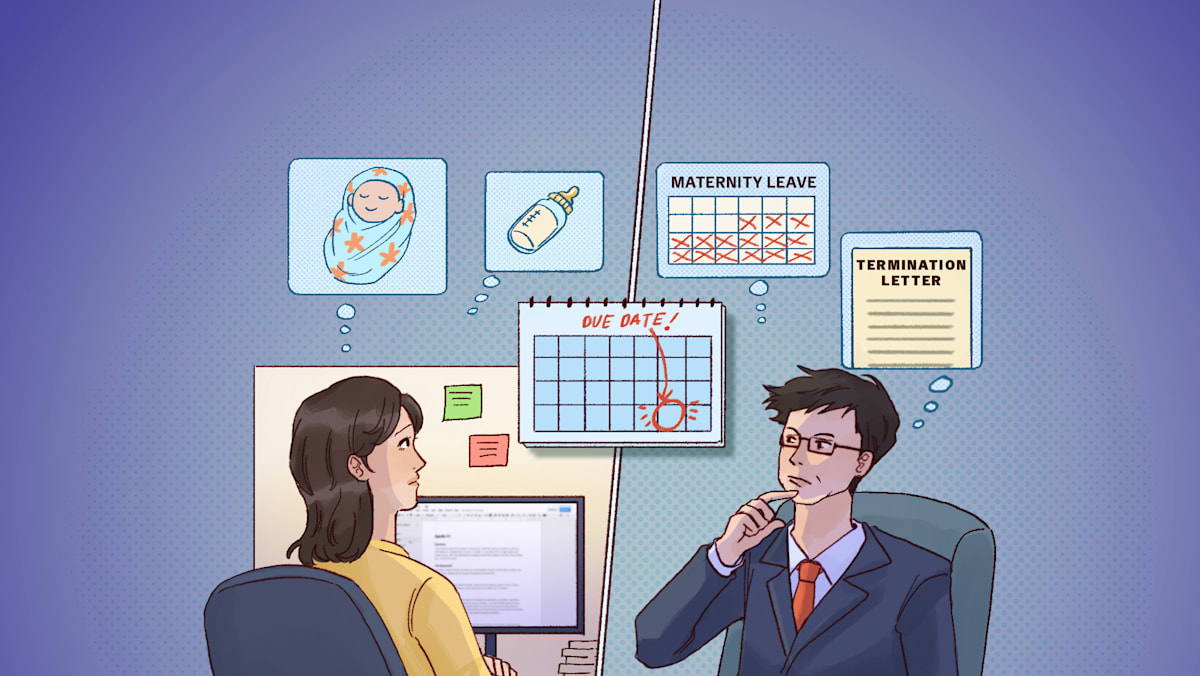
SINGAPORE: Can a company sack an employee simply because she is expecting a baby or due to go on maternity leave? Under Singapore law, the short answer is no – yet dozens of women in past years have lodged claims alleging that is exactly what happened.
Last month, an Employment Claims Tribunal (ECT) issued a judgment awarding S$19,800 (US$15,520) to a woman who was wrongfully dismissed because of her pregnancy and maternity leave.
The Tripartite Alliance for Fair and Progressive Employment Practices (TAFEP) received 49 pregnancy-related discrimination complaints between 2019 and 2025, according to a written parliamentary response by Acting Minister for Manpower Jasmin Lau on Oct 7.
A total of 387 pregnancy-related wrongful dismissal claims were filed at the Tripartite Alliance for Dispute Management (TADM) between April 2019 and 2025, she added.
Of these, 301 were resolved through mediation by TADM, while the remainder were allowed to file claims with the ECT.
Of the 72 who proceeded to file claims at the tribunals, 27 were awarded compensation.
But what counts as wrongful dismissal for a pregnant employee, and is there any way that a pregnant employee can be lawfully dismissed?
CNA spoke to lawyers to find out more.
Why the tribunal ruled in her favour?
Referring to the ECT case last month that resulted in a payout, Mr Johnathan Lee Kui Bao, a lawyer at Fong & Fong law firm who was previously a prosecutor with the Ministry of Manpower, noted there were two parts to the case.
The first part relates to whether the woman’s own resignation amounted to a dismissal, and the second relates to whether such a dismissal was “without just cause or excuse”.
The tribunal found that it was both. In particular, it found that the company’s real reason was the woman’s impending absence from work, due to her hospitalisation leave and subsequent maternity leave.
As both types of leave are entitlements under Singapore law, dismissing her for exercising these rights was wrongful, said Mr Lee.
What counts as wrongful dismissal for pregnant women or women on maternity leave?
A dismissal may be wrongful where the real reason for it is pregnancy, maternity, or an employee’s exercise of a maternity-related employment right, said Ms Amarjit Kaur, Withers KhattarWong’s head of its Singapore employment team.
The Employment Act prohibits an employer from dismissing a pregnant employee, or issuing her a notice of dismissal, without sufficient cause that is unrelated to pregnancy, said Ms Kaur.
This protection applies to female employees who have served the employer for at least three months, and is triggered upon certification of her pregnancy by a doctor.
Ms Kaur listed some examples of dismissing an employee without sufficient cause:
- Because she is pregnant or will be absent on maternity leave
- To avoid paying maternity benefits
- Because she took pregnancy-related hospitalisation leave or medical leave
- Giving a purported reason such as poor performance or redundancy that is not justified by the evidence, or
- Through conduct that effectively compels her to resign
Can a pregnant employee be lawfully dismissed?
A pregnant employee can be dismissed for a genuine reason unrelated to the pregnancy, said Mr Mato Kotwani, a partner at PDLegal Singapore.
This can be serious misconduct, poor performance, or a redundancy exercise.
“The important question is whether the employer can show that the stated reason is real, objectively supported and unrelated to the pregnancy or maternity leave,” said Mr Kotwani.
Examples of misconduct by pregnant employees that can result in legitimate firing include dishonest conduct such as theft or misappropriation of company assets, said Mr Faraaz Amzar, a director at Eugene Thuraisingam Asia and a former ECT magistrate.
“However, the company must be able to substantiate the allegations with evidence,” he said.
If an employer wishes to dismiss a pregnant employee without notice for misconduct, they can do so only after due inquiry, where they set out the allegations against the employee and give her a genuine opportunity to explain herself, said Mr Lee.
The employer should maintain proper documentation and evidence of both the cause for dismissal and the inquiry process, he added.
Read Full Article At Source