SINGAPORE – Since air quality in Singapore first dipped into unhealthy levels on Sept 4 after a couple of haze-free years, the country has faced several haze episodes that crossed the threshold for its Transboundary Haze Pollution Act to be enacted.
Asked if Singapore will be taking legal action against companies that could be responsible for the haze-belching fires in Indonesia, a spokeswoman for the National Environment Agency (NEA) said only that it “has been closely monitoring the haze situation, gathering information on fire hot spots, their sources and impact on Singapore’s air quality”.
The law, enacted in 2014, targets those responsible for causing or condoning fires if the haze causes the Pollutant Standards Index (PSI), a measure of air quality here, to stay in the unhealthy range in any part of Singapore for 24 hours or more. Air quality is considered unhealthy when PSI levels are 101 and above.
Satellite information, wind speed and direction and meteorological information are used to determine if the smoke from a fire is likely to move in the direction of Singapore.
Those guilty under the Act can be fined up to $100,000 a day, capped at a total of $2 million.
The NEA spokeswoman added that regional cooperation within ASEAN remains crucial in resolving transboundary haze pollution.
She pointed to the ASEAN Specialised Meteorological Centre, hosted by the Meteorological Service Singapore under the NEA. The centre provides early warning advisories and assessments of the current hot spot and smoke haze situation.
Such efforts support ASEAN member states’ prevention and mitigation efforts, she said.
NEA is also in touch with the Jakarta-based Interim ASEAN Coordinating Centre for Transboundary Haze Pollution Control, which is coordinating information sharing among ASEAN member states on the regional fire and haze situation, the NEA spokeswoman added.
While the ASEAN Specialised Meteorological Centre focuses on early warning and hot spot monitoring, the new coordinating centre aims to strengthen preparedness among ASEAN countries and reduce the impact of land and forest fires in the region. It can also mobilise resources to tackle the problem.
On Oct 10, Minister for Sustainability and the Environment Grace Fu told the media that Singapore stands ready to assist Indonesia amid the worsening haze conditions.
Indonesian officials later welcomed offers of assistance from Singapore and Malaysia, with one disaster management official saying firefighters on the ground could be more useful than helicopters.
Legal threshold breached
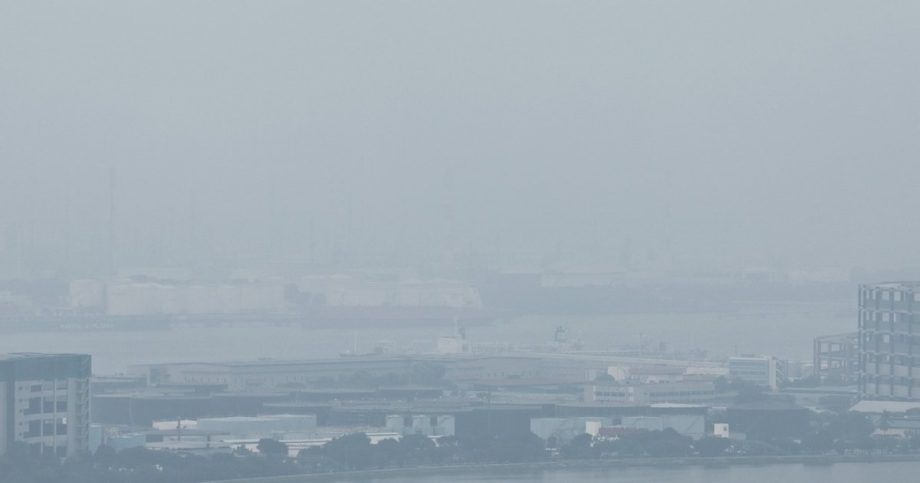
The haze episode on Sept 4 had already breached the threshold for Singapore’s anti-haze law to be enacted, when the PSI crept into the “unhealthy” range in the central region at 7am and lingered there until 8pm on Sept 5.
Since then, The Straits Times has counted at least five other instances of unhealthy air quality lingering for more than 24 hours.
Singapore is facing its longest episode of unhealthy air that started on Oct 5; the PSI crept close to the “very unhealthy” range of 201 and above on Oct 9.
Read Full Article At Source