SINGAPORE – At the revamped Food Opera at Ion Orchard, Ming Chung White Lor Mee stall doles out steaming Henghua delights from a facade designed to resemble an old-fashioned cobbler’s shop. There are rows of wooden shoe lasts, shelves of shoe brushes and tins of polish.
Over at Hakka Bond Express, handmade yong tau foo is served from what looks like a 1970s post office, complete with wooden pigeonhole mail-sorting racks filled with envelopes.
Berempah Bros is decked out as a 1970s hair salon, with an oversized hairdryer, comb and scissors decorating its signboard. Below the service counter is a lit glass display shelf showing vintage hair-misting bottles.
The shopfronts are part of BreadTalk Group’s $5 million revamp of the sprawling 600-seat Food Opera, which reopened on Sept 28 after a three-month renovation.
While themes are not new to BreadTalk Group’s foodcourts, this is the first time the idea has been applied to individual stalls, each with its own identity based on a non-food business from the 1970s.
Jonathan Quek, 31, group chief executive of BreadTalk Group, says the aim is not to recreate the era literally, but to capture its sense of aspiration, when people were beginning to want more than the basics, such as dressing better, listening to music and going out.
He says diners today have a similar appetite for discovering new experiences and places.
BreadTalk Group chairman George Quek, 69, came up with the name Food Opera when it opened at Ion Orchard in 2009. For him, the culinary arts involve performance and showmanship.
With that in mind, Toast Box at Food Opera now offers diners a full view of the roasting and grinding of Colombian Supremo coffee beans for its new premium Nanyang Supremo Kopi Blend, with a cup of Kopi O starting at $3.50. The blend is exclusive to Food Opera.
Diners can watch fishballs being made at LiXin Teochew Fishball Noodles. A baby grand piano takes up space which could otherwise accommodate about 10 diners. Customers can play it and there are plans to engage pianists for live performances.
New to the foodcourt is Orchid Gallery, a retail and lifestyle section which sells local snacks, souvenirs and other home-grown products aimed at both tourists and locals, while Treasure Bakery is a new British-Nanyang bakery concept by BreadTalk Group.

The Treasure Bakery stall at Food Opera.
ST PHOTO: JASEL POH
First foodcourt
Foodcourts under BreadTalk Group have evolved over the three decades since the elder Quek opened his first Food Junction at Bishan’s Junction 8 in 1993.
This was two years after he returned to Singapore following an 11-year sojourn in Taiwan.
There, he had started Singa, a food kiosk selling Singaporean fare. He favoured locations in the basement food streets of departmental stores. The business grew to 21 outlets in Taipei, Kaohsiung and Taichung.
Back in Singapore, he saw an opportunity in the foodcourt business, which kicked off in 1985 with the opening of the first air-conditioned foodcourt in Singapore at Scotts Shopping Centre. He boldly approached the management of Junction 8 with his proposal and opened Food Junction with 19 stalls in a space of close to 11,000 sq ft.
The elder Quek wanted a concept that would stand out and hit upon the theme of a 1960s American diner.
To offer diners a different food mix, he brought in teppanyaki, conveyor-belt sushi and Thai mini steamboat, along with local fare such as Hockchew fishballs and nasi padang served on banana leaves.
He believed mallgoers would be willing to pay more for comfort and quality food in an air-conditioned foodcourt.
The plan was to offer more than just basic meals. The foodcourt was meant as a lifestyle concept.
BreadTalk Group now operates 45 foodcourts across Singapore, Malaysia, Hong Kong, Taiwan and China, with 35 Food Republic outlets, nine Food Junctions and one Food Opera.
Food Junction is found mainly in suburban malls and is more fuss-free, while Food Republic is a thematic food-hall concept, in locations such as Jewel Changi Airport and Suntec City.
Food Opera is the group’s only foodcourt under that name and was created to suit Ion Orchard, a more upmarket mall.
Staying ahead of the competition

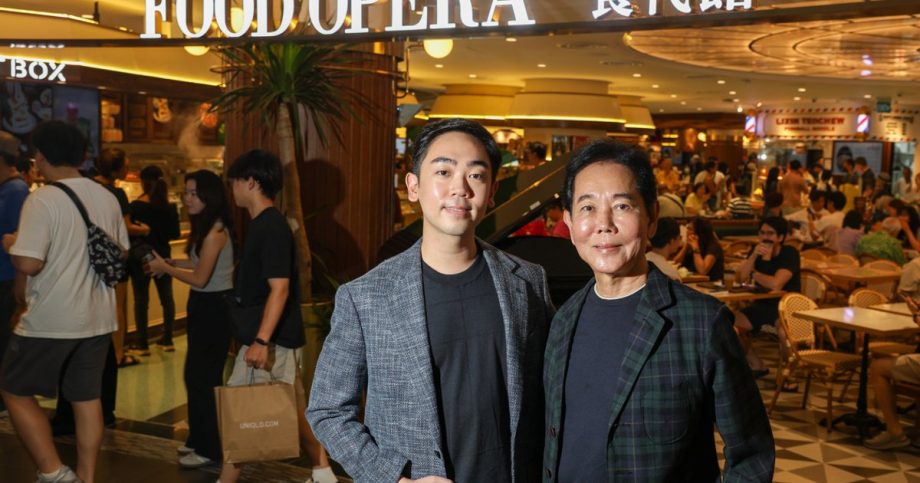
George Quek and his son, Jonathan, place importance on design and aesthetics.
ST PHOTO: JASEL POH
The elder Quek says increased competition means the group has to keep changing.
“To stand out from the competition, we focus on branding. We have to keep improving and reinventing,” he says. “We travel, we observe the trends. Every day, we are absorbing and learning.”


Read Full Article At Source