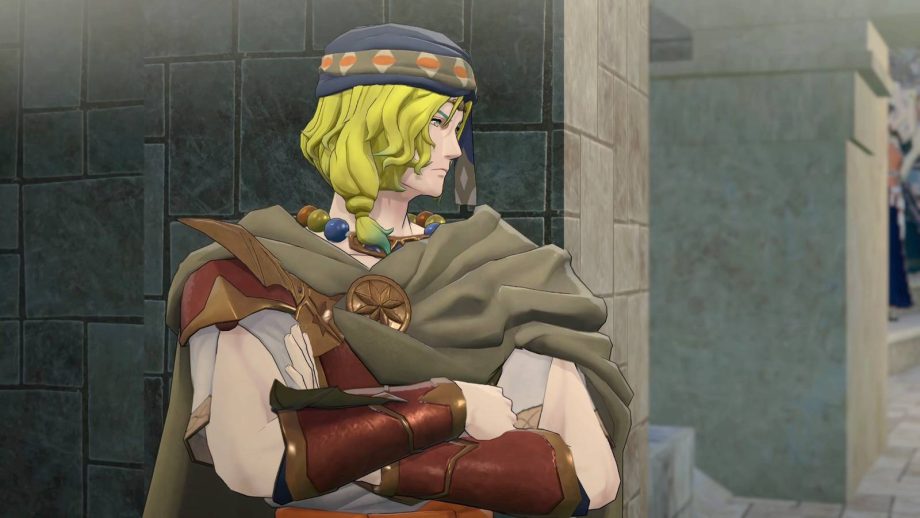
The way RPGs handle religion is something of a meme. Are bad things happening? Might want to see what the local bishop is getting up to. An evil organization is oppressing the masses? It’s probably the church. You should go kill god while you’re saving the world, just to be on the safe side. Bandai Namco’s Tales series, Breath of Fire, sometimes Falcom’s Trails series — these and a whole lot more use religion as an easy caricature for villainy, liberally borrowing iconography and concepts from real-world doctrine to lend a sense of legitimacy to their stories.
The connection between religion and JRPGs is a bit of a trope by now, and not a great one. So I was surprised to see how seriously Fire Emblem: Fortune’s Weave tackled religious topics — and how effectively it implemented real-world ideas to make a strong narrative point.
[Ed note: This piece contains mild spoilers for parts of Dietrich’s path and tones of Part 3 in Fire Emblem: Fortune’s Weave.]
Developer Intelligent Systems has toyed with religious and mythological symbols in Fire Emblem over the years, mostly the latter and typically just when something needed a cool-sounding name. Three Houses‘ Church of Seiros was an exception, a hierarchical religion that relied on ritual, liturgy, and faith — and abused its position — to maintain order. It’s not a bad setup, and Seiros is a wonderfully complex villain. But you could swap her and her church for any oppressive institution and get the same outcome: an oppressive institution that Edelgard wants dead and buried.
I realized Fortune’s Weave was doing something much different toward the end of Dietrich’s route (which you really should play if you haven’t yet). The incident is brief and happens when Fabio, a key ally of Dietrich, explains the origin and workings of Crest Stones. Those are the items from Fire Emblem: Three Houses that conferred supernatural powers on whoever had them, power that eventually drove the bearer to madness and turned them into monsters.
Maybe it was remiss of me, but I never felt the need to know how Crest Stones worked. It’s a magic dragon rock. That’s kind of an explanation in itself, and video game logic operates on rules similar to those espoused by philosophers in Terry Pratchett’s Discworld books: Things just happen; what the hell.
Well, Intelligent Systems decided this thing needed a proper explanation and went all out.

“The very structure of the Crest Stones is truly shocking,” Fabio says. “They contain a conduit to hyperspace.”

Read Full Article At Source