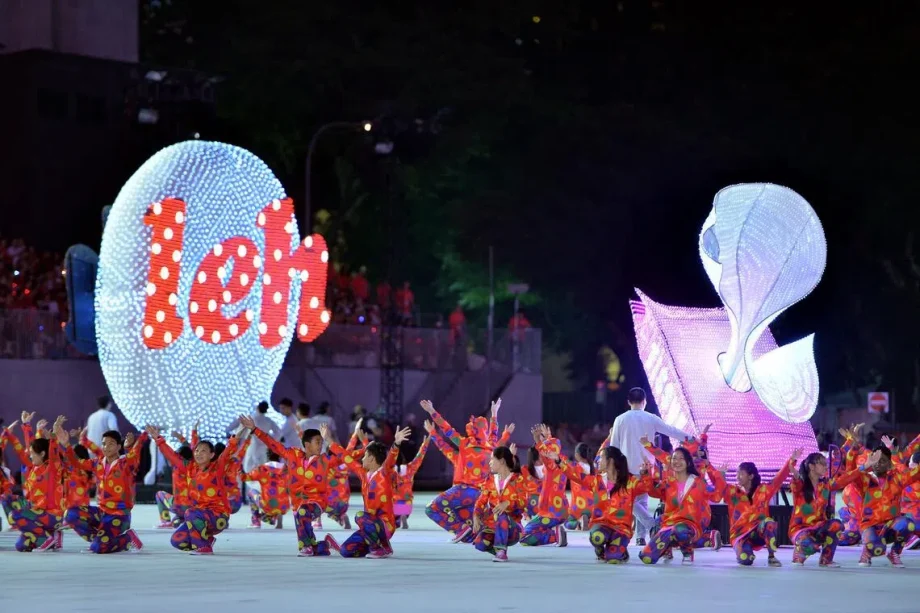
While doing a course on linguistics recently, I was surprised to hear many younger classmates championing the use of Singlish. In fact, the use of the local, colloquial form of English was not only acceptable to them, but also something that they were proud of. “It represents our local culture” was a common refrain.
Some couldn’t even fathom how anyone could see Singlish as a poorer cousin of “standard” English, or why anyone would restrict its use, as long as speakers were able to code-switch between Singlish and more “proper” English in appropriate situations.
Their comments evoked in me a strange mix of validation and discomfort. Since I was young, I had been taught to regard Singlish as “bad English”, and was constantly reminded by parents, teachers and the media to speak “proper” English.
This meant obeying the textbook rules of British grammar and pronunciation strictly; broken grammar, poor pronunciation and particles like “lah” or “lor” were out. In secondary school, the casual request, “Teacher, go toilet”, earned us the coldest gaze and the sarcastic reply, “No, I’m not going to the toilet”.
This official stance was understandable when Singapore was in the earlier stages of its goal to go global. Speaking “good English” was seen as critical: If Singaporeans couldn’t speak a standard of English understood by foreigners, it was argued, how could they do business and interact with the world outside?
It was also believed that allowing people to speak colloquial English, or popularising it in media and entertainment, would hinder efforts to improve their English. Hence the Speak Good English campaigns, with even poor Phua Chu Kang being told to go back to school.
There was a part of me, however, that always wanted to question this tough approach.
A growing acceptance of Singapore English
It was thus comforting when I learnt just how much had changed since then.
Today, much of the linguistic fraternity regards Singlish – or, to go by its technical term, “Singapore Colloquial English” – as a legitimate variant of “Singapore English”, which is itself considered a variety of English, like, say, Indian or Hong Kong English. The other variant is “Singapore Standard English”, which is more formal and closer to British English.
While both variants are seen as a distinctive part of Singapore’s linguistic identity, it is the colloquial variant, with its grammar, vocabulary and syntax drawn from English, Malay, Mandarin, Hokkien and Cantonese, that is seen as truly embodying Singapore’s multiracial, multicultural character.
A typical Singlish sentence could mix words and grammar from any number of these local languages, demonstrating the extent – and beauty – of our “rojak” culture.
While it might not technically be an example of Singlish, my favourite representation of this unique Singaporean mix comes from the kopitiam code of ordering coffee or tea, which features an absolute host of vernacular languages, including Malay, Hokkien, Hainanese and Cantonese.
In one phrase alone, “kopi-C siew dai peng”, incorporates elements of Malay (kopi), Cantonese (siew dai, or “less base”), Hokkien (peng, or “ice”), and possibly Hainanese (the “C” or “si” apparently either referring to “fresh” in Hainanese, or the Carnation brand of evaporated milk) to describe an order of iced coffee with evaporated milk and less sugar.
What could be more local than that?
In line with the linguistic recognition of the value of Singapore English, there is the growing embracement of this local form of English as Singapore’s very own.
An Institute of Policy Studies study has found more Singaporeans using Singlish in everyday life, with 80 per cent of younger folk saying that they speak it well. That statement alone says plenty – I can’t imagine daring to say that I spoke Singlish “well” when I was young.
There is also a greater confidence in the Singaporean accent, with its distinctively un-British and un-American and unique pronunciation patterns that once used to be denounced as “wrong”.


Read Full Article At Source