REFORM WHERE NEEDED
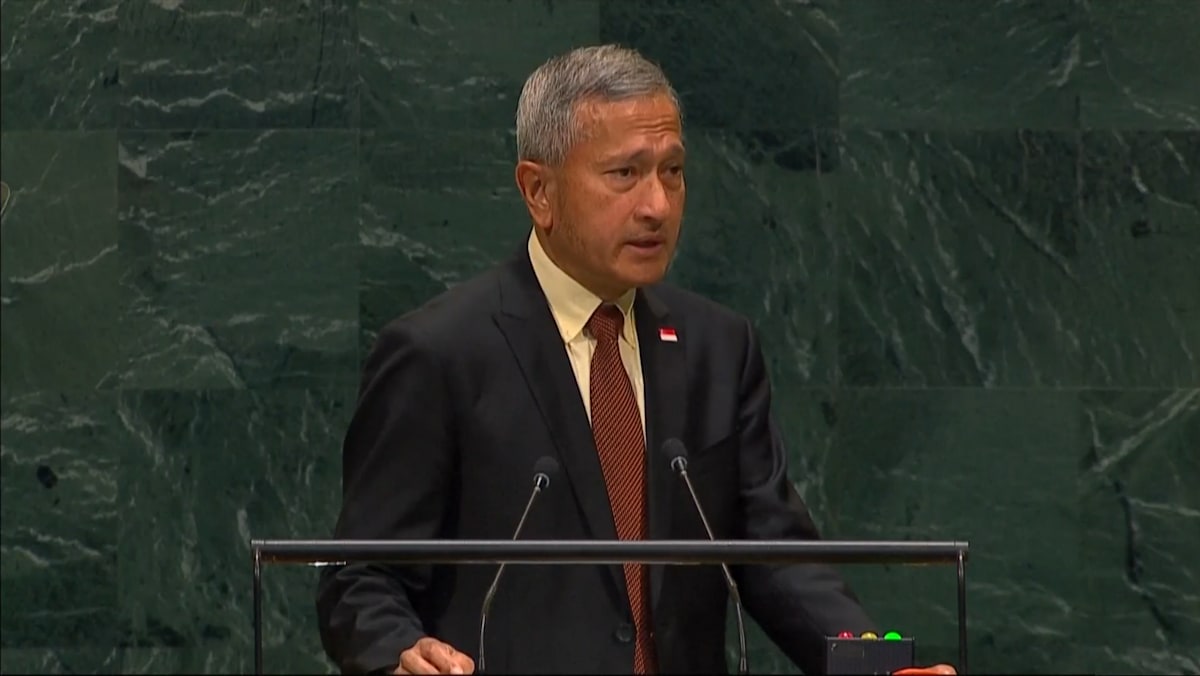
Dr Balakrishnan said multilateralism remained particularly important in a more fragmented world marked by great-power competition, wars, trade barriers, supply chain disruptions and climate change.
He reiterated Singapore’s call for countries to uphold existing international law, pointing to the closure of the Strait of Hormuz amid the war in the Persian Gulf, which had put the UN Convention on the Law of the Sea (UNCLOS) to a “severe stress test”.
“Transit passage through straits used for international navigation is a right for all of us. It is not a privilege subject to fees and tolls, and this is customary international law, which means it is binding on all states, whether or not they consider themselves parties or countries.”
How the world deals with the Strait of Hormuz situation will have implications for navigational rights and freedoms globally, he said.
“At stake is the legal architecture for freedom of navigation and overflight, and we cannot allow any single country to exercise a veto on these navigational rights and freedoms,” he said.
The disruption of the Strait of Hormuz, which carried about a fifth of global oil supplies, had pushed up energy prices, disrupted supply chains and stranded seafarers, he added.
“This is why shared rules like UNCLOS matter. Defending them is not just a matter of principle or debate; it is in our collective interests. The largest economies depend on the open sea lanes as much as the smallest,” he said.
Read Full Article At Source