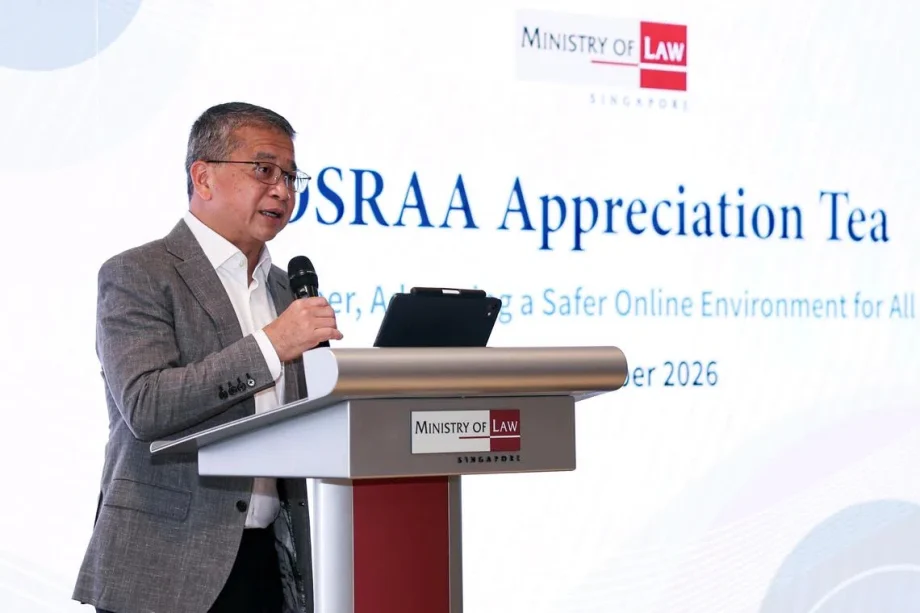
SINGAPORE – The Government will work with designated online platforms to respond faster to online harms, including taking down offending content or banning perpetrators, under Singapore’s new legal framework to help victims get timely redress and better protection, said Law Minister Edwin Tong.
“As platforms become more familiar with the framework, we will work with them towards shorter response times,” said Tong, who is also Second Minister for Home Affairs, on Sept 23.
“Because when harmful content is circulating online, even that extra one hour (that it is available) can sometimes matter a lot.”
Depending on the type of online harm, designated online platforms currently have to respond within six to 48 hours of being notified under the Online Safety (Relief and Accountability) Act (OSRAA) that was passed in 2025.
“We calibrated these timelines very carefully. We always knew from the start, from the victims’ accounts, that speed mattered a lot,” said Tong.
“But we also recognised that the platforms needed time to understand… the new framework and adapt their processes so that they will be able to function within this framework. So these timelines that we had introduced, they are a starting point.”
He was speaking at an appreciation event held at the Temasek Shophouse in Orchard Road to thank community, academic, government and business partners for their support in developing and implementing OSRAA.
At the event, he outlined how the Government has room to make the process for victims to notify online platforms about online harms faster and easier.
The Straits Times had reported earlier on how victims of online harms had suggested several improvements to the process of dealing with online harms, especially in reporting harms, such as less form filling.
For now, designated online platforms must respond within six hours for straightforward cases of intimate images and videos of victims shared online without their consent. The same goes for straightforward child abuse material that is shared online.
Straightforward cases involve online abuse material that depicts women, men or children whose genitals, anal region or breasts are exposed.

Read Full Article At Source