SINGAPORE – The drive from Agok airstrip to Ameth-Bek Hospital cut through vast stretches of sandy ground and scrubland. Every so often, a truck would pass carrying young men – sometimes boys – armed with AK-47s.
It was an unremarkable sight to everyone but me, yet a stark reminder that the security situation could change quickly. Near the hospital, the presence of the United Nations Interim Security Force for Abyei peacekeepers brought some reassurance.
I was based at the Abyei Special Administrative Area, a disputed region between Sudan and South Sudan. Its communities have been shaped by years of tension, displacement and inter-communal violence. People fleeing the war in Sudan were still crossing the border during my assignment, while insecurity in South Sudan kept access to healthcare extremely fragile.
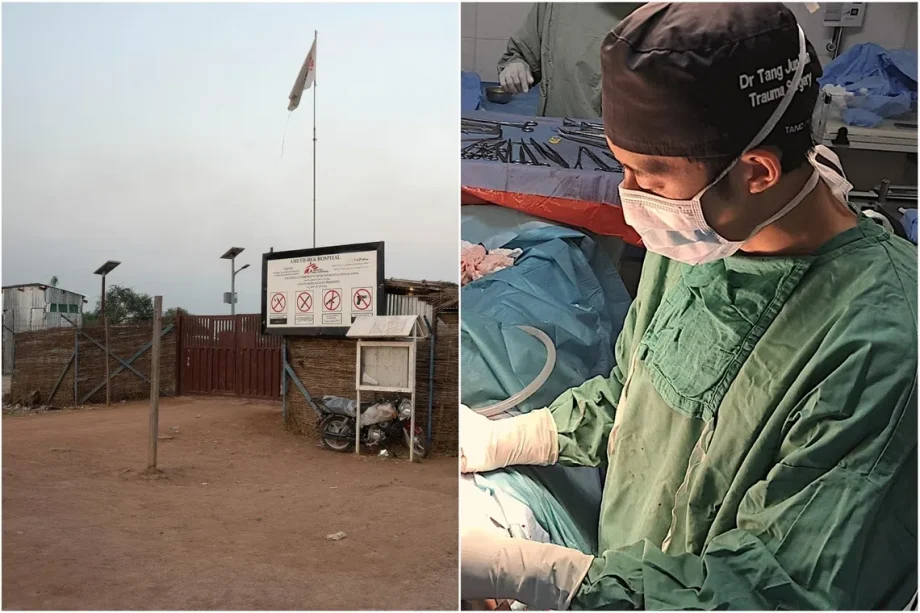
Ameth-Bek is a 91-bed secondary hospital and the only facility providing surgical care for a large surrounding region about 15 times the size of Singapore. It has an emergency room, operating theatre, surgical and inpatient wards, maternity services and a neonatal ward. With specialist referral difficult, it has to manage almost every and any case that comes through its doors.
I was one of two general surgeons in a project by Medecins Sans Frontieres, or Doctors Without Borders. Between April and June, the team performed 1,170 operations, with more than 20 cases on some days. We managed violence-related injuries, road traffic accidents, emergency abdominal surgery, obstetric emergencies, burns and common urgent surgical conditions such as hernias and infected wounds. The workload was heavy and varied, requiring constant adaptation with a small team and limited equipment and investigations.

A Doctors Without Borders vehicle at the entrance of Ameth-Bek Hospital in the Abyei region on the border of Sudan and South Sudan.
PHOTO: COURTESY OF TANG JUN HAN
Few resources, more ingenuity
Trauma patients often arrived late at Ameth-Bek Hospital. Some had travelled long distances from Sudan after experiencing gunshots, drone attacks, explosions or other violent injuries, reaching us only after substantial blood loss, infection, pain and exhaustion had pushed their bodies close to their limits.
We also saw other consequences of delayed access to care. For example, children with burns who had initially been treated at home, sometimes with rabbit hair applied to the wounds as a local remedy. There was something almost disarming about it, until you remembered that families were doing what they could with what they had. Some patients had lived with severe open fractures for years, with bones jutting out.
In Singapore, we are used to the scoop-and-run pre-hospital system, extensive laboratory testing, CT scans, readily available blood products and intensive care unit (ICU) beds. In Abyei, none of these were possible.
We had to be deliberate about every blood test, asking whether the result would meaningfully change what we needed to do. Diagnosis often came down to a careful history, thorough physical examination, and close observation when non-operative management was chosen.
For much of the assignment, we had only one functioning diathermy pencil for a long operating list each day. It is a common instrument for cutting tissue and controlling bleeding that we barely think about having in operating theatres back home. In Abyei, replacement equipment and resupply could take time. We had to plan the use of the diathermy pencil around the day’s cases, preserving it for those cases where it would make the most significant difference.
The constraints changed not only how we operated, but also what a good outcome meant.


Read Full Article At Source