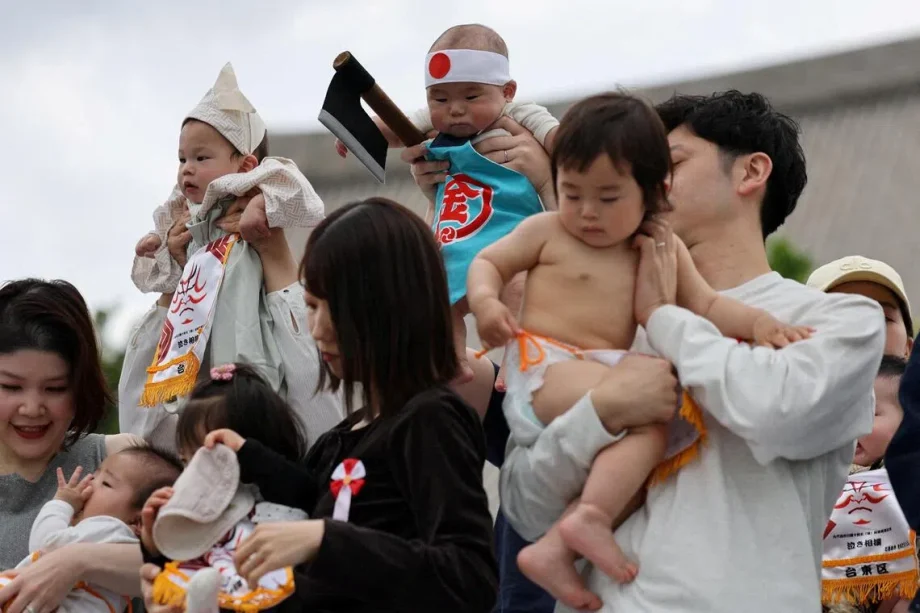
TOKYO – Having led Japan’s largest metropolis for a decade, Tokyo Governor Yuriko Koike considers a long-awaited statistical uptick among her proudest achievements: births in the capital are finally rising.
In 2025, Tokyo registered 85,064 Japanese births; representing a modest year-on-year increase of 1.02 per cent, or an extra 857 babies, it was the first such increase in 10 years. While the net gain seems small on paper, underlying demographic trends suggest genuine momentum is beginning to build.
That same year, 79,481 couples registered their marriages in the capital, up by 3,040 pairs in a second consecutive annual rise. Because few babies in Japan are born out of wedlock, a sustained rise in unions serves as a crucial bellwether for future cradles.
This momentum is carrying directly into 2026. In the first half of the year, Tokyo welcomed 2,278 more babies than during the same period in 2025, according to preliminary Health Ministry data released on Aug 28.
This localised jump is helping lift figures nationwide. Japan recorded 342,068 births between January and June 2026 – a net increase of 2,788 births year on year, representing the country’s first nationwide first-half increase in 11 years.
For a hyper-efficient urban metropolis long considered a sterile pressure cooker, this demographic turn of the tide is significant and serves as early vindication of Koike’s signature “children first” philosophy.
“I was in national politics before and got frustrated because nothing was being done. That’s why I ran to serve as the governor of Tokyo,” Koike, a former Cabinet minister and TV journalist, told The Straits Times in a recent exclusive interview to mark 10 years in office.
The 74-year-old governor has effectively turned Tokyo into a living laboratory for families, bypassing national bureaucracy to lead Japan in areas such as childcare subsidies and maternal support, and often implementing policies before they are adopted by the state.
“Since then, the national government seems to have gradually started to take action and put various systems in place,” she said. “I see Tokyo’s role as the driving force leading these initiatives.”
Ten years after breaking the glass ceiling to become the first female governor of Japan’s largest prefecture of 14.3 million residents, Koike has left an indelible mark and captured international attention, not least from policymakers in Singapore, who are grappling with similar demographic pressures.

Tokyo Governor Yuriko Koike broke the glass ceiling 10 years ago to become the first female governor of Japan’s largest prefecture.
ST PHOTO: WALTER SIM
Squeezed into Tokyo’s central 23 wards are nearly 10 million residents living across 627.51 sq km, an urban footprint slightly smaller in area but even more densely packed than Singapore’s.
Read Full Article At Source