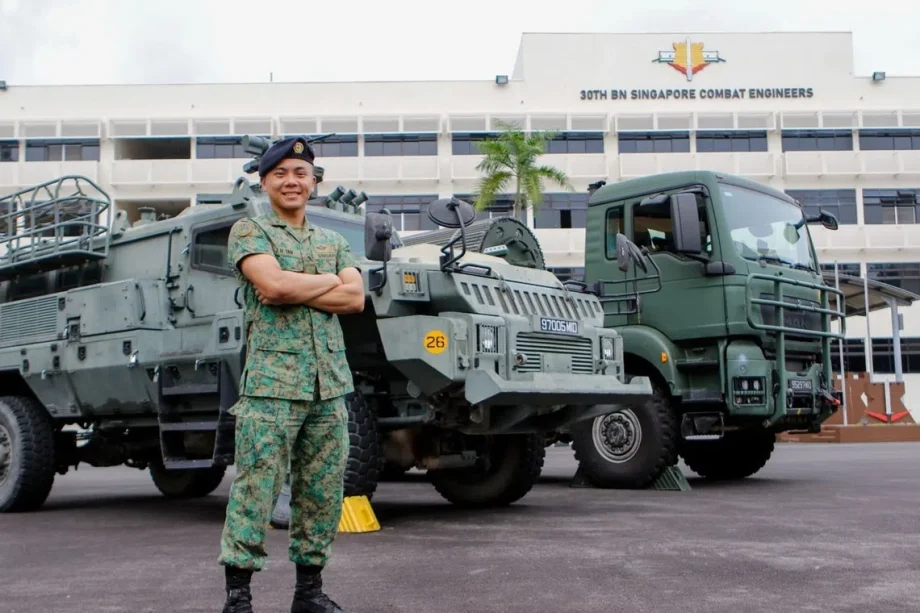
Lieutenant-Colonel Brandon Tan’s work is, in many ways, laying the foundations for the Army of the future.
As Deputy Assistant Chief of General Staff for Plans and Head Force Plans, Tan helps shape the Army’s long-term development – from its technology, budget, manpower and land-use needs to how it prepares for evolving forms of warfare.
His role requires him to look beyond the Army’s immediate needs and consider what it will take to ensure that the force remains ready and relevant for the challenges ahead.
The plans he works on may not bear fruit for another five, 10 or even 15 years. Yet decisions made today could determine whether the Army is ready for a future in which autonomous systems, artificial intelligence and new defence doctrines change how wars are fought – or whether it can respond to unforeseen disruptions.
For Tan, preparing the Army for the future is not only about anticipating new technologies, policies or threats. It also means developing soldiers and leaders who can adapt, make decisions and lead through change.
The heartbeat of the future Army
For all the emphasis on capability development, technology and long-term planning, Tan believes the Army’s most important asset has not changed through the years: its soldiers.
That conviction shapes the decisions he makes. However advanced the Army becomes, it must still equip its soldiers with the ability to think critically, the agility to adapt and the courage to act when circumstances change.

Tan (right) presents a plaque to a soldier from 30 SCE. The example set by his former wing commander shaped his belief in recognising and bringing out the best in every soldier.
PHOTO: COURTESY OF BRANDON TAN
From the tank battles and infantry assaults of World War II to future battlefields shaped by autonomous drones and unmanned systems, warfare has changed dramatically. Yet as Tan puts it, war is fundamentally about pitting will against will.
Drawing on military theorist Carl von Clausewitz’s ideas, Tan says: “Technology is a means to an end. It will never fully replace the visceral element of warfare, which requires strong leadership.”
Tan first saw what such leadership looked like during his own time at Officer Cadet School (OCS), where his wing commander’s dedication to those under his charge left a lasting impression on him.


Read Full Article At Source