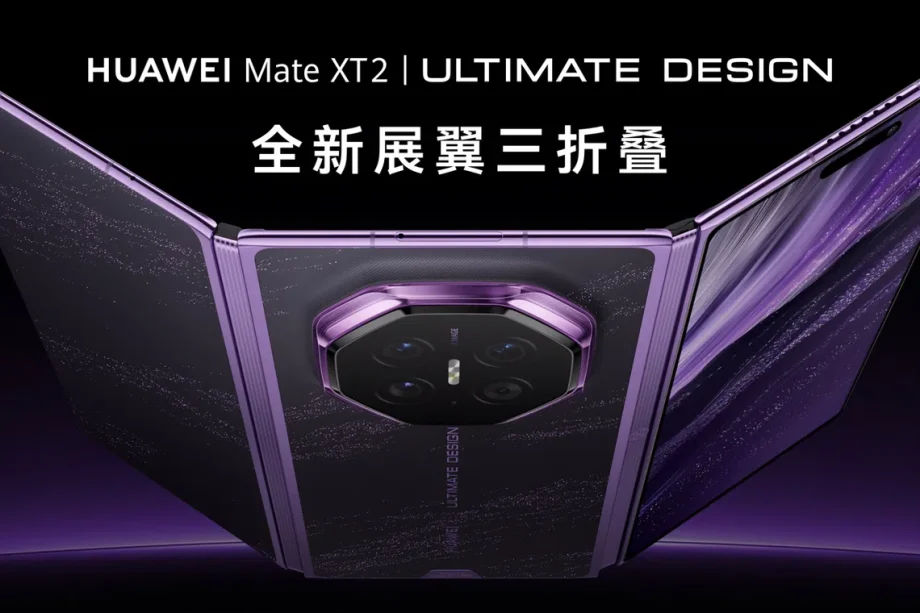
In case you missed it, Huawei announced its second flagship tri-fold, the Huawei Mate XT 2 Ultimate Design (which we’ll refer to as Mate XT 2).
This follows its debut tri-fold, which is available in Singapore (albeit quite late). The new Mate XT 2 is also the third tri-fold in Huawei’s lineup, as the previously launched Huawei Mate XTs rolled out in only a few markets.
Before we get into the foldable’s upgrades, we noticed one of Huawei’s biggest achievements to date: the Kirin 9050 Pro processor, based on a new scaling law it developed.
Kirin 9050 Pro, the debut chip with LogicFolding Tau (τ)
This is mild nerd territory. If you’re more interested in what the phone can do, you may skip past this section.
In chip design, semiconductors (and their makers) grapple with diminishing returns as they attempt to squeeze more transistors into a very small space.
Some observations, like Moore’s law, assume semiconductor costs fall as component counts rise (more and tinier transistors in the same space).
Readers who have heard of Moore’s law would also know that its death and end have been predicted countless times. Depending on who you ask (e.g. 1, 2), it stopped being relevant in the 2010s, 2020s, yesterday, tomorrow, and never. You get the gist.

Read Full Article At Source