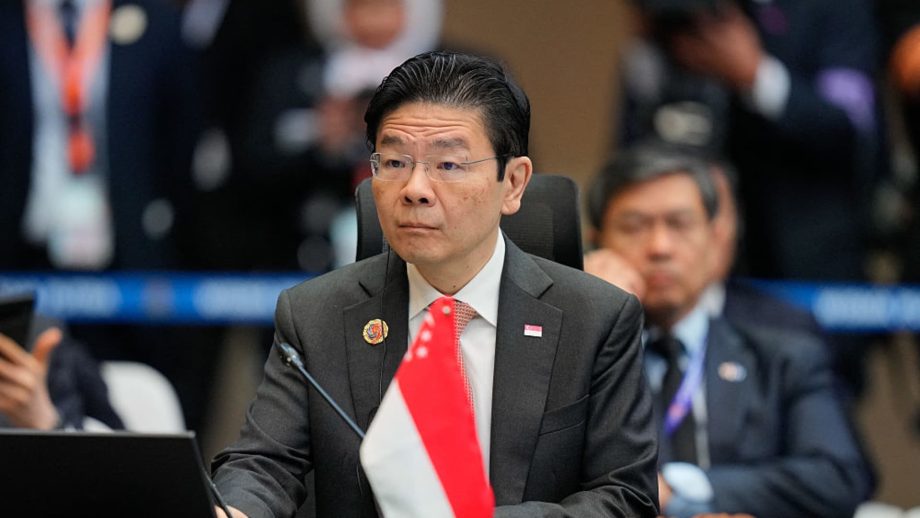
Singapore’s Prime Minister Lawrence Wong attends the 28th ASEAN Plus Three (APT) Summit during the 47th Association of Southeast Asian Nations (ASEAN) Summit in Kuala Lumpur on October 27, 2025. (Photo by Vincent Thian / POOL / AFP) (Photo by VINCENT THIAN/POOL/AFP via Getty Images)
Vincent Thian | Afp | Getty Images
Singapore’s prime minister has commonly been cited as the world’s highest paid elected leader. Now, incumbent Lawrence Wong will see the compensation gap between him and his global counterparts grow even wider.
Wong on Tuesday announced in the parliament that ministerial salaries will be adjusted upwards, having remained unchanged for 15 years.
Following the revisions, Wong’s annual pay package will rise to 3.6 million Singapore dollars ($2.85 million) from SG$2.2 million.
The SG$3.6 million figure consists of both fixed and variable components, and Wong has pledged to donate his full salary increase to charity for five years, assuming he remains prime minister.
A quick comparison shows the gap between Wong and other world leaders is quite stark. The new package is just more than four times that of the Swiss president, and seven times the $400,000 salary paid to the U.S. president.
A clean wage
Singapore’s political salaries are linked to the private sector.
Data from the Public Service Division revealed the salary level of an entry level minister, known as the MR4 grade, is based on the median income of the 1,000 highest-earning Singapore citizens, with a 40% discount to reflect the ethos of public service.
That figure will rise from $1.1 million to $1.8 million, with the prime minister drawing twice the MR4 grade.
The city-state says that competitive salaries help it attract capable candidates who may otherwise remain in business, finance or other highly paid professions.
It also describes the system as a “clean wage” model without hidden personal perks or other salary components. A political office holder will only draw one salary, no matter how many portfolios a person holds.
However, a jump in the MR4 benchmark does not mean that every Singapore minister will see their salaries increase by that much immediately.
Wong said in the parliament that existing political officeholders will receive one-off adjustments of up to 9% from Oct. 15, based on factors including performance and when their salaries were last adjusted.
A minister currently receiving S$1.1 million could therefore initially see annual pay rise to around S$1.2 million rather than immediately reaching S$1.8 million.
Further adjustments will depend on individual performance and responsibilities, he said.
“Political salaries are a difficult and emotive issue,” Wong said, adding that “The sums involved are more than what most citizens earn. So I understand why Singaporeans scrutinize them closely, and why many feel strongly about the matter.”
“But we run an open system and believe in being transparent about ministerial salaries. We cannot avoid this issue simply because it is politically difficult.”
Read Full Article At Source