SINGAPORE – Across Lee Hsien Loong’s two-decade premiership, Singapore became a wealthier country with a stronger and more diversified economy, despite having to weather several major crises.
Yet, his defining achievement may well be how the city state built a more comprehensive social safety net between 2004 and 2024, according to the editors of a new book launched on Sept 8 on Lee’s tenure as Singapore’s third prime minister.
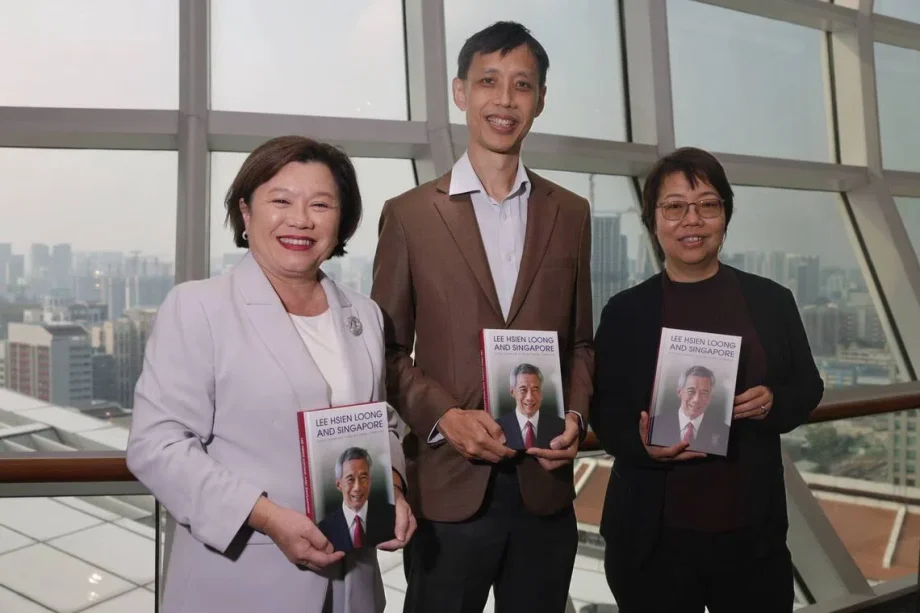
Titled Lee Hsien Loong And Singapore, the 440-page publication brings together 23 essays from Singapore’s leading thinkers and policy practitioners.
The book from the Institute of Policy Studies (IPS) is edited by IPS senior research fellow Gillian Koh, former Opinion editor of The Straits Times Chua Mui Hoong, and Nominated MP Terence Ho, who is also executive director and associate professor (practice) at the Institute for Adult Learning, Singapore University of Social Sciences.
Contributors include former Monetary Authority of Singapore managing director Ravi Menon, Professor Tommy Koh, Professor Chan Heng Chee and Manu Bhaskaran, an economist and expert on regional politics and geopolitics.

Copies of Lee Hsien Loong And Singapore on display during the book’s launch on Sept 8.
ST PHOTO: JASEL POH
Chua said the biggest change in Singapore by 2024 was how people felt about dealing with the vicissitudes of life compared with in 2004, when the Republic’s social safety net covered largely only the very old or sick.
This was a direct result of changes in social policy brought about by Lee and his government, she said.

Read Full Article At Source