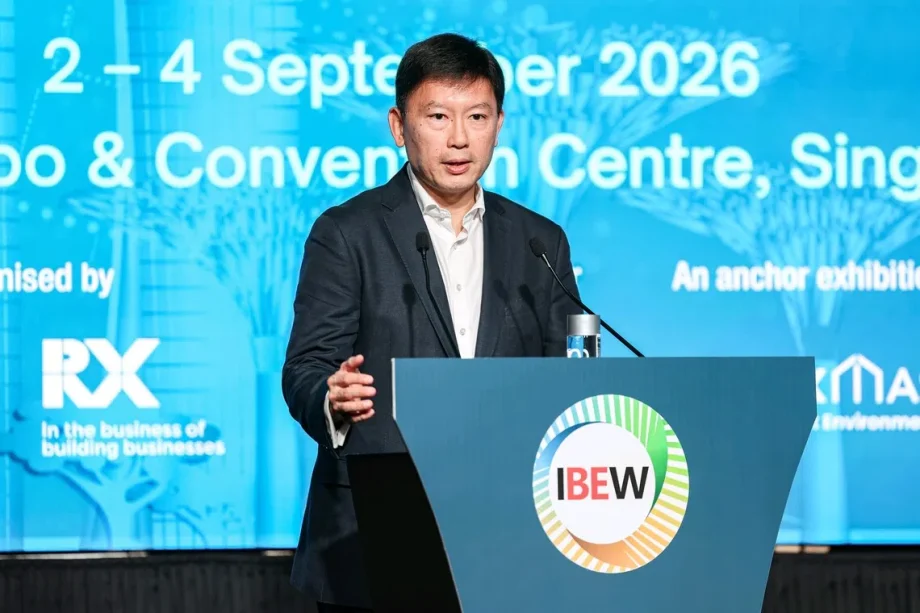
SINGAPORE – Over the next five years, some $112 million will go towards research and innovation for the built environment, as well as commercialising solutions that can be deployed in Singapore and overseas, National Development Minister Chee Hong Tat said.
The funds will be set aside under the Research, Innovation and Enterprise 2030 (RIE2030) plan, with focus areas including developing safer and more productive demolition techniques.
This is in addition to about $185 million that has been secured under the plan in the past year.
“As we rejuvenate more parts of our city, we need better ways to carry out demolition works more efficiently and safely, while minimising risks, disruptions, noise and other disamenities in dense built-up areas,” Chee said on Sept 2 at the International Built Environment Week (IBEW) 2026.
Developing smarter ways to maintain buildings is also important, he said.
“As our buildings age and their uses become more diverse, we need better tools to assess structural health, lifecycle costs and the remaining operational lifespan. These tools can help building owners anticipate maintenance needs, plan repairs in a timely manner,” he said.
Efforts to reduce operational and embodied carbon emissions will also be stepped up, as Singapore works towards achieving net-zero carbon emissions by 2050, Chee said.
Finally, greater emphasis will be placed on helping promising innovations translate into real-world solutions.
“Ultimately, our investments in R&D must translate into tangible improvements in the way we design, build and manage the built environment,” he said.
To unlock more underground uses to optimise limited land resources, the Government will also work with the National Research Foundation to tap more funding to support innovation in Singapore’s long-term underground development goals, Chee said.
The first grant call for RIE2030 is expected to be launched later in 2026 to get more companies to co-develop new solutions, participate in pilot trials and adopt promising innovations in their projects, Chee said.
A greener built environment
Singapore’s efforts to build greener have also made steady progress, Chee said. The built environment sector accounts for over 20 per cent of the country’s carbon emissions.
Greening buildings is critical to reducing the country’s carbon footprint and achieving its targets by 2030 under the Green Building Masterplan, and the Singapore Green Plan 2030.
Read Full Article At Source