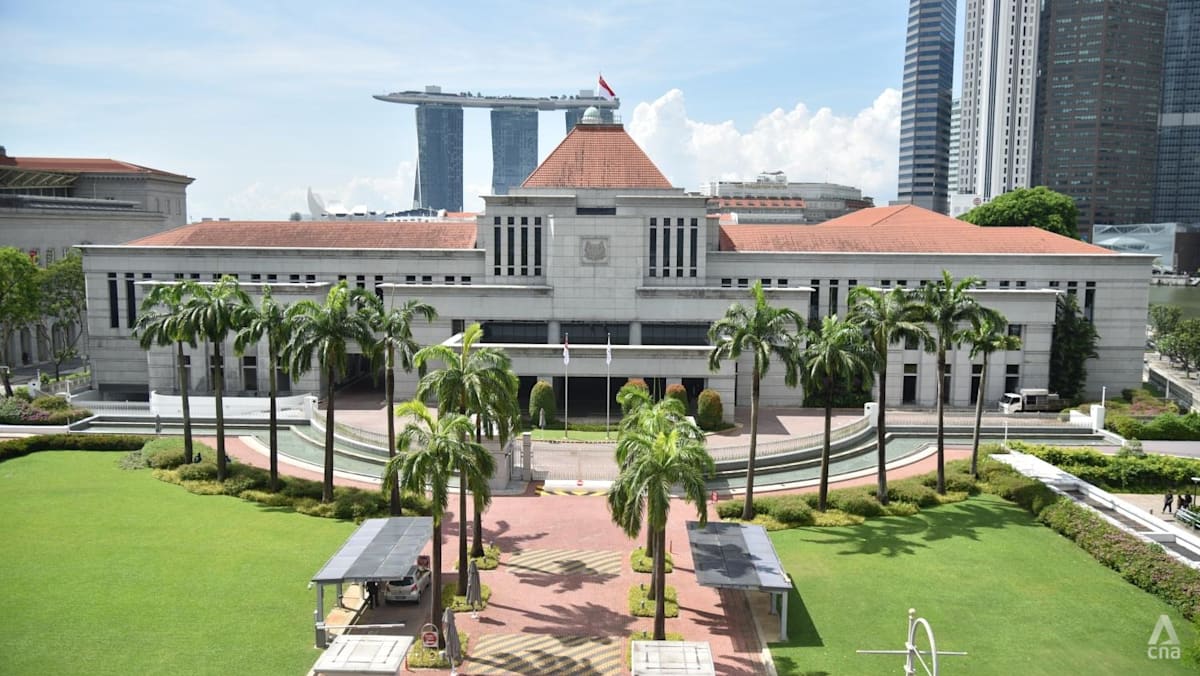
SINGAPORE: The review of Singapore’s political salaries will be addressed in parliament on Tuesday (Sep 8), with Prime Minister Lawrence Wong and Coordinating Minister for Public Services Chan Chun Sing delivering the government’s response on the matter.
Political salaries are reviewed by an independent committee that is appointed once every five years, but there has been no change to how much ministers and parliamentarians are paid since 2011.
The last review was completed in 2017 with the government deciding not to implement any changes, while a review slated for 2023 was deferred due to prevailing global circumstances.
The political salaries framework covers the salaries of the president, prime minister, speaker of parliament, deputy speaker of parliament, members of parliament (MPs), non-constituency MPs, nominated MPs and political appointment holders.
CNA looks at how the salaries are calculated and benchmarked against the private sector, and why past recommendations to raise them were not taken up.
How are political salaries calculated?
The political salary formula contains both fixed and variable pay components:
- A fixed component of 13 months
- An annual variable component, typically set at one month
- An individual performance bonus, set at three months for good performance
- A national bonus, set at three months if targets are met.
If all the boxes are ticked, the political appointment holder could receive an annual salary of 20 months.
The benchmark for an entry-level minister is based on the median income of the top 1,000 Singaporean income earners. A 40 per cent discount is applied to reflect the ethos of sacrifice that political service involves.
An entry level minister is appointed at a grade of MR4, and can also be appointed to more senior grades of MR3, MR2 and MR1 subsequently.
A minister may start out at the lower end of the MR4 range with a monthly salary of S$46,750. This works out to an annual salary of S$935,000, of which the fixed component is S$607,750 and the rest is variable.
The monthly salary at the benchmark level is S$55,000, which comes up to an annual salary of S$1.1 million. The fixed component is S$715,000 and the rest is variable.
Meanwhile, the national bonus is based on four socio-economic indicators, weighted equally: The real median income growth rate of the average Singaporean, the real income growth rate of the lowest 20th percentile of Singaporean income earners, the unemployment rate of Singaporeans and the real gross domestic product (GDP) growth rate.
How much do the prime minister and president earn?
The president, prime minister, parliamentary speaker and deputy speakers are on fixed salary points which are set at pre-determined ratios to the MR4 salary, reflecting their roles and responsibilities.
For instance, the prime minister earns twice the salary of an MR4 minister, or S$2.2 million. There is no one to decide on the performance bonus for the prime minister, so his bonus is based only on the national bonus.
The president receives the same monthly salary as the prime minister, including the 13th month fixed component, as well as the annual variable component but without the performance and national bonuses. This works out to S$1.54 million.
Read Full Article At Source