
Ryan Wee has what he considers a good number of friends.
The self-professed introvert does not need many. He is content with his current circle of friends, which includes about five people he calls close friends – those he can confide in and be vulnerable with.
But maintaining those ties has taken more effort as the 26-year-old, who works in a content marketing agency, ages into adulthood.
“It’s hard to arrange a date to meet when people have jobs and are getting married,” Wee says. “There are many competing interests.”
Making new friends is even tougher, he thinks.
“I think people are a bit more guarded in Singapore; we’re not so outgoing that we’ll strike up a conversation with someone on the train,” says Wee, who studied history at University College London.
“We’ll approach people in a specific setting, like some sort of common interest club or (social) event,” he adds. “But outside of that it’s quite unusual.”
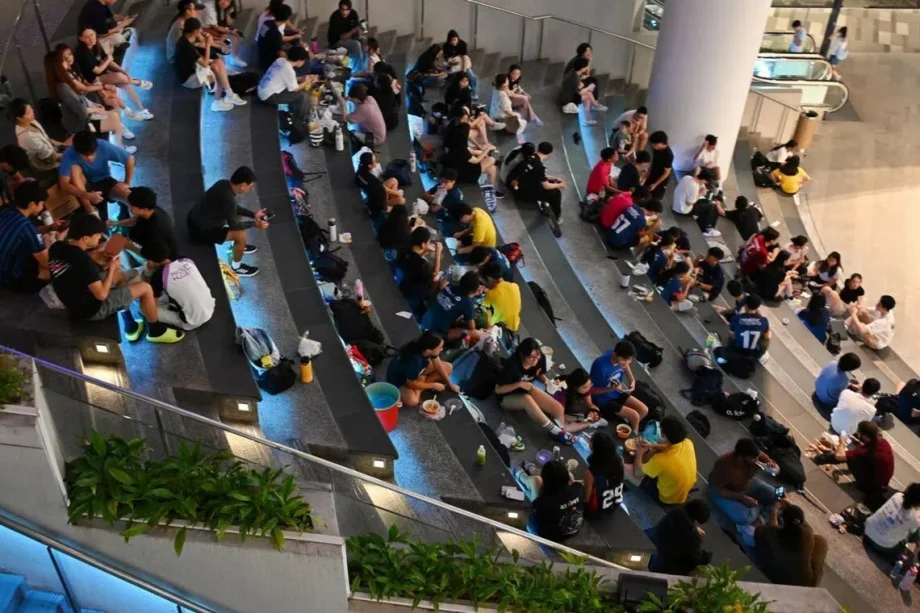
Wee is likely not alone in feeling this. Friendship circles in Singapore have been shrinking, especially among young people. But some young people are also discovering that a shared purpose can bring them closer to others.
Maintaining friendships
According to the National Youth Council’s (NYC) National Youth Survey, the proportion of youth with more than three close friends dropped from 56 per cent in 2013 to 48 per cent in 2025. Eight per cent say they have no close friends in 2025, up from 4 per cent in 2013.

The National Youth Council’s National Youth Survey found that 48 per cent of youth respondents have more than three friends in 2025, down from 56 per cent in 2013.
PHOTO: ST FILE
But young people do want to forge strong friendships. One in three youth say they are keen to make new friends, and over one in two want to improve their current relationships, according to a NYC Youth Needs Survey conducted in 2025.
Such findings come together to shape the SG Youth Plan, launched in July 2026. The five-year roadmap, based on responses from over 60,000 youth aged 15 to 35, aims to help young Singaporeans become more confident, connected and able to contribute.
Narasimman Tivasiha Mani, co-founder and executive director of Impart, a non-profit organisation dedicated to helping youth facing adversities, says young people face different challenges in forming and maintaining friendships at different junctures in their lives.
Those in school often have their time taken up with classes, tuition and extracurricular activities, he says. Meanwhile, youth transitioning from school to work face “an abrupt drop-off in relational health once they step outside institutional safety nets”, he adds, such as the natural common spaces schools offer.
Building stronger bonds
Spearheaded by the Ministry of Culture, Community and Youth (MCCY) and the National Youth Council (NYC), the SG Youth Plan is a five-year roadmap shaped by responses from over 60,000 youth aged 15 to 35.
The SG Youth Plan aims to help young Singaporeans develop confidence to navigate life transitions, forge meaningful connections, and give back to society.
Connect

“Third spaces” are defined as casual places outside of school, work and home, where people can mingle and hang out.
PHOTO: ST FILE
One of the key initiatives is the creation of 12 “third spaces” – casual places outside of school, work or home where youth can hang out.

Finding a community

Nathaniel Chan (bottom right), co-president of youth-led music education collective The Resonance Project with fellow volunteers of the group.
PHOTO: COURTESY OF NATHANIEL CHAN
Outside of school, helping others is how Secondary Four student Nathaniel Chan met several of his close friends.
The 16-year-old teaches kids how to play ukulele at a student care centre every Wednesday as part of The Resonance Project (Reso).
Reso is a youth-led and volunteer-run non-profit collective founded in 2021. It brings music education to underserved seniors and primary school pupils, providing music lessons at places like active ageing centres, student care centres and family service centres.
Chan joined in 2024 after attending one of Reso’s outreach concerts. He has been one of two co-presidents of the group since July 2026. He considers many of his fellow volunteers his close friends.
Volunteer teams at each centre are fixed, he explains. “You do debriefs, planning calls and generally spend a lot of time with (the same people). Naturally, you’ll get to meet and find people that way.”

The Resonance Project’s annual recital in November 2025 brought its beneficiaries from different centres together to perform for one another and showcase their musical progress.
PHOTO: COURTESY OF NATHANIEL CHAN
Nearly 80 per cent of youth surveyed by NYC say they want to do good and take action, but 43 per cent are unsure how to start.
“I think for people who are a bit hesitant (about volunteering), my advice would be to bring a friend along,” says Chan. “It’s more comforting to go through the experience with someone you already know.”
What keeps them going once they start? Young people value genuine contribution, says Narasimman, but they tend to become disengaged if they feel their involvement in a cause is tokenistic.
“Youth derive a sense of purpose only when they possess authentic agency; the knowledge that their choices directly shape real-world outcomes,” he says.
It is this sense of agency that has kept Chan active in Reso, an entirely youth-run project. It currently has more than 350 active volunteers, most of whom are aged 12 to 18.
“The fact that everything is run by us – that gives us a lot of ownership, in the sense that we know we’re the ones making real impact,” says Chan.
Like Chan, volunteering is a part of Wee’s life. The competitive Scrabble player – ranked third in Singapore – helps to run Scrabble workshops, sessions and tournaments for community centres as a member of Singapore’s Scrabble Association since 2014.
“If they need someone to liaise with participants during a tournament, or they need a slightly better player to show new players the ropes, I volunteer to teach people,” he says.

Competitive Scrabble has not only earned Ryan Wee (above) tournament titles, but also a diverse group of friends he says he would not have found otherwise.
PHOTO: COURTESY OF RYAN WEE
Competitive Scrabble has not only earned Wee tournament titles, but also a diverse group of friends he says he would not have found otherwise.
He met one of his close friends – a fellow player in his 50s – through Scrabble. They meet regularly to train and sharpen their skills, and Wee visits his home every Hari Raya.
It would have been hard to befriend somebody at such a different life stage in any other context, he adds.
“I would not have known him if not for Scrabble,” says Wee.

-
In Perspective is a research-led content programme by SPH Media that combines insight-driven storytelling with expert perspectives on key issues shaping society.
In partnership with the National Youth Council
Read Full Article At Source