DJI Romo P review: a unique robot vacuum

DJI Romo P review: a unique robot vacuum


Everyone knows DJI as the maker of consumer drones such as the Mavic series, as well as gimbal cameras like the Pocket. But a robot vacuum? Who would have thought?

Then again, a robot vacuum is not quite that different from a drone – if you think about it. Both use cameras and sensors to map and manoeuvre around their surroundings, recognise and avoid obstacles in their paths, and eventually return to where they started – or the dock, in the case of a robot vacuum.

Seen from that perspective, the transparent-bodied DJI Romo P starts to make a bit more sense. Whether DJI is merely dipping its toes into smart home appliances or planning a much wider push remains to be seen. For now, its first attempt already makes quite a statement – at least fashionably.
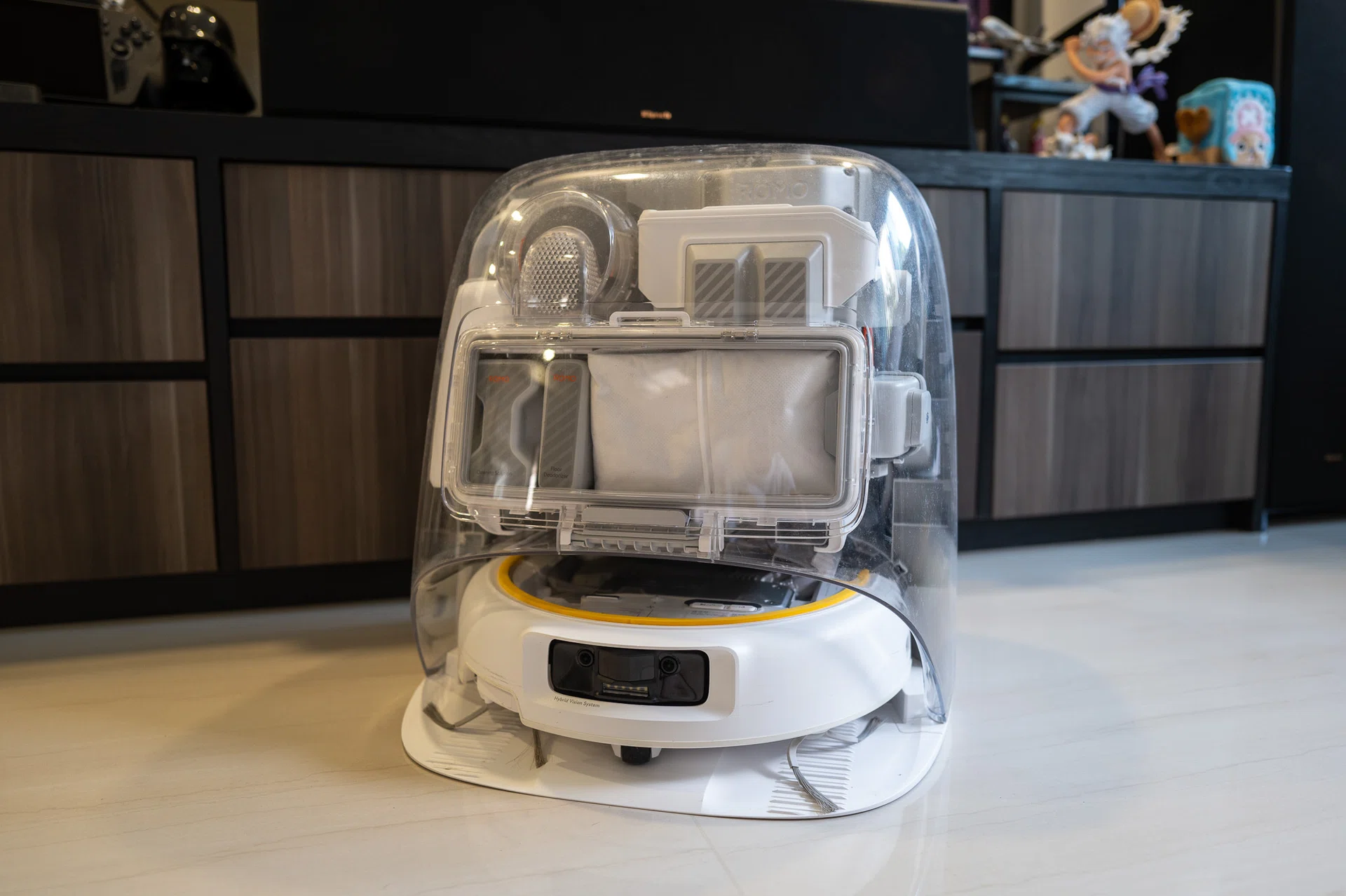
DJI Romo P transparent dock

Fortunately, you don’t get to see dirt being transferred from the robot vacuum to the dust bag.

Photo: HWZ

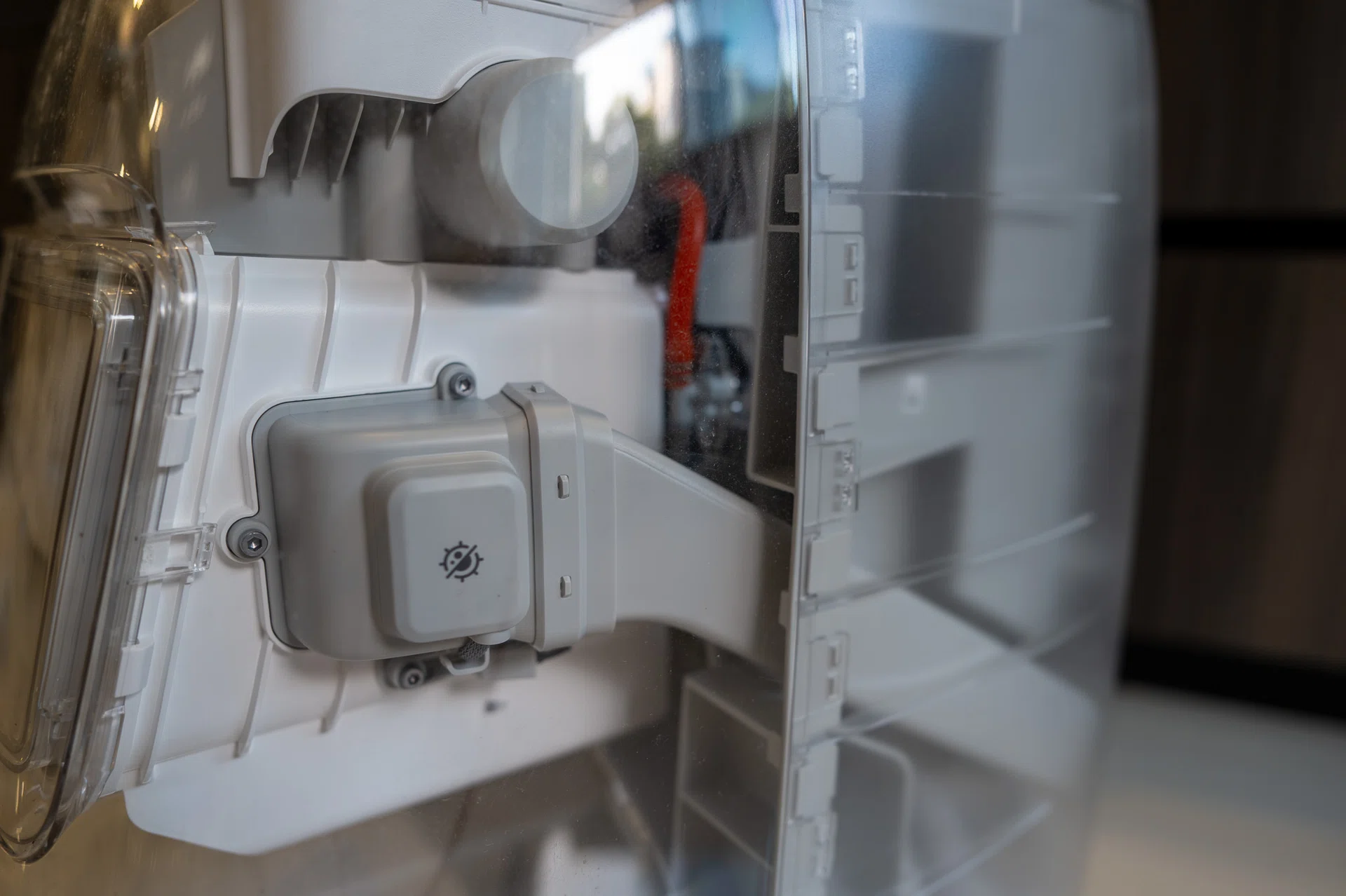
Both the robot and its dock leave much of their inner workings exposed, so you can see the tubing and other mechanical parts that other brands would normally hide. I find it quite fascinating, especially if you’re a tech geek like me, although the Romo P probably looks more at home in a research lab than in a living room. I’m sure it will also become a conversation starter whenever guests visit.

It is worth pointing out, however, that the tubing and water tanks themselves are opaque. Thankfully, this means the dust, dirty water and everything else the Romo Pcollects are not placed on display. Whether the overall design appeals to you will largely depend on your taste, but the more important question is this: does it clean well? Let’s find out.

Hands-on and performance
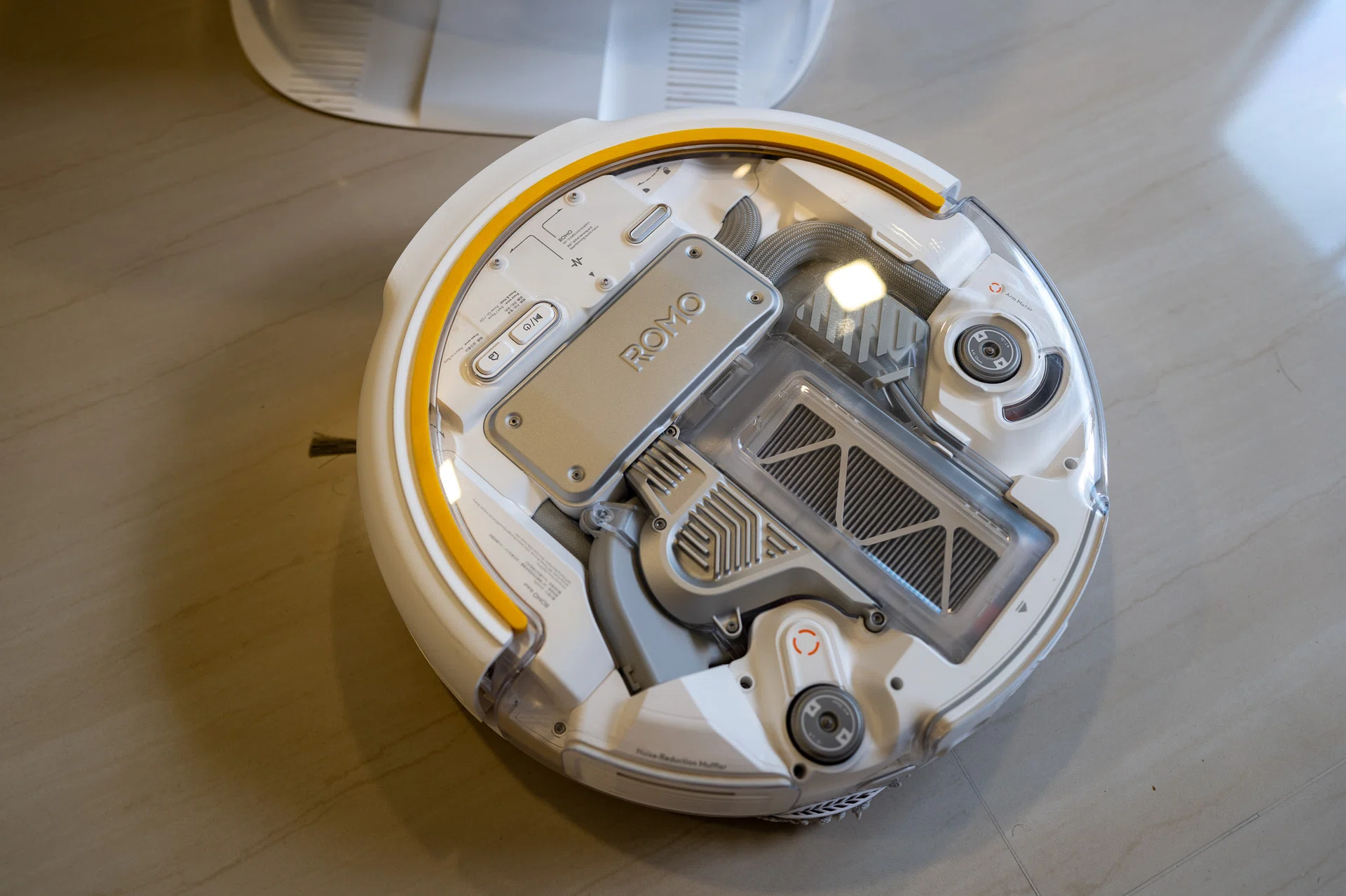
DJI Romo P robot vacuum

It’s easy to imagine the Romo P as a spaceship from the Star Wars universe.

Photo: HWZ
Perhaps what surprised me most about the Romo P was its navigation. Then again, should it really have been a surprise? This is precisely the sort of technology DJI has plenty of experience with, even if it is still the new kid on the block when it comes to smart home appliances.

After setting it up and pairing it with the DJI Home app, the robot mapped my home fairly quickly. It gets surprisingly close to furniture without repeatedly bumping into it and, more importantly, recognises the small objects that can stop less observant robot vacuums in their tracks. This is thanks to a pair of binocular fisheye vision sensors working together with wide-angle solid-state LiDAR.

By comparison, I usually had to pick up loose items and other small clutter before starting a cleaning run with the Dreame Aqua 10 Roller AE. The Dreame combines LDS navigation with dual-laser 3D structured light, rather than a camera-based vision system, and I found its obstacle avoidance less dependable. The Romo P requires less preparation. It spots cables, slippers and other small objects pretty well, then steers around them without leaving an unnecessarily wide area untouched.

The Dyson Spot+Scrub AI I reviewed recently was also very good at recognising objects and stains, but I found the Romo P moved with slightly more confidence. It is also noticeably less cumbersome than the unusually thick Dyson robot.

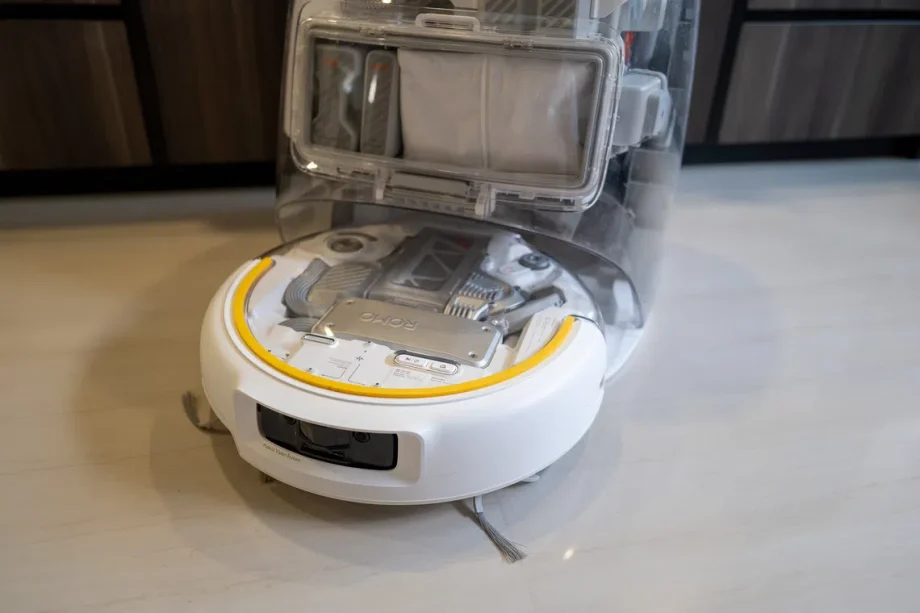
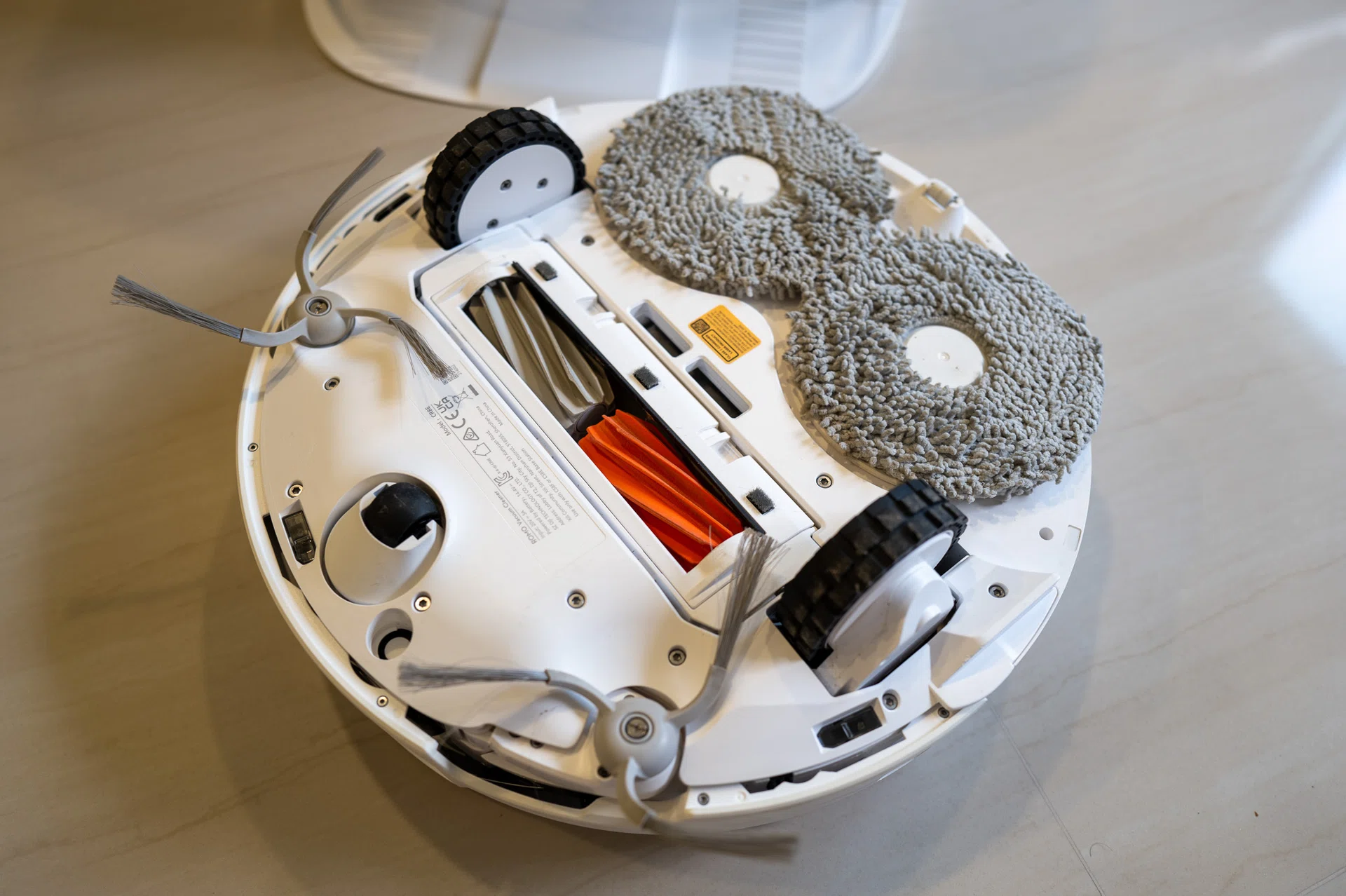
Romo P underside

It would have made the Romo P even more interesting if the bottom was transparent as well.

Photo: HWZ

Cleaning is done through two roller brushes and assisted by two side brushes. One of those side brushes can extend to reach along walls and into corners, while their rotational speed changes to reduce the chance of scattering debris across the room.

On the marble and parquet flooring in my home, it had little difficulty picking up dust, crumbs and dog hair. The extending brush is also useful around skirting boards and furniture legs, although, like most robot vacuums, it cannot completely replace the occasional manual clean in awkward corners. In terms of overall cleanliness, I’ll be honest, though: the Romo P did not leave my floors noticeably cleaner than the recent models I tested from Dreame and Dyson. I think we have reached a point of diminishing returns when it comes to vacuuming performance. Once a robot can reliably pick up everyday dirt and debris, increasing the suction figure does not always produce an equally obvious improvement. What separates these high-end models now is how well they navigate, avoid obstacles and complete a cleaning run without needing your intervention. In that respect, the Romo P does a pretty good job.

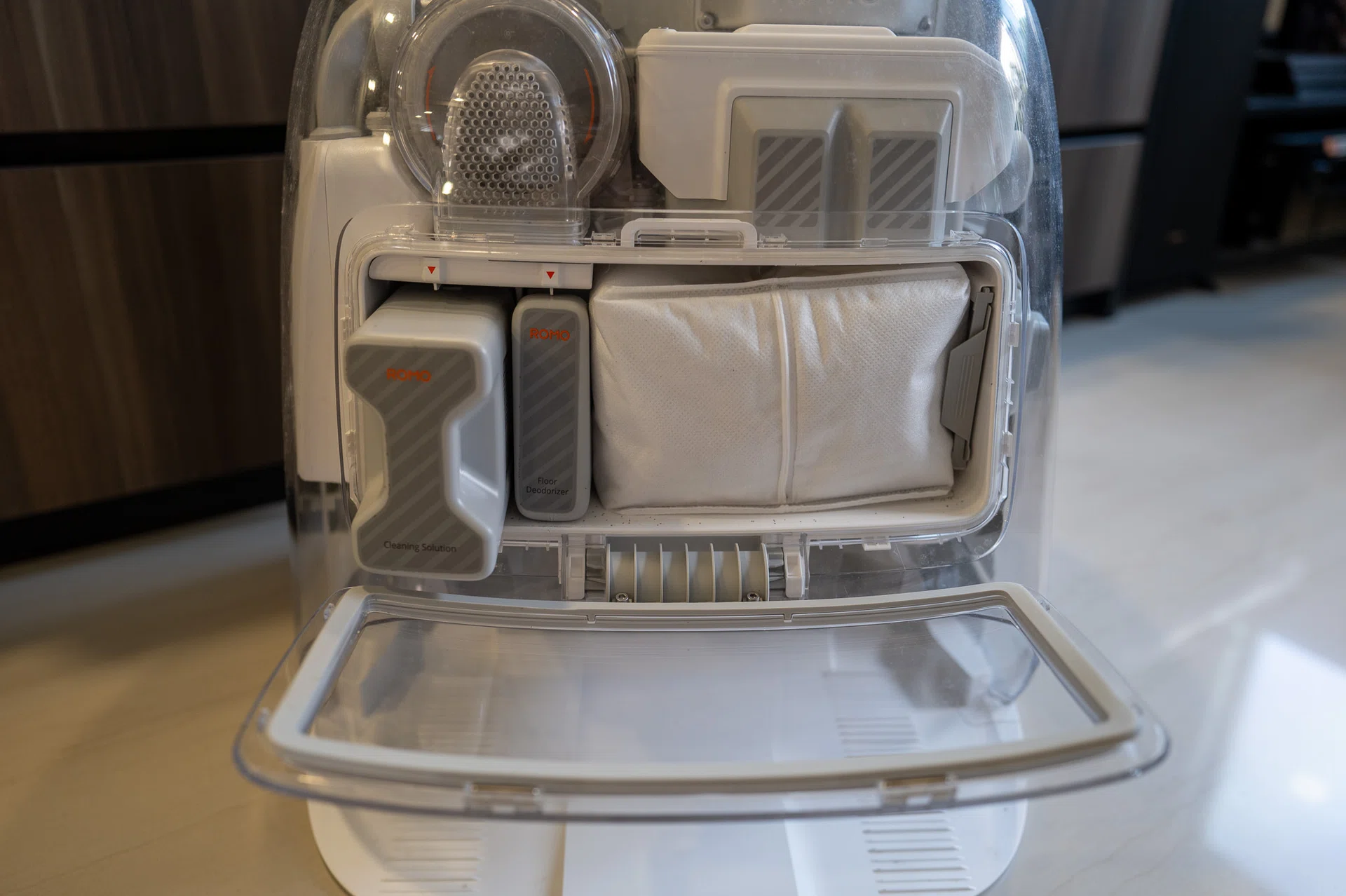
DJI Romo P cleaning tanks

The Romo P’s docking station includes tanks for a cleaning solution as well as a floor deodorizer.

Photo: HWZ

Mopping is where DJI’s first effort feels more conventional. The Romo P uses two thick spinning pads instead of the roller systems that I personally prefer. DJI claims that the pads apply 12N of downward pressure, and they work well enough on footprints, light paw marks and ordinary grime. The right mop can also extend outwards, helping it clean closer to the edge of a room, though not as far-reaching as the Mova V70 Ultra’s extending side mop.

For all its ability to spot tiny objects, the Romo P is not especially capable when it encounters a raised threshold. It does not have the climbing mechanisms now fitted to many competitors’ models. My home is mostly level, so this was less of a concern, but if you have a raised entrance or transition between rooms then this should be a careful consideration.

Final thoughts

Android looking robot vacuum

More droid-looking than a robot vacuum?

Photo: HWZ

The DJI Romo P costs S$1,729 from DJI’s online store, but you can easily find it discounted at retailers such as Gain City, which was selling it for S$1,299 at the time of writing. At that price, it becomes a much more convincing option. Its vacuuming is good, its mopping is adequate and its obstacle avoidance is easily its strongest feature. Personally, I also really like its transparent appearance, which makes it stand out in a sea of anonymous-looking black and white robot vacuums.

However, there is a security matter that cannot simply be ignored. A vulnerability disclosed earlier in 2026 (via The Verge) allowed unauthorised access to Romo devices and their camera feeds. DJI said the video-access issue was patched and that wider system upgrades were being deployed, but an incident like this certainly does not instil confidence – particularly when the product concerned has a camera and moves around inside your home.

That makes the Romo P slightly more difficult to recommend without qualification. Judged purely on its cleaning performance, obstacle avoidance and discounted S$1,299 price, it is an accomplished first robot vacuum from DJI and one I would otherwise readily recommend. Whether you are comfortable with its security history is ultimately a personal decision. If that does not put you off, the Romo P is a capable robot vacuum with a design unlike almost anything else currently available.

The DJI Romo P is available for $1,729, but you can buy it at a discounted price at Gain City (click here to buy).


Read Full Article At Source

Share. Save. Don't Miss The Buzz: XFacebookRedditLINETelegramWhatsAppGmail

Leave a Reply