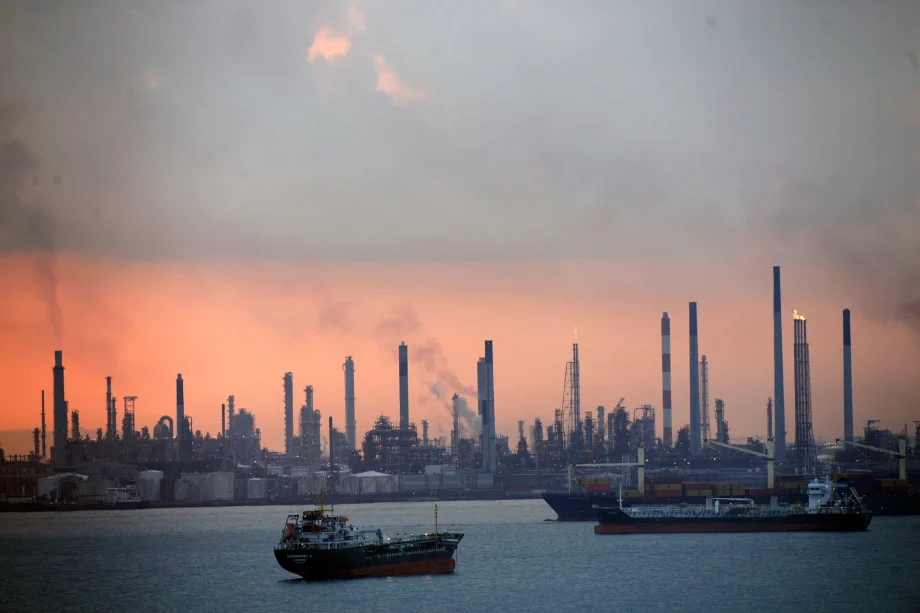
Its proximity to Jurong Island, the Republic’s petrochemicals hub, also provides synergies
[SINGAPORE] Singapore’s new Western island – to be formed from the merger of several islands – could house infrastructure for next-generation clean-power solutions, industry players said.
These could include green hydrogen or – if the Republic decides to proceed with it – advanced nuclear energy.
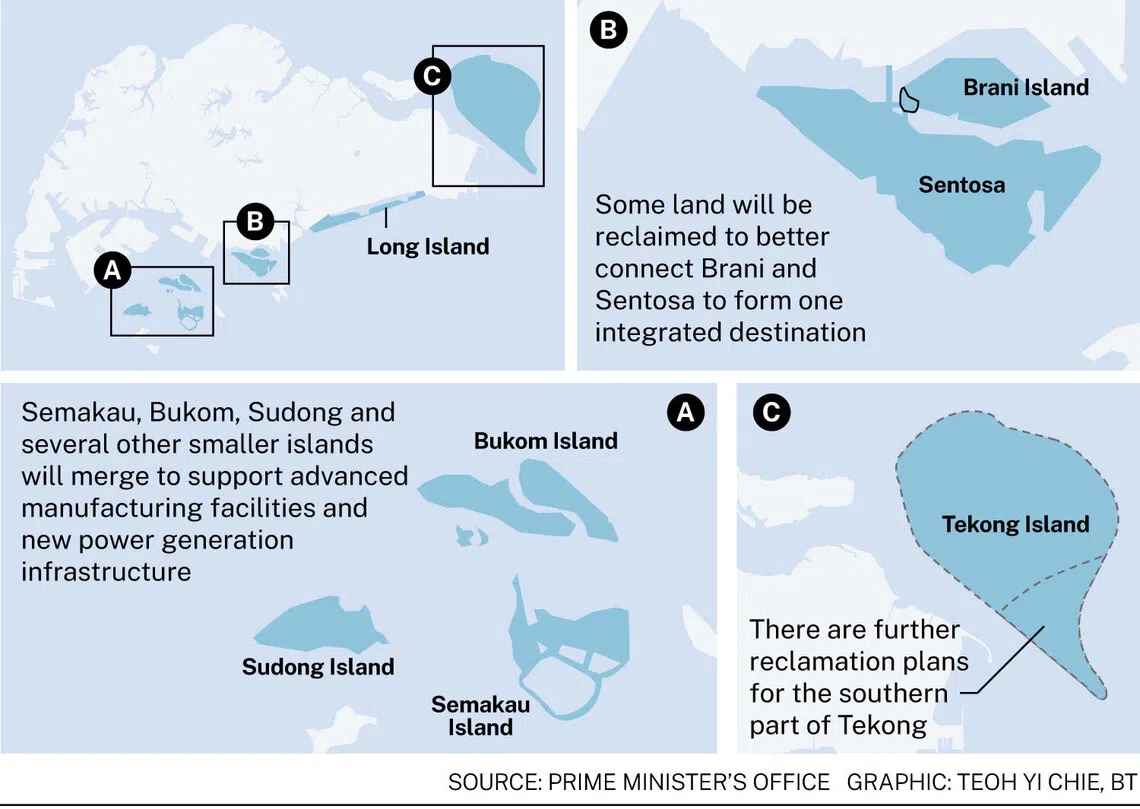
The Western island will be created by merging Semakau, which houses Singapore’s offshore landfill; Bukom, where its first refinery still operates; and Pulau Sudong, which has an airstrip that the Singapore Armed Forces uses during emergencies. It also consists of several smaller islands.
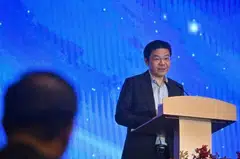
The island will “support a new generation of industries”, said Prime Minister Lawrence Wong at the National Day Rally on Sunday (Aug 23).
Sanjeev Gupta, Asean and Singapore energy leader at consultancy EY-Parthenon, said it could be a viable location for advanced nuclear energy technologies such as small molecular reactors.
“The real opportunity is to build on the success of Jurong Island and create Singapore’s next-generation energy hub,” he added, citing the island’s separation from population centres as a favourable factor to site advanced nuclear energy facilities.
The island could also house infrastructure for nuclear fusion energy – a more nascent technology that has yet to be commercialised, but is progressing “robustly”, said Melvyn Yeo, managing partner of climate technology investor Trirec.
Singapore has not decided whether to adopt nuclear energy, but is studying the option closely.
It will go through a voluntary assessment by the International Atomic Energy Agency in 2027, focused on informed decision-making.
SEE ALSO
Regardless of Singapore’s decision, the new island could be designed for multiple energy sources while “preserving the nuclear option”, reckoned Sunil Veetil, whose Singapore advisory Perdura helps companies with green finance and the energy transition.
“(Building) the common infrastructure is more important than picking the winning technology today,” he said. “Regulations, jetties, storage, grid connections, pipelines, water and utilities should be designed to accommodate several future fuels.”
For instance, green hydrogen has yet to take off, bogged down by high costs and supply chain constraints, as well as large efficiency losses when used for power generation. But these challenges could ease in the future and the fuel could get cheaper, noted Veetil.
Beyond future fuels, the island could also house existing technologies.
Gupta cited natural gas power plants that are hydrogen-ready, allowing Singapore to switch to the clean fuel as the technology matures, while preserving optionality.
An alternative is to develop more domestic solar and energy storage infrastructure, said Kavita Gandhi, executive director of the Sustainable Energy Association of Singapore (Seas).
“There could also be an opportunity to co-locate data centres (with) sources of clean energy,” she said.
Advanced manufacturing possibilities
On Sunday, PM Wong indicated that the new Western island could be tapped for advanced manufacturing.
Yeo believed that Singapore could set up more capabilities in manufacturing specialised components, with its expertise in materials science.
Products could span from heat-resistant materials for nuclear reactors to photonic semiconductors.
The island’s proximity to Jurong Island, Singapore’s petrochemicals hub, also offers synergies.
Said Gupta: “By locating new power generation, hydrogen and ammonia infrastructure, as well as carbon management solutions alongside existing industrial demand, Singapore could strengthen both energy security and industrial competitiveness.
“The close integration between the two islands would also support the development of lower-carbon energy supply chains, helping Singapore attract and retain energy-intensive industries while advancing its longer-term decarbonisation ambitions.”
The new island will include Pulau Bukom, where Aster Chemicals and Energy operates a refinery and is developing a sustainable aviation fuel plant.
When asked how its operations will be impacted, a spokesperson said that the company will work closely with the government “to explore how Bukom can contribute to this next chapter, while continuing to operate our facilities safely and reliably”.
“Delicate” balance with environmental concerns
While the island holds economic potential, this will need to be weighed against environmental trade-offs.
Veetil said: “The southern islands contain some of Singapore’s most valuable marine ecosystems. Reclamation is effectively irreversible, so the ecological cost needs to be explicitly valued rather than treated simply as an environmental permitting issue.”
Yeo likewise said that the new island will be “critical” for economic development, but acknowledged the need to consider biodiversity and environmental concerns.
“It’s always going to be a very delicate balance on competing needs,” he added.
Feasibility and environmental studies “will help build a clearer picture of any impacts on marine ecosystems and how these could be managed”, said Gandhi.
“In a land-constrained country like Singapore, evaluating the best use case of the land, while balancing economic, environmental and social priorities, is always top of mind,” she said.
Veetil called for the island to integrate sustainable innovations, adding: “Waste heat could support water production, treated wastewater could be reused industrially, carbon dioxide could potentially become a feedstock, and recovered materials could support construction.”
Read Full Article At Source