living with an extra x-chromosome and klinefelter syndrome

living with an extra x-chromosome and klinefelter syndrome


SINGAPORE – Former nurse Tim (not his real name) could never recall anything from more than two days ago. Neither could he plan anything more than two days ahead.

This made looking for long-term employment hard, the 33-year-old said.

Growing up, Tim, who asked not to be identified for fear of being recognised by former healthcare colleagues, met all the normal childhood milestones.

“When I was in school, I had a lot of issues studying… I experienced ‘comprehension disorder’. Whenever I was reading a passage, when I got to the second sentence, I would have forgotten the first.

“Studying was almost impossible, so I devised my own methods to remember. It worked, but I was retained in the first year at JC (junior college) because my study methods did not work there,” he said.

Secondary school was difficult for Tim. He was bullied throughout and struggled to recall his lessons.

“At first, it was just frustrating. Later, it was more of a sinking feeling that something was not right,” he added.

Tim also experienced physical pain.

“I had sharp pain in my sides when I was in secondary school and in JC. (The episodes) were fleeting but excruciating, and I would double up in pain.

“My knees cut out when I was at university and I would trip. It was the same feeling as when you sit down for too long and your legs go numb,” he said, adding that there was one morning when he could not feel his left leg from the hip down.

He consulted doctors – from general practitioners to specialists – but none of them could tell him what his condition was.

Tim has an extra X chromosome, a genetic variation that causes Klinefelter syndrome. The condition is hard to diagnose because its symptoms are often very subtle.

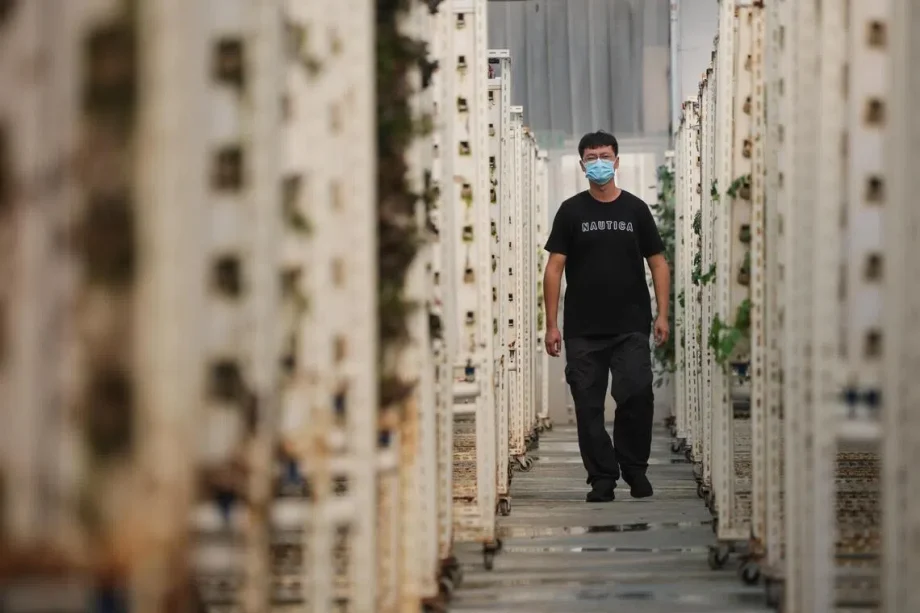
Tim participating in the vocational rehabilitation phase of the NNI Integrated Cognitive Engagement programme and volunteering at Greenhood, a rooftop farm in Hougang. Behind him is Sitizalihah Arsat, senior associate well-being coordinator at NNI.

Tim participating in the vocational rehabilitation phase of the NNI Integrated Cognitive Engagement programme and volunteering at Greenhood, a rooftop farm in Hougang. Behind him is Sitizalihah Arsat, senior associate well-being coordinator at NNI.

ST PHOTO: GIN TAY

Like Tim, men and women with genetic conditions that are practically unheard of often feel that it is impossible to find a cure or even relief from their symptoms.

There are about 3,000 people in Singapore living with such conditions.

While some had their conditions diagnosed as babies, others were diagnosed only in childhood or adulthood. So far, 7,600 genetic diseases have been identified, and more are being discovered every year.

Genetic disorders are usually caused by differences or changes in a person’s genes. While many genetic conditions are inherited from parents who are affected or are carriers, some can arise in children even when neither parent has the condition.

Frustrated, Tim decided to carry out his own research. As a nursing student, he had access to medical journals, so he scoured the literature and databases in search of a name for his condition.

“The only one with the same symptoms I have was a genetic condition,” he said.

“I went to a private hospital and insisted on a genetic blood test to get a diagnosis and was found to have that extra X chromosome. I was in my 20s when I finally found out what I have.”

According to geneticist Angeline Lai, Klinefelter syndrome is a genetic condition affecting only males, in which there is an extra X chromosome, leading to an XXY chromosome pattern.

“Usually, females have two X chromosomes, while males have one X and one Y chromosome.

“In individuals with Klinefelter syndrome, there is an extra X chromosome and thus, 47 chromosomes in total (instead of 46),” said Lai, a senior consultant with the Department of Genomic Medicine at KK Women’s and Children’s Hospital (KKH).

“Women who are above 35 when they become pregnant have a slightly higher chance of having a child with chromosomal anomalies, including Klinefelter syndrome.”

Most cases go undiagnosed

She added that while the condition is estimated to occur in about one in 1,000 newborn males, between 70 per cent and 80 per cent remain undiagnosed throughout their lifetime.

The syndrome is usually diagnosed by a genetic blood test that identifies the karyotype, which is the number, size and shape of the chromosomes.

The genetic blood test can be carried out during prenatal screening, at puberty, or when married couples have difficulty conceiving.

Klinefelter syndrome can be an “incidental finding” during non-invasive prenatal testing for chromosomal conditions such as Down syndrome.

It is tested for especially when a boy’s physical growth is slower, including incomplete development of typical signs of puberty, such as body hair, a deeper voice or enlargement of the testes.

In some boys with the syndrome, breast tissue may develop during puberty.

Lai said: “Apart from these, other findings such as learning difficulties tend to be less specific.”

Tim is tall, a characteristic of the condition, but he did not develop breasts.

He felt, however, that his increasing learning difficulties, together with his physical symptoms, hampered his work as a nurse.

“I was slowly losing my capacity to learn, making it difficult to ramp up my capability to multitask. My eyes were superimposing words onto the containers of different medicine, and I was also experiencing involuntary tremors, making it dangerous for me to remain in my nursing position,” he said.

When his condition worsened, Tim suspected that he had multiple sclerosis (MS), a condition where the body’s immune system attacks the protective covering of neurons. So he went to the polyclinic for a referral to the National Neuroscience Institute (NNI).

Despite having white matter lesions in his brain, which can indicate damage to nerve fibres or their protective fatty covering, he tested negative for MS.

During a consultation with the neurologist, Tim raised the challenges he faced in getting a job and was referred to the NNI Integrated Cognitive Engagement programme.

He attended two rounds of its vocational rehabilitation phase, which offered guided weekly volunteering sessions in the community over eight weeks.

Tim first worked at Punggol Library, where he tidied and shelved books, followed by another eight weeks at Greenhood, a hydroponic and aeroponic rooftop farm where he helped plant, tend and harvest leafy vegetables.

Sitizalihah Arsat, a senior associate well-being coordinator at NNI who runs the programme with a team of associate psychologists, said she saw the difference that vocational rehabilitation had made for Tim.

“His confidence has grown, and he recently told me that he would like more permanent work. I approached a farming company and shared Tim’s experience. I am so happy that he now has a part-time job, and I am looking out for other potential part-time positions to help him fill his week,” she said.


Read Full Article At Source

Share. Save. Don't Miss The Buzz: XFacebookRedditLINETelegramWhatsAppGmail

Leave a Reply