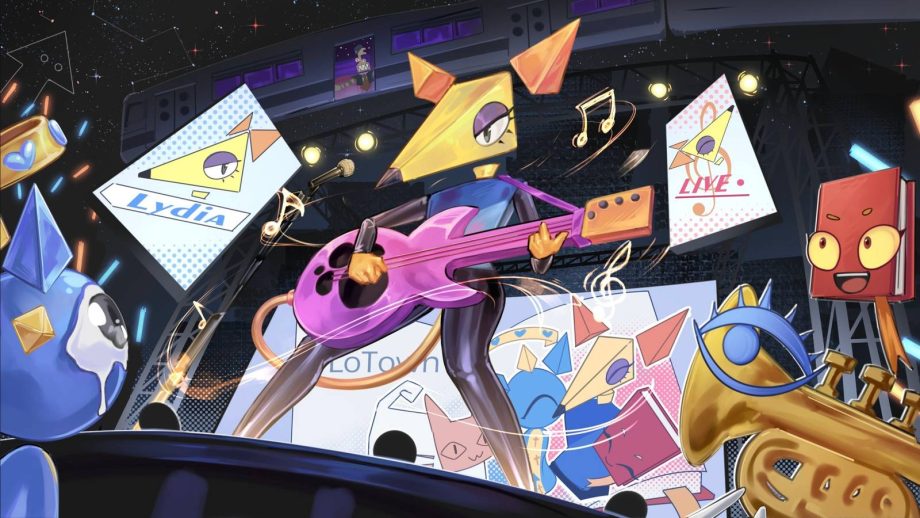
Somewhere in the afterlife, there’s a card catalog full of sentient books. Each one’s been made from a person’s very best moment. Your job’s sorting through them. So far, so good — until you open one up, and there’s no shining memory inside. The reason, you’re told: an entire world out there has lost its god, and without one, no moments get made at all. That news gets you sent hurtling by train to investigate…and thrown headlong into interviewing strangers about their personal crises, asking innocent questions about the shame, self-doubt, and grief that have kept people trapped since their god stopped showing up for them. The way you comfort these strangers isn’t through dialogue choices — it’s through physical transformation. Mid-conversation, you shapeshift: bullets for legs, a cat’s head, a tuba for a torso, whatever the moment seems to call for.
Burden Street Station is a surreal narrative adventure from solo Irish developer Iodine, published by Critical Reflex. The game doesn’t get less strange once you’ve made it past the initial premise, either. The book with no moment inside — and your companion for the rest of the game, named Memo — names you “Bee Eater,” for reasons mostly unclear. You’re sent off to bring back the missing god by an overseer named Collector, who reads less like a mentor than like someone with their own reasons for wanting this solved. You’re completing detective work, kind of, via confusing clues you lift from memories buried deep in other people’s pain.

Burden Street Station gets compared to Disco Elysium quite a bit for its grimness and its oddities. Both games turn a single mind into a cast of competing voices arguing over the best way to handle one weighty conversation. Land on the right persona for a particular chat, and a person will open up and tell you something useful. Land on the wrong one, and you’ll see people flinch, throw you a curveball, or simply wait for you to try again. As you extract more and more memories, you’ll unlock new personas (such as, say, “mysterious,” “killer,” and “…cat”), each of which can change what you look like, in addition to what you’re capable of communicating.

Read Full Article At Source