Welcome to Stomping Ground — a space where Stompers share reflections, personal essays and social commentaries that spark conversation and insight.
The durian has always been a polarising fruit — you either love it or hate it.
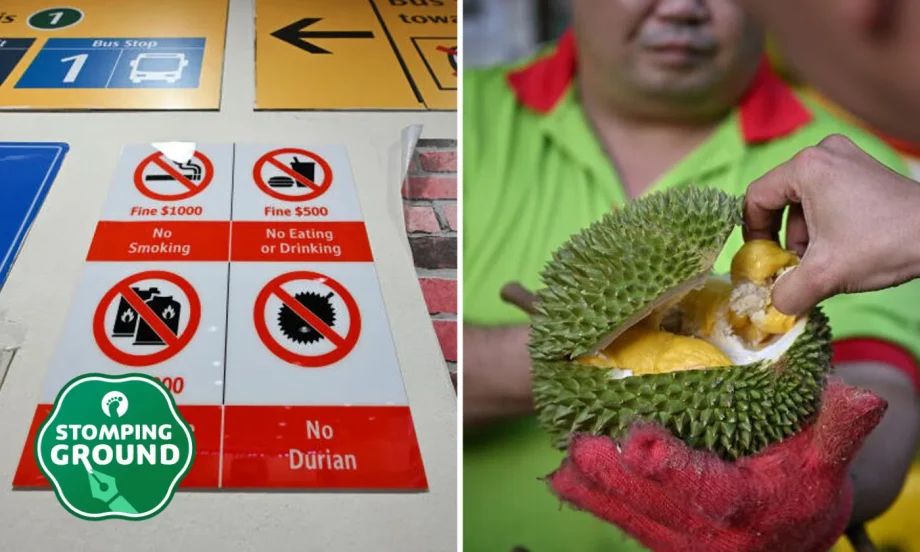
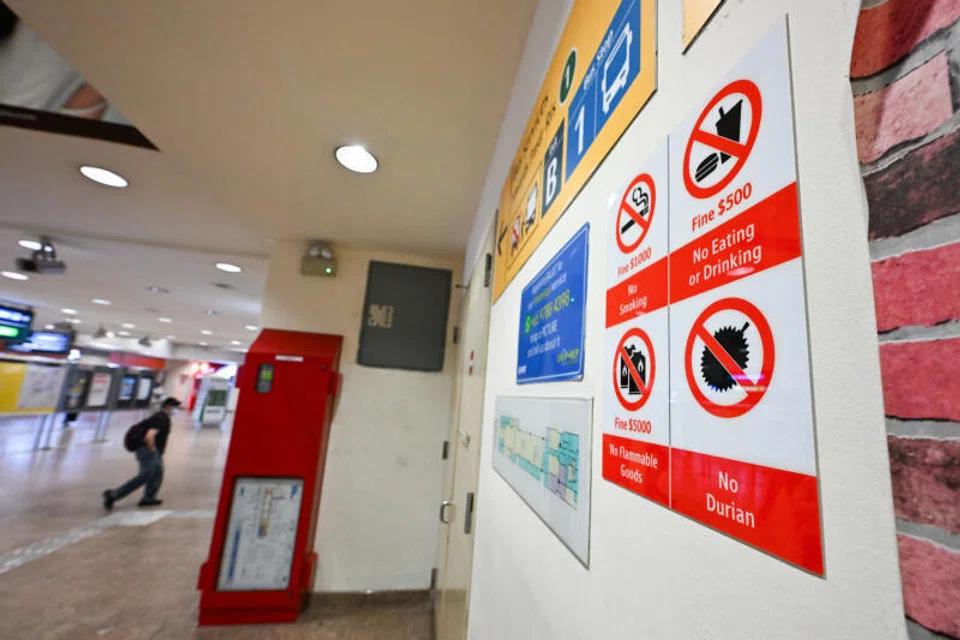
It is also famously prohibited on Singapore’s public transport because of its unmistakable smell. Those caught bringing prohibited items on board the MRT can be fined up to S$500.
But Stomper Anwar feels the familiar “No Durian” sign speaks to a larger issue — one involving public infrastructure, cultural identity and even social class.
“The inspiration to write this came while looking at the iconic ‘No Durian’ sign during a commute,” said the Stomper, who recalled his own personal experience of being denied boarding on a public bus.
Scroll to continue reading
Anwar claimed he was “refused boarding” because he had been carrying durians packed in Styrofoam boxes and ended up walking 20 minutes home instead.
That experience got him thinking: How do you bring the King of Fruits home if you don’t drive?
How the durian ban on buses highlights Singapore’s mobility divide
“The intersection of public infrastructure, culinary identity and social stratification offers a profound lens through which to examine Singaporean society,” Anwar said.
“At the centre of this tension is the durian — revered as the undisputed ‘King of Fruits’ and an undeniable cornerstone of local cultural pride.”
While restrictions on durians are primarily intended to maintain the comfort of passengers in enclosed, air-conditioned spaces, Anwar feels they can have wider implications.
“For a nation where the vast majority of the population relies daily on public transit, restricting how this prized fruit is transported does more than regulate smell,” he said.
“It subtly exposes and amplifies perceptions of socioeconomic disparity and class-based friction.”
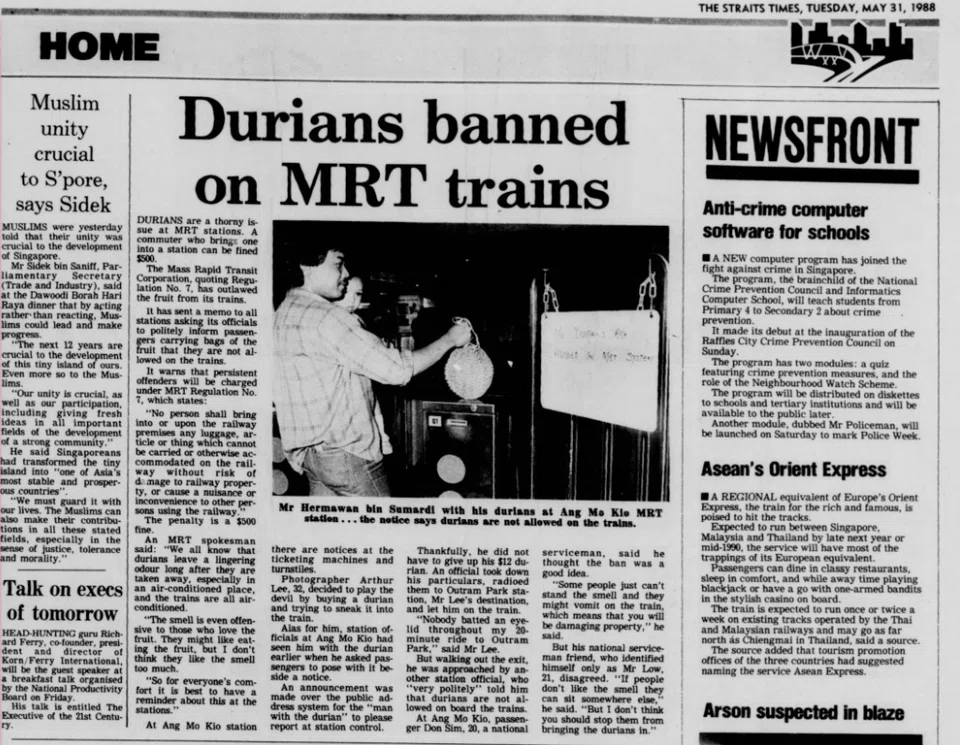
A 1988 news clipping about the durian ban on MRT trains.
PHOTO: NATIONAL LIBRARY BOARD
To Anwar, the durian is more than just something to eat.
He described it as a “social ritual”, with families and friends gathering around a table to crack open and share the fruit.
“Gathering around a table to crack open fresh husks is a multi-generational, communal experience that cuts across ethnic and linguistic lines,” he said.
“It represents a shared heritage and a distinct sensory identity.”
At the same time, he acknowledged Singapore’s need to carefully manage its shared public spaces.
“Singapore’s governance model is highly celebrated — and occasionally critiqued — for its meticulous management of public spaces,” he said.

Read Full Article At Source