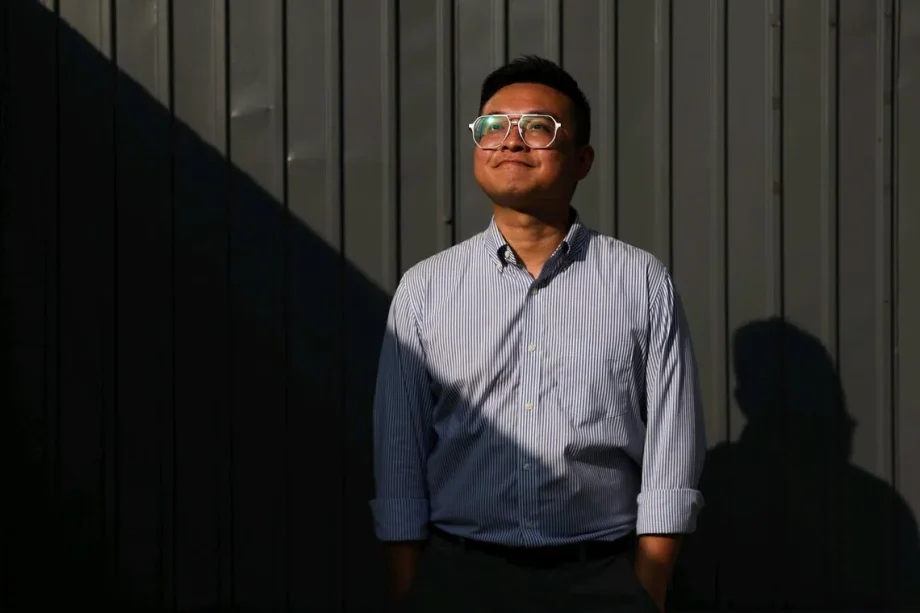
SINGAPORE – For years, Cornelyus Tan had an impressive career in marketing while secretly relying on methamphetamine.
His double life ended in 2022 when he was arrested and sent to detention at Changi Prison’s Drug Rehabilitation Centre (DRC) for six months.
There, he met teachers, lawyers, bankers and other white-collar professionals who, like him, had used drugs.
“On paper, we look well. We are all very successful. But at the core of it, we had a common problem – the heart,” said Tan, 37, as he shared his story publicly for the first time in a July interview with The Straits Times.
A growing number of well-educated people in Singapore’s population like Tan are getting involved in drugs. In 2025, 293 inmates in DRC had tertiary education or higher qualifications, compared with 204 in 2021, according to Singapore Prison Service (SPS) statistics. They accounted for about one in 10 newly admitted inmates in 2025, up from 8.8 per cent in 2021. Their qualifications ranged from polytechnic diplomas to doctorates.
This trend is expected as Singapore’s population has become more educated, a Central Narcotics Bureau (CNB) spokesperson told ST. Over the past decade, the share of residents aged 25 and above with at least tertiary education grew from 42.9 per cent to 54.5 per cent. But CNB noted that those with tertiary qualifications remain underrepresented among the DRC inmate population.
Still, cases involving highly educated professionals can provoke surprise – as did the recent conviction of a medical doctor for drug use.
Education and income may seem like natural buffers against substance abuse, but counsellors who work with drug offenders say addiction cuts across all backgrounds.
There is a growing recognition that drug use is not confined to people who are poorly educated, unemployed or socially disadvantaged, said Gopal Mahey, a senior counsellor at the Centre for Psychotherapy.
Reasons for this trend include the expansion of the global drug market and increasing availability of synthetic drugs, he said.
Technology has also made drugs more accessible to people from all backgrounds, said We Care Community Services’ executive director Tham Yuen Han.
In the past, abusers typically got their hands on illicit drugs via personal connections – family members or friends with a history of addiction, or peddlers in their neighbourhood, she said.
“Now with technology, you don’t need those connections, because sometimes it just comes to you on social media,” she said, citing Telegram channels that peddle drugs.
Other factors behind this group’s drug use include peer influence, social media and entertainers who seek to glamorise drug use or downplay its harmful effects, as well as exposure to more liberal drug cultures overseas, said the CNB spokesperson.
The “Superman” effect
For some educated professionals who use drugs, the substances can initially feel less like a problem than a solution. Drugs made them more productive, helped them cope with stress or connect with others.
Tan was first introduced to meth at a house party in 2014, when he was 25 and an aspiring fashion photographer and arts college undergraduate.
Meth, also known as Ice, is one of the most commonly abused drugs among drug abusers with tertiary education arrested in 2025, along with cannabis, Ecstasy and heroin, said the CNB spokesperson.
The crystals gave Tan a “Superman effect”, an adrenaline rush leaving him constantly efficient and happy.
“I was able to think creatively. There were many good comments about my work,” said Tan. “Everything that I found (was like) ‘Wow, it’s an inspiration’.”


Read Full Article At Source