August 11, 2026
SINGAPORE – I am 39 and I have been a pest buster since 2020. My father had more than 40 years of experience in the pest control industry before he retired.
My ambition, since I was young, had been to become a soldier and I fulfilled that dream in the Singapore Army for 13 years. I didn’t see myself as an entrepreneur and had more of a taste for adventure.
As I grew older, my perspective shifted and I found the trade interesting. Being a soldier and a bug buster are similar: Both involve fighting an enemy.
Before the Covid-19 pandemic hit, I had a chat with my brother, who had started his own pest control business after working closely with my father for years. I decided to resign from the army to join him and help build the business.
In Singapore, we deal with common pests and vectors. Vectors are organisms – mosquitoes and rodents, for instance – that transmit disease-carrying pathogens. Cockroaches, too, can spread diseases through their droppings, as they lurk in dirty environments such as rubbish bins and drains.
All vector control workers and technicians in Singapore must be certified by the National Environment Agency (NEA). I signed up for the joint industry certification for pest management by the Institute of Technical Education and NEA. It is a three-month part-time course that entails 66 hours of theory and practical lessons on managing pests and their breeding areas.
Starting from ground zero
The first year on the job was tough but exciting. I had to start from scratch. In the beginning, I shadowed our pest control technicians to gain exposure to various types of jobs, from the most basic to the most complicated.
We have in-house entomologists who study insects and their behaviours, such as their life cycles and how they interact with the environment and other creatures, including humans.

Chan using a ladder to inspect and check for rodent activity in hard-to-reach areas. He had placed traps there the day before.
When I started out, I asked them many questions. They recommended pest control methods based on their understanding of insect behaviour. When we dealt with difficult cases, I would take a step back and ask them: “Why didn’t this theory and recommended method work? Why is the pest behaving unusually?”
I still remember helping my very first customer solve his pest issue. A subterranean termite issue was stressing him out. Seeing the relief on his face later was the moment that clicked for me – this business could work.
More than half the jobs are routine ones, such as going to food and beverage premises to ensure that they are protected from possible infestations. We locate and treat potential breeding areas before pests like mosquitoes and cockroaches can breed. We identify issues, like waste that is not cleared properly or potential entry points for cockroaches, rodents and flies, so that owners can rectify them.
It’s more complex when there is an infestation – for instance, finding dozens of cockroaches when you open up a cupboard or discovering multiple rodents – which affects people’s everyday lives.

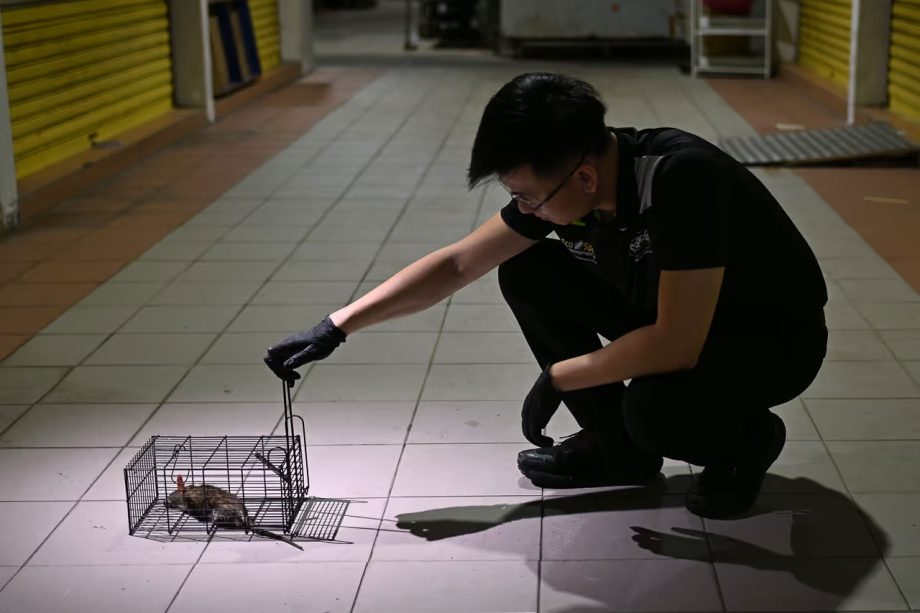
Food is often used as a lure for rodents.
Before diagnosing the issue in a home or food establishment, I ask what the pest sighting frequency is: For cockroaches, are there daily sightings? How many each time? If you see more than two during the day, I would say that’s very serious.


Read Full Article At Source