[SINGAPORE] More people around the world are now living longer, and the numbers paint a clearer picture.
The global lifespan has been increasing over the past few decades, with the average life expectancy rising from 64.6 years in 1990 to 73.8 years in 2023.
It is even higher in Singapore, where the life expectancy at birth for residents was 83.9 years in 2025.
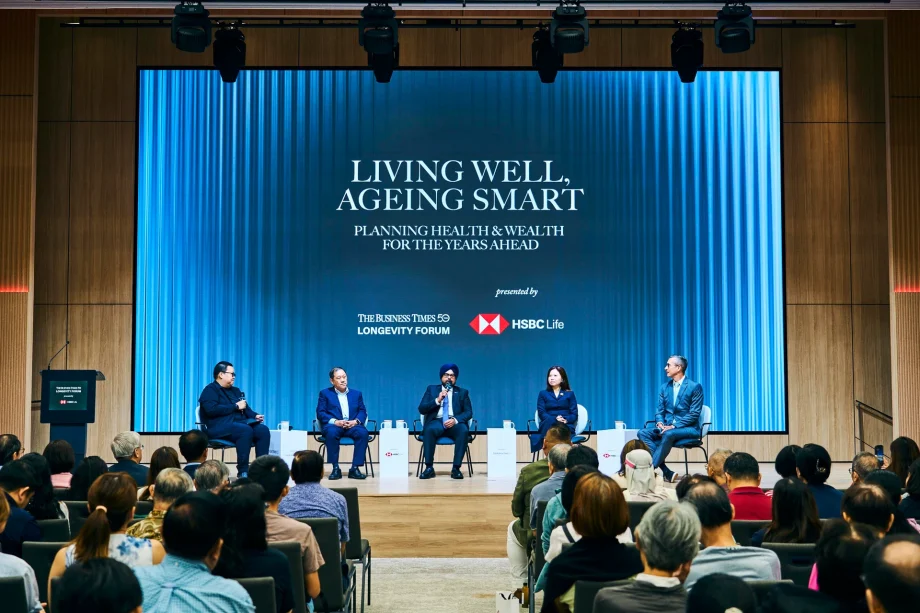
And yet, life expectancy only tracks how long people live, and not how well they live, said a group of panellists at The Business Times Longevity Forum presented by HSBC Life on Saturday (Jul 25).
“We have one of the highest life expectancies in the world, but the last decade is spent in ill health,” said Dr Sue-Anne Toh, CEO and co-founder of Novi Health, a specialist medical clinic and health tech company.
She was joined by Professor Chin Jin Jih, deputy CEO for clinical and academic development at NHG Health and senior consultant in geriatric medicine at Tan Tock Seng Hospital; Dr Naras Lapsys, chief clinical officer and senior dietitian at Chi Longevity; and HSBC Life CEO Harpreet Bindra.
In Singapore, there is currently a gap of about 10 years between a person’s lifespan (which measures how long a person lives) and healthspan (which measures how long a person can live in good health and with a good functional quality of life).
Closing that lifespan and healthspan gap has been a major focus in Singapore. At the national level, the government has initiatives such as Healthy 365 – a programme that incentivises residents to lead more active lifestyles. The private sector is also increasingly adding more offerings aimed at preventive healthcare.
But increasing one’s healthspan is still very much driven by the actions of the individual. Panellists urged people to start investing in themselves earlier, both in terms of financial planning and lifestyle choices and habits.


Read Full Article At Source